
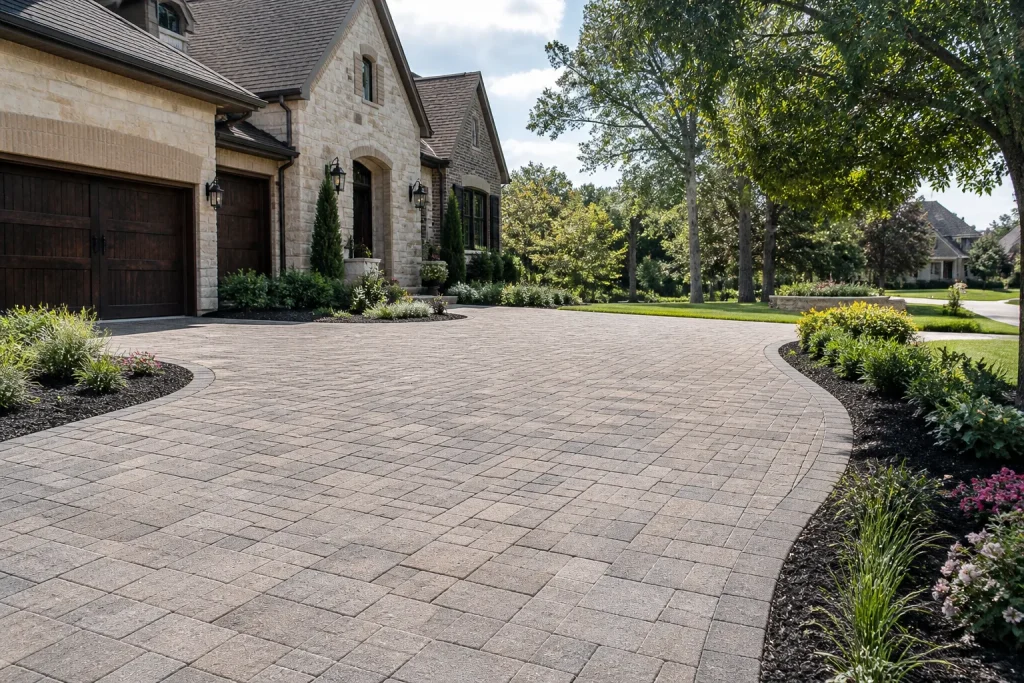
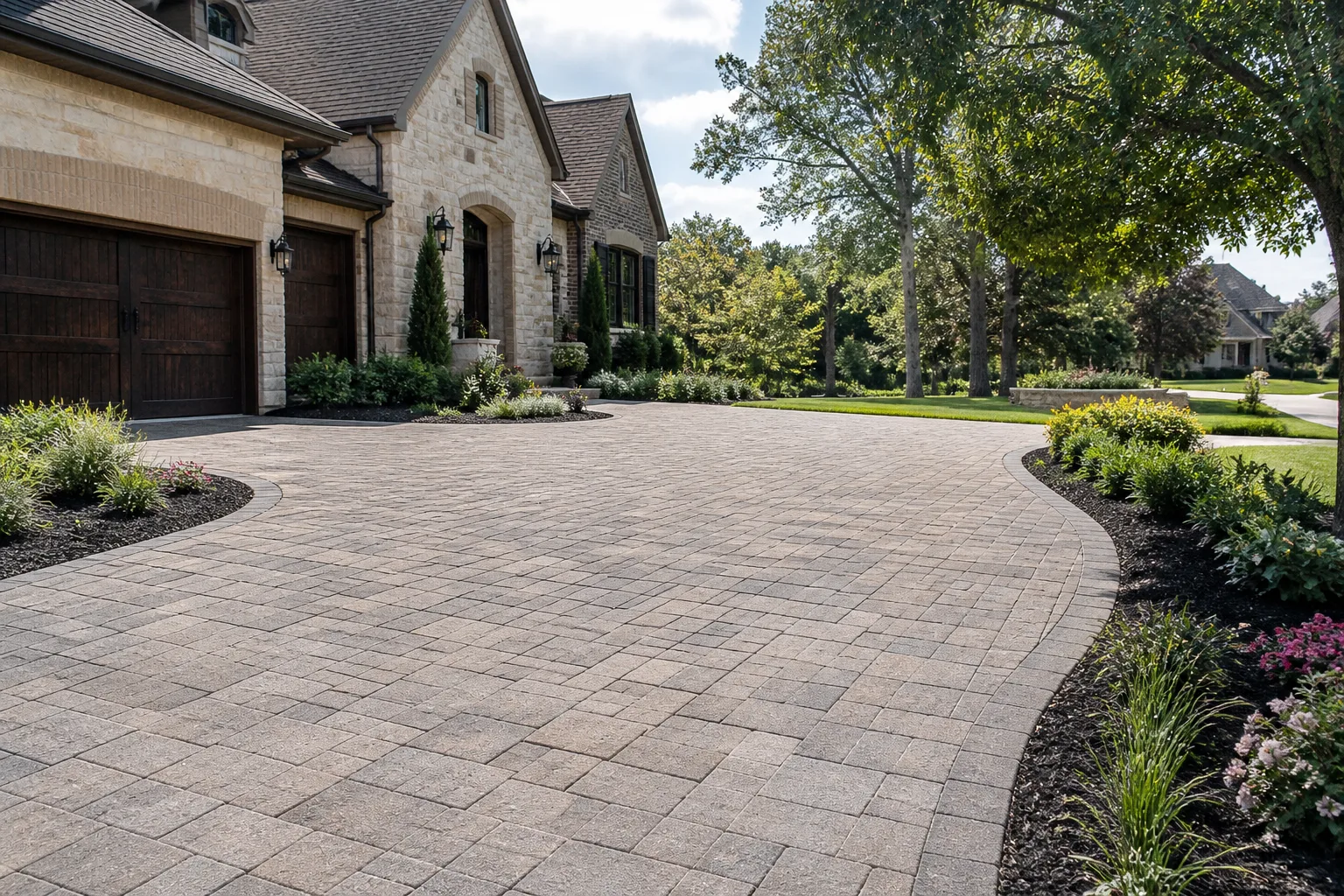
Oldcastle Driveway & Pavers in Fort Worth: A Homeowner’s Guide
Oldcastle’s catalog lists over 40 residential paver products, but fewer than a third are actually rated for the freeze-thaw cycling and expansive clay soil Fort Worth sits on. Most homeowners never see that distinction at the showroom, because the display wall shows color and shape, not thickness and absorption ratings. The paver that looks best under showroom lighting is often the one that heaves, chips, or fades first in a Fort Worth driveway. Here’s how to tell which Oldcastle lines hold up, and which ones you’ll be replacing in three summers.
If you’d rather not sort through spec sheets on your own, call (833) 570-6084 and we’ll walk you through what your specific driveway needs. Estimates are free, and the price comes in writing before anyone touches a shovel.
Why Fort Worth Soil and Heat Break the Wrong Paver
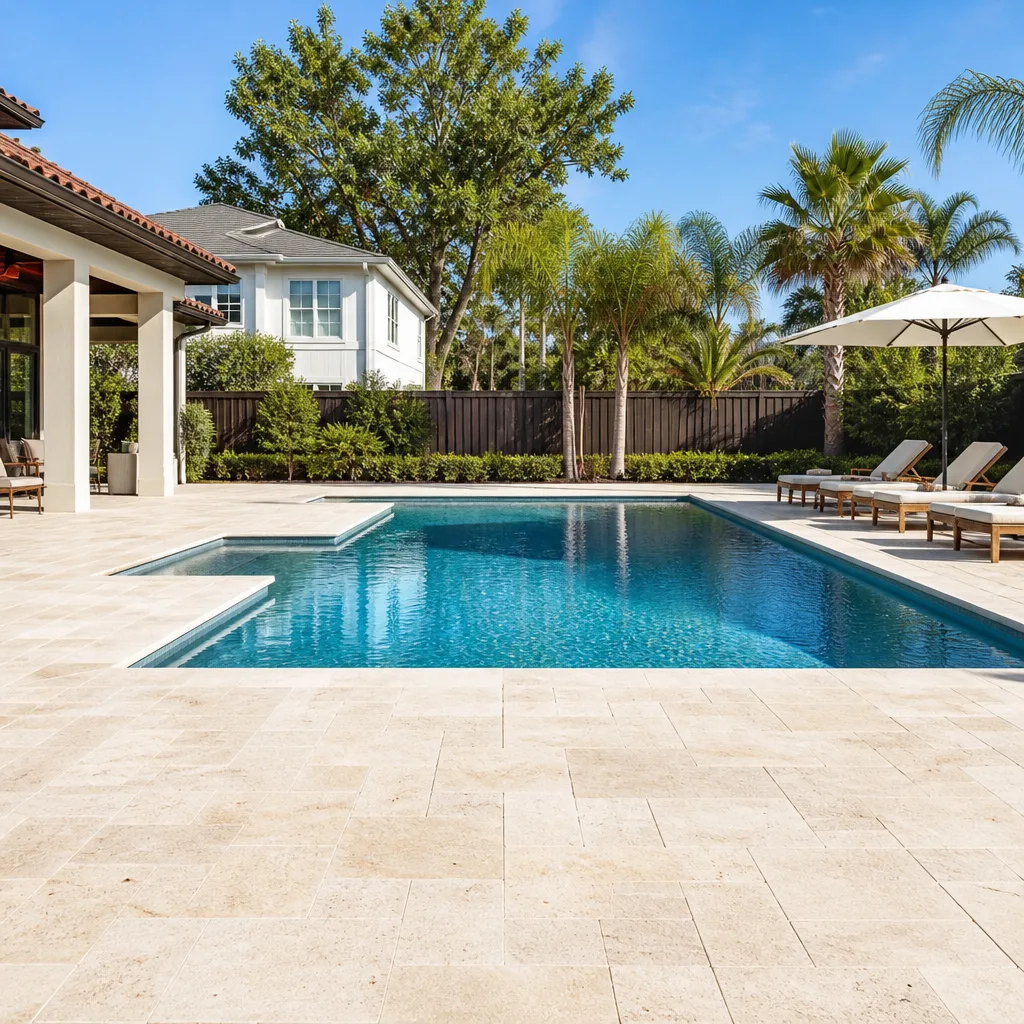
Fort Worth sits on a band of expansive clay that swells when it’s wet and shrinks when it’s dry. That movement is the single biggest reason driveways fail here, and it has nothing to do with how a paver looks. A paver can be beautiful, dense, and precisely cut, and still crack loose from its bedding sand if the base underneath it moves through a wet spring and a dry August.
The second pressure is heat load. Fort Worth regularly clears 100°F in July and August, and a driveway in full sun runs hotter than the air temperature. Pavers absorb and re-radiate that heat, and color-through pigment takes the UV hit day after day. Cheap surface-applied color fades in a couple of seasons. Good pigment runs through the full thickness of the unit, so a chip doesn’t reveal a different color underneath.
One more factor: vehicle load. Your driveway isn’t a patio. It carries a two-ton SUV on four contact patches, day in and day out. Fort Worth driveways with heavy vehicles, trailers, or regular delivery traffic need a heavier paver grade than a walkway or patio ever would. We’ve pulled pavers out of a driveway over in Ridglea where a lighter 60mm unit was laid on a shallow base, and the rutting started within 18 months. The pavers themselves were fine. The base wasn’t.
Holland Stone, Venetian, or Brussels Bloc: A Fort Worth Comparison
These are three of Oldcastle’s most common residential paver lines, and they’re built for different jobs. Matching the line to your driveway’s conditions is the whole game in Fort Worth.
- Holland Stone: A rectangular, single-piece paver with a slightly textured face. It comes in standard and heavier grades, and the heavier grade is what Fort Worth driveways want. Holland’s tight, interlocking pattern handles vehicle load well, and the standard shape uses less cutting waste on a straight driveway. This is a workhorse choice for a Fort Worth driveway that sees daily vehicle traffic.
- Venetian: A larger-format paver with more visual sweep. It reads elegant on a wide driveway, and the larger face means fewer joints. But larger units mean fewer joints to flex with clay movement, and a joint holds the assembly together. In Fort Worth clay, Venetian wants a deeper, more thoroughly compacted subbase to perform, and it should not be laid on a shallow base just because the units are bigger.
- Brussels Bloc: A tumbled, dimensional paver with a more rustic face. The tumbled edge looks warm against a Fort Worth house, and the texture hides minor settling. It performs well on driveways when the base is right, and the more irregular profile can help mask the tiny shifts clay causes, but it won’t correct a bad subbase. Nothing will.
The short version: for a Fort Worth driveway that carries real vehicle weight, Holland Stone in the heavier grade is the safest match. Venetian is a beautiful choice if the subbase is done properly. Brussels Bloc is a strong middle option when you want texture. None of them can outrun a shallow base, no matter which one you pick. If you’re also weighing fence and exterior upgrades while the driveway is torn up, our Fence Installation in Fort Worth page covers how to sequence the work.
60mm vs. 80mm: The Thickness Call Fort Worth Driveways Need
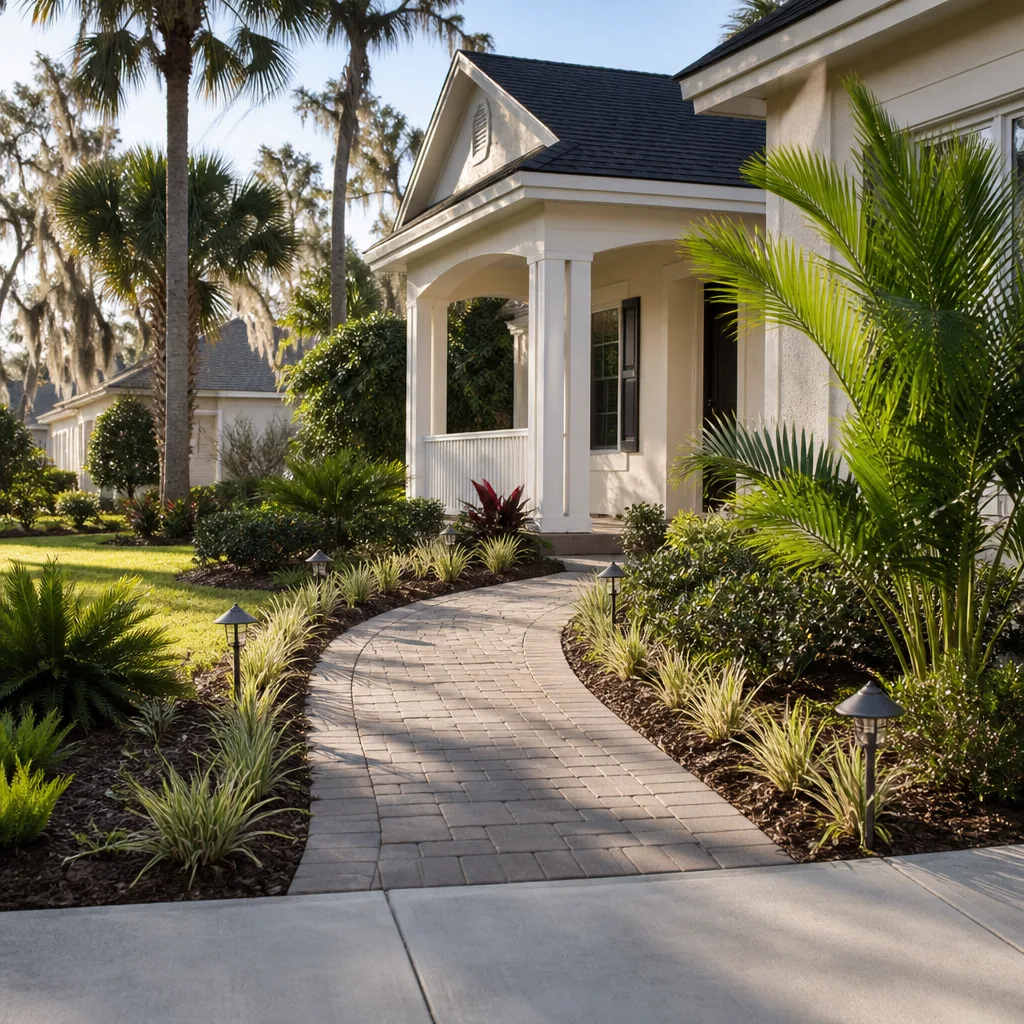
Here’s where most quotes go wrong. Oldcastle pavers come in two common thicknesses for residential work: 60mm (about 2-3/8 inches) and 80mm (about 3-1/8 inches). The thinner unit is fine for a walkway or a patio. It is not fine for a Fort Worth driveway carrying a daily SUV.
The rule we follow: residential driveways get the 80mm grade. A Fort Worth driveway sits on clay that moves, and the extra 20mm of unit thickness spreads vehicle load over a wider footprint and resists the point-loading that cracks a thinner paver when the base shifts underneath. On a patio or pathway, 60mm is appropriate and lighter on the budget. On a driveway, it’s a false economy.
When a contractor quotes you a driveway in 60mm to hold the price down, ask why. Sometimes they’ll say the pattern allows it, or the base is “solid.” Neither answer changes the physics. The heavier grade is the default for Fort Worth driveways, and a written scope should name the thickness so it’s on the record. On a project here, the price is written before anyone starts, and if a change comes up, it doesn’t proceed until the change order is signed. That applies to a paver thickness upgrade the same as any other decision.
Color-Through Pigment and What 17 Summers of Sun Actually Do
Oldcastle’s residential pavers use pigment that runs through the full thickness of the unit, not a surface stain. That’s a real difference, and it’s the reason a chip doesn’t reveal a pale spot underneath. But “color-through” isn’t the same as “fade-proof.”
Realistic timeline for a Fort Worth driveway in full sun, based on what we see on local installs:
- Years 1 – 2: Slight mellowing across the face, especially in reds and deeper charcoal tones. This is normal and not a defect.
- Years 3 – 5: A noticeable lightening in direct-sun zones, particularly on pavers that take the afternoon sun. Shaded areas hold color longer.
- Years 6 – 10: Slow, even shifting toward a softer tone. The change is most obvious if a section was replaced and the surrounding units have aged differently.
What you won’t see with color-through pigment is a blotchy, peeled look where the surface color has worn off to leave a raw face. That’s what surface-dyed or painted pavers do. In a Fort Worth summer above 95°F, that difference shows up fast. The honest expectation is gradual, even mellowing, not forever-new color. Anyone who promises zero fade is selling, not describing.
The Subbase Under Oldcastle Pavers in Clay Soil
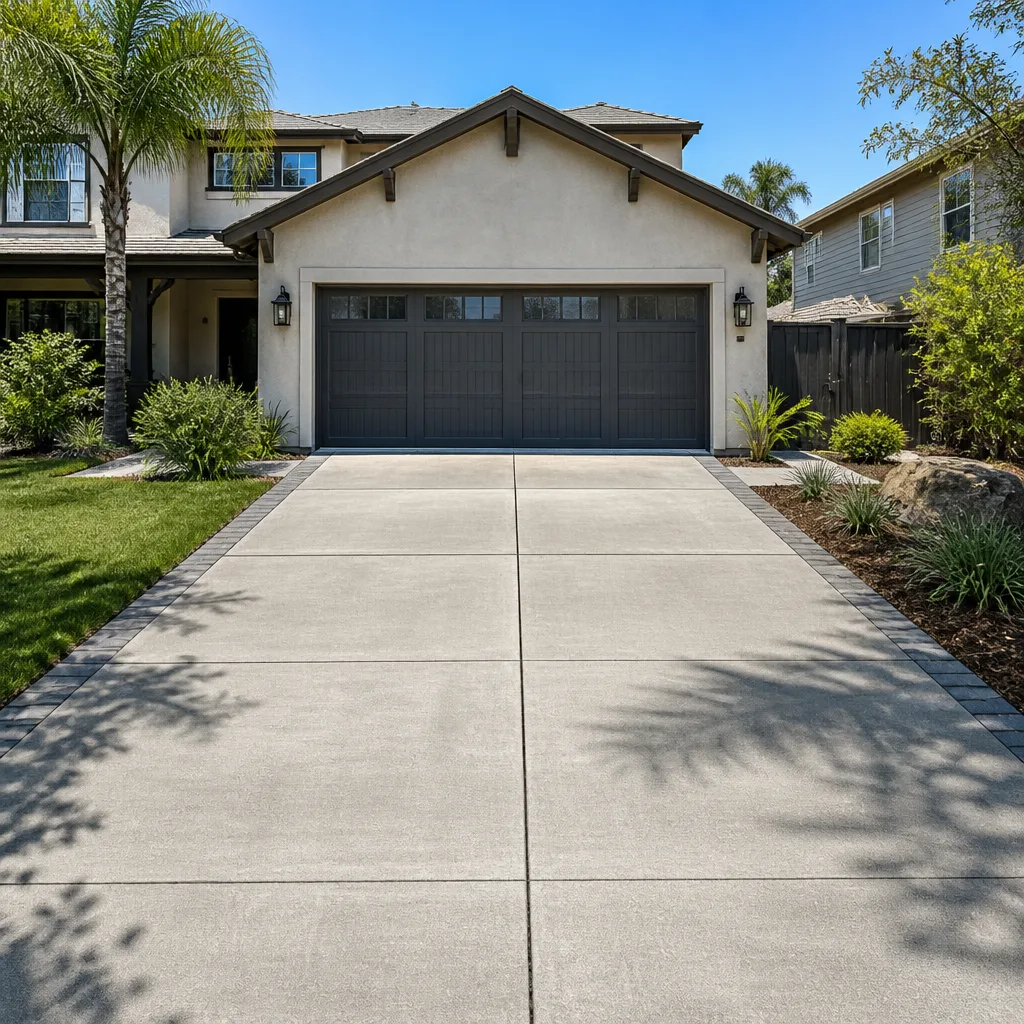
This is the part of the job nobody photographs, and it’s the part that decides whether your driveway lasts 20 years or four. In Fort Worth clay, the compacted aggregate subbase is the difference between a driveway that holds and one that ruts.
On our Fort Worth installs, we follow these minimums:
- Excavation depth: Remove enough clay to make room for the full subbase plus bedding sand plus the paver itself. The paver surface should land at the finished grade you planned, not an inch above it.
- Compacted aggregate depth: A minimum of 4 inches of crushed aggregate for residential driveways, placed in lifts and compacted as it goes, not dumped in one pass. Fort Worth clay is unstable, so heavier vehicle load calls for more, and we go to 6 inches or more where the driveway sees trailers or frequent delivery traffic.
- Bedding sand: A consistent 1-inch sand setting bed over the compacted base, screeded, not just spread.
- Edge restraint: A solid edge restraint on both sides, because a Fort Worth driveway held only by sand at the edges will spread.
- Compaction check: Each lift of aggregate gets compacted before the next goes down. A base that’s “roughly there” will move.
If a quote doesn’t mention excavation depth or the aggregate thickness, ask. If they can’t tell you, that’s your answer. Our technicians have up to 19 years of experience, and the first thing most of them mention on a Fort Worth paver job is the base, not the pattern. For the larger picture on what a full driveway installation involves across trades, see our Driveway & Pavers in Fort Worth page.
What Documentation to Ask For Before Anyone Lays a Paver
You don’t need to be a contractor to protect yourself here. You need three documents and one honest answer.
- Product data sheet: For the exact Oldcastle line and thickness being quoted. It lists compressive strength, water absorption, and the manufacturer’s intended use. If it names a patio grade, ask why it’s going on your driveway.
- Installation specs: The written subbase depth, aggregate type, bedding sand, compaction method, and edge restraint. This is the scope that should be in your written price.
- Warranty terms: Read what Oldcastle’s warranty actually covers. Product warranties on pavers generally cover manufacturing defects, not installation. Cracking from a poor subbase, settling from clay movement, and color mellowing from UV are not manufacturing defects, so they’re not covered by the product warranty. That means the installation warranty is the one that matters, and it should be in writing.
Ask the contractor for their own workmanship warranty in writing, with a term in years and a clear description of what’s covered. “We stand behind our work” is not a warranty. A written warranty with a term is. Under the 365-Day Done Right Promise, if it isn’t done right we make it right, and that’s backed by a terms page, not an asterisk.
When to Call a Pro
If you’re just resealing an existing paver driveway, or replacing a couple of settled units at the edge, that’s reasonable to handle yourself. The moment the job involves removing and rebuilding a subbase, resetting edge restraint, or deciding between 60mm and 80mm on a driveway that carries real weight, it’s a professional call. Subbase work is invisible in the finished product and almost impossible to inspect after the pavers go down, which is exactly why the written scope matters. Getting it wrong means paying twice. If the clay under a Fort Worth driveway is already moving, a lighter paver won’t save you.
We’ve also helped homeowners who were mid-way through a larger exterior project and needed the driveway, fence, and drainage plan sequenced so nothing had to be redone. If that’s the shape of your project, our Home Additions & ADU in Fort Worth page covers how the bigger project fits together.
The Bottom Line
The right Oldcastle paver for a Fort Worth driveway is less about curb appeal and more about matching the line and thickness to clay soil and vehicle load. Holland Stone in the heavier 80mm grade is the safest match for daily vehicle traffic. Venetian and Brussels Bloc perform well when the subbase is deep, well compacted, and restrained at the edges. Color-through pigment fades gradually and evenly over years, not blotchy or peeled. And the single most important document you’ll ever get is a written scope that names the thickness, the subbase depth, and the workmanship warranty. Any contractor who quotes a driveway without those three things is quoting a guess.
If you’re in Fort Worth and want help choosing between Oldcastle lines, sizing the subbase for your soil, or getting a second opinion on a quote you’ve already got, Rowan Construction Group Fort Worth offers free estimates. Call (833) 570-6084. We’ll put the price in writing before anyone picks up a shovel, and if you’ve got a competitor’s quote, we’ll review it line by line at no charge.
Frequently Asked Questions
How much does an Oldcastle paver driveway cost in Fort Worth? A residential paver driveway in Fort Worth typically runs $12 to $22 per square foot installed, depending on the Oldcastle line, the 60mm vs. 80mm grade, and the subbase depth clay soil requires. That range includes the compacted aggregate base, bedding sand, pavers, and edge restraint. Call (833) 570-6084 for an exact written quote, free of charge.
Which Oldcastle paver is best for a Fort Worth driveway? Holland Stone in the 80mm grade is the safest match for a Fort Worth driveway that carries daily vehicle traffic. Venetian and Brussels Bloc work well when the subbase is deeper and properly compacted, but no line performs over a shallow base in clay soil. Call (833) 570-6084 and we’ll tell you which line fits your site.
Will Oldcastle pavers fade in the Fort Worth heat? Color-through pigment mellowing gradually and evenly over 3 to 6 years in full sun, and holds a soft tone well past 10 years. It won’t fade to a blotchy or peeled surface the way surface-dyed pavers do. Slight lightening is normal, not a defect. Call (833) 570-6084 for a free estimate on a properly installed driveway.
Does Oldcastle’s warranty cover a cracked paver? Product warranties generally cover manufacturing defects, not installation. A crack from a poor subbase or clay movement isn’t a manufacturing defect, so it isn’t covered by the product warranty. That’s why the contractor’s own written workmanship warranty matters, and ours comes in writing with a defined term. Call (833) 570-6084 to schedule a free estimate.
Written by the team at Rowan Construction Group Fort Worth.
Need Construction Help?
Call Rowan Construction Group Fort Worth - licensed & insured, here with fast after-hours help in Fort Worth.
(833) 570-6084