
Cover Driveway & Pavers in Fort Worth: A Homeowner’s Guide
Cover markets its units as pad-ready, but in Fort Worth “pad-ready” is a moving target. The brand’s standard foundation spec assumes a level, compacted base, and Tarrant County lots average a 2 to 4% natural grade running toward drainage swales. Most properties here need regrading before a single paver gets set, and the driveway apron feeding that pad is almost never inside the base price. This guide puts real numbers against both gaps. If you’d rather hand the whole sequence to someone who does it weekly, call (833) 570-6084.
What “Pad-Ready” Actually Requires in Fort Worth
Cover publishes foundation requirements for its units: a level, compacted, well-drained base, typically specified as a reinforced concrete slab or a compacted aggregate pad depending on the model. That language is honest and also generic. It was written for a national market, and Fort Worth soil doesn’t read national specs politely.
What we check on a Fort Worth lot before we quote anything:
- Grade and fall. A 2 to 4% cross-slope is common on Tarrant County residential lots, and it usually runs toward a swale or a neighbor’s fence line. Cover’s slab wants level. You can’t have both without a cut-and-fill plan.
- Soil behavior. Much of Fort Worth sits on expansive clay that swells when wet and shrinks hard in August. A pad that’s compacted to spec in March can move by the following summer unless the subgrade is treated and the drainage is right.
- Setback and impervious cover. The pad has to land somewhere legal. That means checking the plat, the rear and side setbacks, and how much of the lot is already covered by roof, drive, and patio.
- Utility locate. Sewer laterals and water lines cross rear yards in patterns that don’t match what the homeowner remembers from the inspection report. We call for locates before the first stake goes in.
When a homeowner tells us the unit is “pad-ready,” we treat it as a starting assumption, not a fact. The measurement either confirms it or it doesn’t. That’s a half-day of work and it’s the difference between a pad that lasts and one that re-grades itself after two wet springs.
Regrading and Compaction Costs in Fort Worth, in Dollars
For a typical Fort Worth lot with 3 to 5% grade change across the ADU footprint, regrading and compaction runs $3.50 to $7.00 per square foot. A 400-square-foot pad lands around $1,400 to $2,800 for the earthwork alone. Steep lots or lots with significant fill or haul-off push toward the top of the range and beyond.
Here’s how the line items break down on a quote you can compare:
| Line item | Fort Worth range | Notes |
|---|---|---|
| Site survey and grade check | $250 – $500 | Includes utility locate call |
| Cut and fill / regrading | $3.50 – $7.00 per sq ft | Pad area plus a 2 ft working margin |
| Subgrade compaction | $1.50 – $3.00 per sq ft | Lift-by-lift, moisture-conditioned |
| Aggregate base (4 to 6 in.) | $4.00 – $8.00 per sq ft | Flex base, compacted |
| Retaining or grade wall (if needed) | $35 – $65 per linear ft | Only on lots with a true grade break |
Two things drive the final number more than square footage: how much dirt has to leave the site, and how tight the crane access will be. A tight lot where the crew hand-carries material instead of using a skid steer costs more. We’d rather say that on the front end than surprise a homeowner on day three. Under Clause 1 of the Haven Standard, the price is written before anyone starts, and no change moves forward without a signed change order. That matters more on earthwork than almost any other trade, because what’s under the grass is a genuine unknown until you dig.
Permeable Pavers vs. Poured Concrete for the ADU Approach
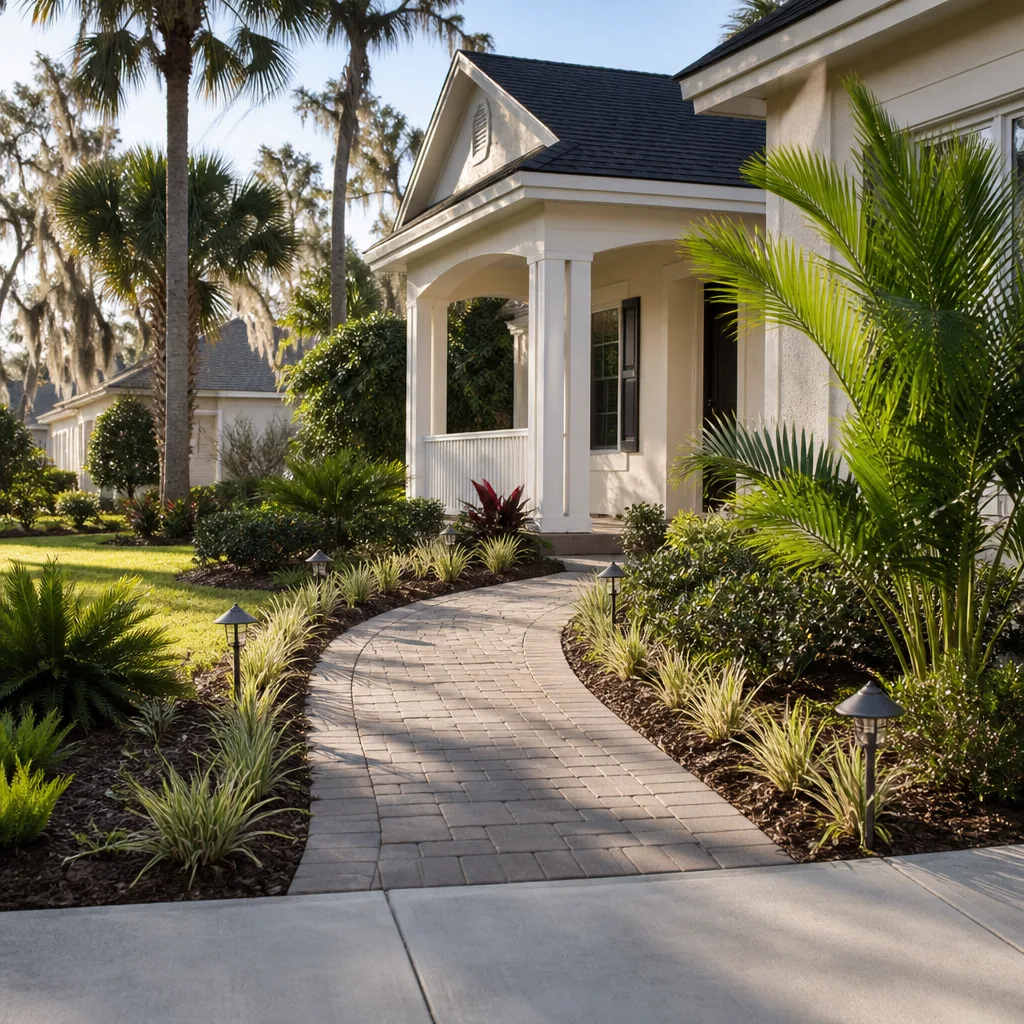
The apron connecting the street to the ADU pad is where most Fort Worth homeowners get the biggest surprise. It’s rarely in the Cover base price and it’s rarely discussed until the unit is on the ground.
Two realistic options, compared honestly:
- Permeable interlocking concrete pavers (PICP). Installed cost in Fort Worth runs $12 to $22 per square foot. Brands like Belgard and Techo-Bloc make the units we install most. PICP lets stormwater infiltrate between joints into an open-graded base, which can help with impervious cover limits and drainage review. It’s also repairable: pull up the section, fix what’s under it, relay it. Joint sand needs refreshing every few years.
- Poured concrete. Installed cost runs $8 to $14 per square foot, typically 4 to 6 inches thick with rebar or mesh. Cheaper up front, faster to place, and it holds up in Texas heat if it’s air-entrained and properly jointed. It’s also impervious: every square foot counts against your lot’s coverage, and crack repair means patching or replacing a section, not relaying a few pavers.
Permeable pavers usually cost $1,500 to $3,500 more on a 300-square-foot approach. Whether that’s worth it depends entirely on how close your lot sits to the coverage limit. On a lot with room to spare, poured concrete is a perfectly good answer. On a lot already near its impervious threshold, PICP often makes the difference between an approval and a redesign. If you want a contractor’s line-by-line review before you commit, our team at Driveway & Pavers in Fort Worth quotes both and puts the numbers side by side.
Fort Worth Stormwater Rules and the Drainage Review Trigger
Fort Worth’s stormwater requirements are triggered by how much impervious cover a project adds and how it changes the way water leaves the lot. An ADU plus a new approach often crosses that line even when the ADU alone wouldn’t. In practical terms, a drainage review may require a grading plan showing where water goes and a demonstration that it doesn’t sheet onto a neighbor’s property or back up against a foundation.
What we plan for on a Fort Worth ADU project:
- Calculate total impervious area (roof, existing drive, new approach, and any patio) before the design is fixed.
- Choose a surface that keeps the added coverage under the review threshold when the lot is tight, which is where PICP earns its price.
- Design positive fall away from both the ADU slab and the main house, with a defined discharge point.
- Confirm the discharge point with the city before the paver base goes down, not after.
- Document the finished grades with photos, since that record is what a future buyer or inspector will want to see.
We’ve had Fort Worth jobs where the drainage question added two weeks to the schedule and jobs where smart surface selection kept it out of review entirely. The difference is almost always made at the design stage, before any material is ordered.
Sequencing the Pavers Around Cover’s Delivery Window
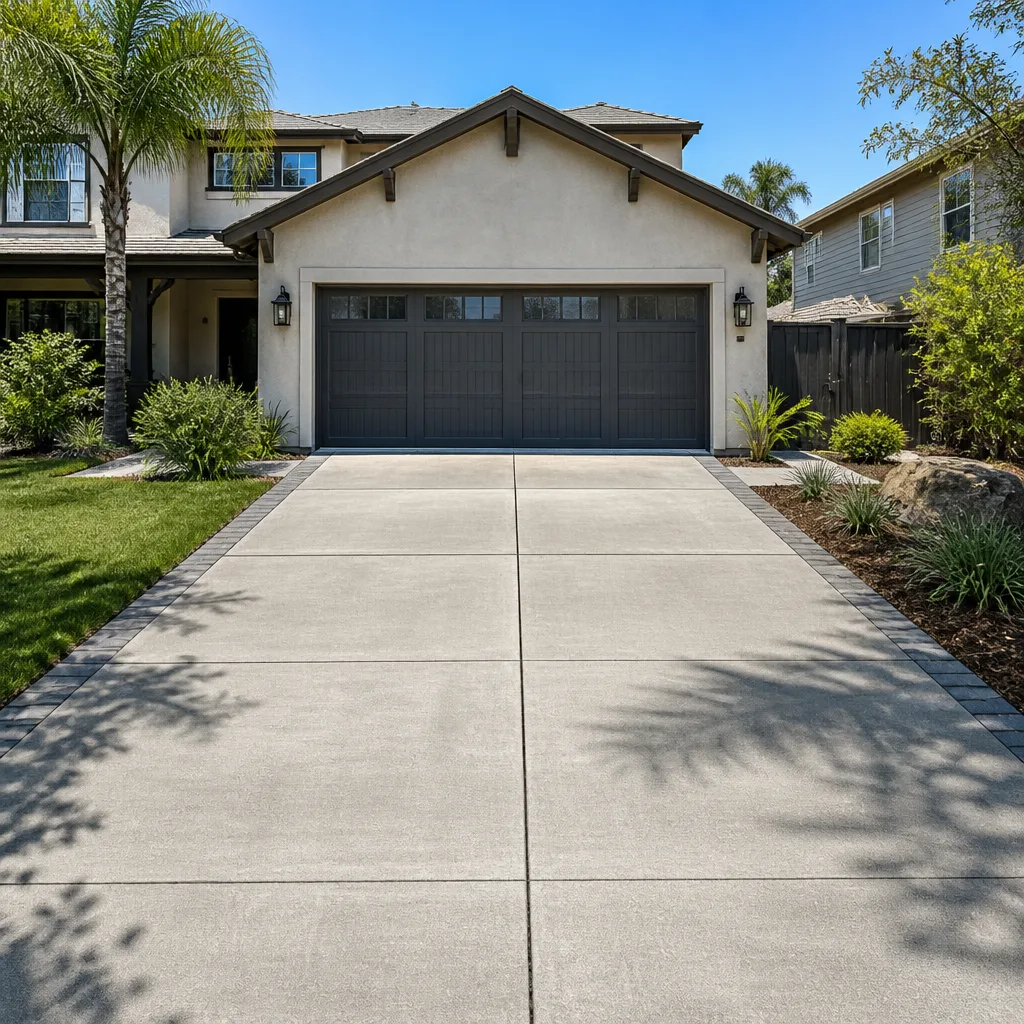
This is where rework costs hide. Cover’s installation typically involves a delivery and a crane or lift to set the unit on the pad. That equipment needs a prepared, compacted approach to drive and set up on. If the pavers aren’t in and locked up, the crane works off a temporary surface, and temporary surfaces in Fort Worth mud season mean ruts, settlement, and repair.
The sequence we run:
- Grade check, utility locate, and drainage plan approval.
- Regrade and compact the subgrade for both pad and approach.
- Aggregate base and compaction for the pad.
- Pour or set the pad; let it cure.
- Install the paver approach and lock it up with joint sand.
- Cover delivery and set.
- Final connections, finish grading, and photo documentation of the whole job.
Getting step 5 finished before step 6 is the whole game. When homeowners ask us to install the approach afterward, they usually end up paying for access repair on top of the paver work. Our technicians have up to 19 years of experience and we’ve seen this play out enough times to build the sequence into every ADU quote from the start. If a unit has already been delivered and the lawn is now a mud pit, we can usually get it back to grade, but it costs more than doing it in order would have.
When to Call a Pro
If your lot has more than about 4% grade change, if the rear yard drains toward the house, or if you’re within reach of the impervious cover limit, the design work is worth paying for. Regrading a Fort Worth lot wrong is expensive to undo. So is a pad that moves. We’d rather have a conversation about numbers before the shovel goes in than troubleshoot after.
Related services in Fort Worth: paired with a new ADU, most homeowners also want a fence installation in Fort Worth to define the new space and a written plan for home additions and ADU work in Fort Worth that accounts for the whole sequence, not just the unit.
The Bottom Line
Pad-ready is a useful starting point and a poor substitute for a site visit. In Fort Worth, the three things that decide your final cost are grade, drainage review, and sequencing. Grade usually means $3.50 to $7.00 per square foot of earthwork. Drainage review is often avoidable through smart surface choice, and a permeable paver approach that keeps you under the impervious threshold is usually worth the $1,500 to $3,500 premium. Sequencing is free to plan and expensive to fix.
Get the price in writing before anyone lifts a shovel. That’s what Rowan Construction Group Fort Worth does on every job: a flat written price, a written scope, and a documented photo record when the crew leaves. If you’re comparing a competitor’s estimate, we’ll review it line by line at no charge. If you’re in Fort Worth and need help, Rowan Construction Group Fort Worth offers free estimates. Call (833) 570-6084.
Frequently Asked Questions
Permeable interlocking concrete pavers run $12 to $22 per square foot installed in Fort Worth, so a 300-square-foot approach typically lands between $3,600 and $6,600. Poured concrete runs $8 to $14 per square foot for comparison. Add $3.50 to $7.00 per square foot if the lot needs regrading first, which most Fort Worth lots do. Call (833) 570-6084 for an exact quote; the estimate is free and the price is written.
Often yes, especially when the ADU and its new drive push total impervious cover past the review threshold. The review usually requires a grading plan showing positive fall and a defined discharge point. Choosing a permeable surface can keep the added coverage low enough to stay out of review on some lots. Call (833) 570-6084 to talk through your lot before the design is set.
Typically no. Cover’s published requirements describe the foundation spec (level, compacted, well-drained base) but the pad prep, earthwork, and driveway approach are generally separate scope items. Budget $3.50 to $7.00 per square foot for regrading and $12 to $22 per square foot for permeable pavers on the approach. We’ll review any written estimate line by line at no charge; call (833) 570-6084.
You can, and it usually costs more. The delivery crane needs a prepared, compacted approach to work from, and installing pavers afterward often means repairing access damage on top of the paver cost. Doing the approach first is the cheaper sequence. Call (833) 570-6084 to schedule a free site visit and a written quote that includes the full order of work.
Written by the team at Rowan Construction Group Fort Worth.
Need Construction Help?
Call Rowan Construction Group Fort Worth - licensed & insured, here with fast after-hours help in Fort Worth.
(833) 570-6084