
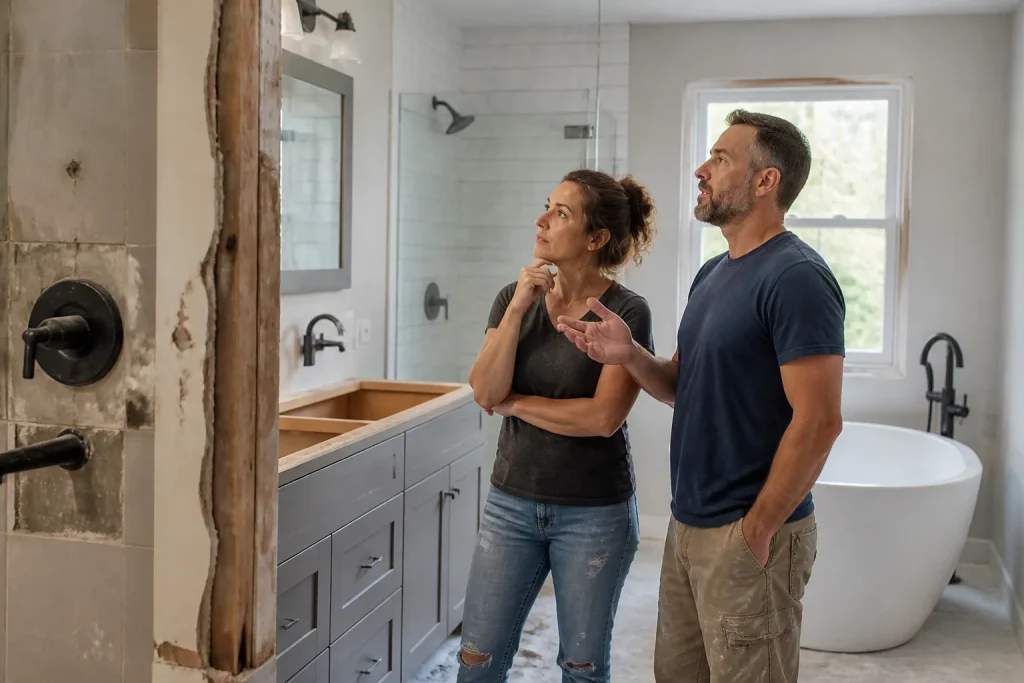
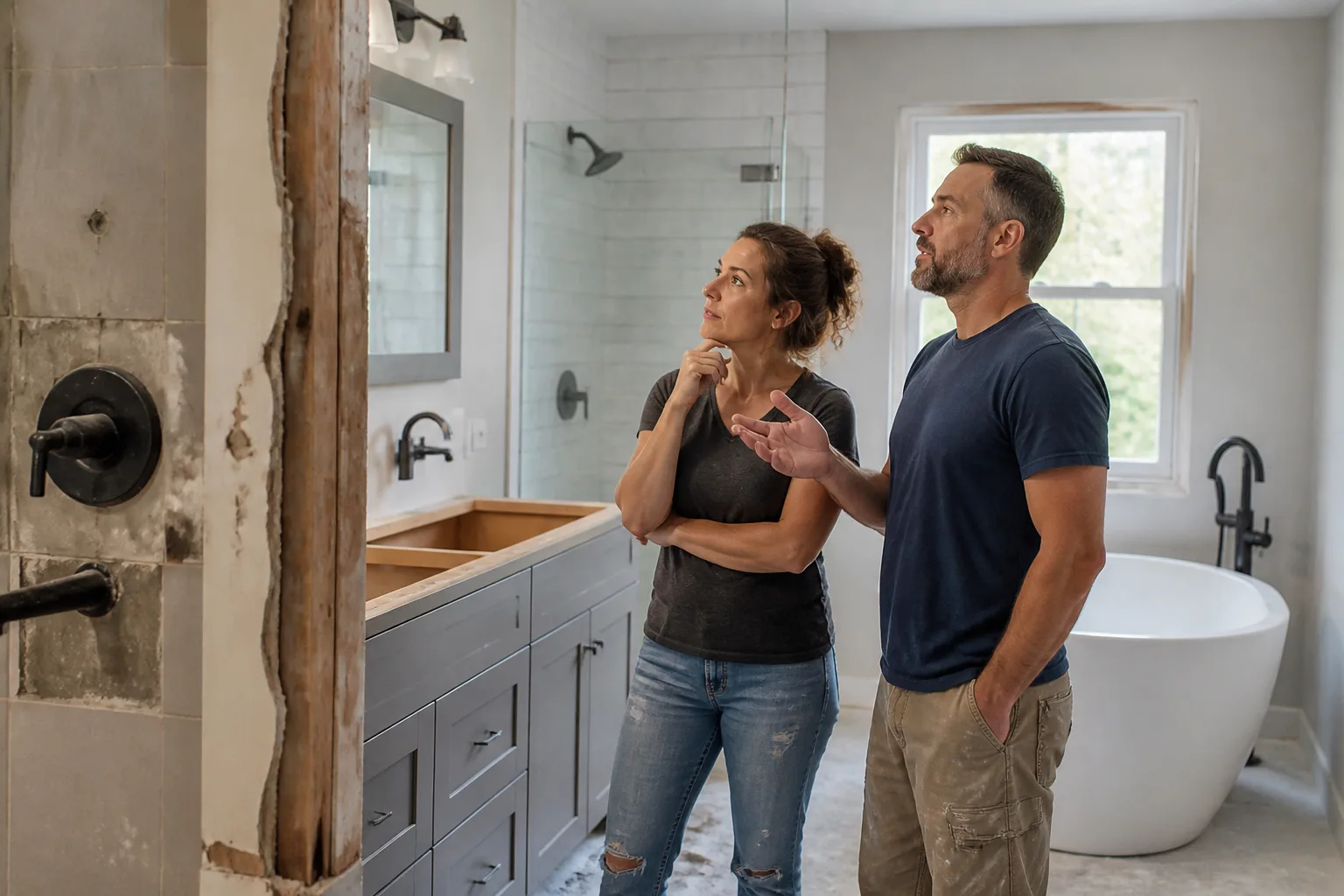
Bathroom Remodeling: Repair or Replace? How Fort Worth Homeowners Decide
Most bathroom remodels fail for a reason nobody sees on the design board: moisture already sitting in the subfloor. Fort Worth water pressure routinely runs 80 – 100 PSI in older neighborhoods, above the 80 PSI residential code maximum. That chronic overpressure wears out supply lines and valve seals, and it is the most common undiscovered cause of bathroom subfloor rot we find on demo day. So before you price tile and a vanity, you have to decide one thing: is this a cosmetic repair or a replacement that gets to the bottom of it? If you’d rather have someone put eyes on it than guess, call (833) 570-6084.
Key Takeaways
- Test wood moisture content before demo. Readings above 19% typically mean the subfloor is compromised and a tile-only fix will repeat in three to five years.
- A cosmetic surface remodel in Fort Worth runs far less than a full gut-and-rebuild, but the savings evaporate if the underlying leak isn’t fixed.
- A pressure-reducing valve installed at $285 – $450 stops the water damage cycle from starting over after your remodel.
- Pulling the right permit protects your insurance claim if a later leak causes damage.
- Fort Worth’s hard water (200+ mg/L calcium carbonate) means fixture finish, grout type, and caulk spec are longevity decisions, not style decisions.
How do you know if the subfloor is actually damaged before demo?

You test it with a non-invasive moisture meter, and you write down the number. A pinless meter reads wood moisture content through tile, vinyl, or carpet without a single hole, and it gives you a documented reading instead of a gut feeling. We run it across the floor in a grid, especially near the toilet flange, the shower curb, and any supply line penetration through the floor. Those are the three spots where Fort Worth overpressure does its quiet damage.
The reading decides the path. Anything above 19% wood moisture content triggers a subfloor replacement recommendation on our side, not a repair. Below that threshold, and with no soft spots or staining at the joists, a surface remodel can be honest. Here’s the sequence a Fort Worth homeowner can ask for before anyone swings a hammer:
- Ask for a moisture meter reading in writing, with the locations noted.
- Have the technician lift the toilet and check the flange and wax ring for staining.
- Look at the supply stops and the shower valve from the access panel. Corrosion there points to the pressure problem, not just an old fixture.
- Check the joists below if there’s a basement or crawlspace. Soft, dark wood at the penetrations is the tell.
A meter reading takes a few minutes. Replacing a rotted subfloor after a failed tile job takes a weekend plus a second round of demolition. The reading is the cheaper evidence, every time.
Repair or replace: what does each path cost in Fort Worth dollars?
The gap between the two paths is real but smaller than most people assume, once you account for doing the cosmetic work twice. Here’s how the numbers break down for a typical Fort Worth hall bath or guest bath, quoted as ranges because the room size and fixture tier drive the final figure:
| Scope | What’s included | Typical Fort Worth range |
|---|---|---|
| Cosmetic surface remodel | Tile floor and tub surround, vanity, fixtures, paint – no subfloor work | $6,500 – $11,000 |
| Gut-and-rebuild with subfloor replacement | Full demo, new subfloor and cement board, tile, vanity, fixtures, permit and inspection | $14,000 – $24,000 |
| Pressure-reducing valve (PRV) install | Valve, fittings, pressure test at the hose bib | $285 – $450 |
| Subfloor repair only (localized) | Replace rotted section, address the leak source, reinstall flooring | $1,200 – $2,800 |
On a full gut job, the countertop choice alone can swing the number. Cambria and Caesarstone quartz carry a premium, and Kohler versus Toto fixtures move the line item by a few hundred dollars either way. Those are real choices, but they’re not the decisions that keep the floor from failing. The subfloor and the PRV are.
If the meter reads high, spending $8,000 on cosmetics and putting it back over wet wood is the expensive path, because you’ll be back in that room in three to five years, paying for demolition twice. That math is why we put the number in writing before anyone starts, with a flat price and a written scope, so the two paths sit side by side on paper.
Why does Fort Worth water pressure matter, and what’s the $285 – $450 fix?

Fort Worth’s water pressure runs high in the older neighborhoods, and high pressure is a slow leak generator. A pressure-reducing valve, or PRV, sits on the main line coming into the house and caps what the rest of the plumbing sees. Installing one runs $285 – $450, and it’s the single cheapest thing you can do to stop the water damage cycle from starting over after your remodel.
The mechanism is simple: sustained pressure above the code maximum stresses the supply line connections and the valve seals. A tiny weep at the shower valve or the toilet supply drips into the subfloor, and wood stays wet long enough to rot. New tile over rotted wood is a cosmetic mask on a structural problem, and it doesn’t last.
Here’s the test any Fort Worth homeowner can run before the remodel gets priced:
- Screw a pressure gauge onto an outdoor hose bib and read it. If it sits above 80 PSI, the house needs a PRV or a replacement if one is already there and failing.
- Have the meter reading written down and the pressure logged on the same visit.
- If a PRV exists, note its age. They don’t last forever, and a stuck-open valve is the same as no valve.
We’ve pulled a supply line out of more than one older home in the Fort Worth area where the valve seat had been weeping for a decade behind a wall nobody opened. The tile looked fine right up until the grout cracked. In our experience, checking the pressure on the same trip as the moisture reading catches the cause and not just the symptom. That documented photo record of what we found and what we did comes standard on every visit, so a homeowner can see the gauge reading and the meter reading, not just hear about them.
Does a Fort Worth bathroom remodel need a permit, and why does it matter?
It depends on the scope, and the line matters more than people think. A cosmetic remodel, meaning a like-for-like fixture swap, paint, and vanity replacement with no change to the plumbing rough-in or the floor structure, generally falls below the permit threshold. Move a drain, add a shower valve, or replace the subfloor and the work triggers a permit and a city inspection in Fort Worth.
Pulling the permit isn’t paperwork for its own sake. It protects the homeowner’s insurance claim if a leak occurs later. An unpermitted plumbing change that turns into water damage is exactly the kind of thing an adjuster will push back on, and the homeowner ends up holding the loss. A permitted job has an inspection record showing the work met code at the time it was done.
So when the scope crosses one of these lines, budget for the permit and the inspection:
- Relocating the toilet, sink, or shower drain
- New or relocated supply lines and shutoff valves
- Subfloor or joist repair and replacement
- Adding a second bath or converting a closet or tub to a shower
Every job we quote at Rowan includes the permit line if the scope triggers it, with the inspection passed before the final invoice. Under Clause 1 of the Haven Standard, the price is written before anyone starts, so the permit cost isn’t a surprise added when the inspector shows up. That’s been true since well before this article, across thousands of projects, and it’s the discipline that keeps a job within a few percent of the agreed cost.
Which materials hold up to Fort Worth’s hard water?

Fort Worth water carries 200+ mg/L calcium carbonate, which is genuinely hard, and that number drives two material decisions more than any design trend: fixture finish and the grout-and-caulk spec. Hard water leaves mineral deposits that dull plated finishes and eat away at cheap caulk joints, and the deposits are what make a recently remodeled bath look tired in two years.
On fixtures, the finish ratings are the purchase decision. Kohler and Toto both publish finish durability that holds up better than an entry-level chrome, and on the shower valve specifically, the finish wear shows first. Pick a brand with a documented finish warranty and get the warranty terms in the written scope, not just the showroom pitch.
On the grout and caulk, the spec matters more than the color:
- Epoxy grout in the shower floor and walls resists mineral absorption far better than cementitious grout and doesn’t need an annual reseal.
- Silicone caulk rated for wet areas at every change of plane, meaning corners and where tile meets tub or floor, instead of grout there. Movement open up grout lines and hard water works its way in.
- Sealed porcelain tile over the subfloor assembly, so the surface resists water even if a joint fails.
Announcing a full reseal every year isn’t the deal. Pick the right grout and caulk up front and skip it. For exterior work that lives in the same hard-water and weather cycle, our team also handles Driveway & Pavers in Fort Worth, and the material-spec thinking is the same: the surface only lasts if the base and the joint spec are right.
When to call a pro instead of going the repair route
There’s a clean line between the work a careful homeowner can scope themselves and the work that needs a contractor with a moisture meter and a permit. Call a pro when any of these show up on your inspection:
- Moisture meter reading above 19% wood moisture content at more than one location
- Soft, dark wood at the joists or around the toilet flange
- Water pressure above 80 PSI with no PRV, or a failing PRV
- Any change that moves plumbing or replaces the subfloor, which triggers a Fort Worth permit
For a full replace, the demo usually reveals more than the meter did, and that’s where a written change order matters. No work proceeds on a change at Rowan until the change order is signed, which is how a job that starts at one number finishes close to it. Our background-checked, uniformed technicians photograph what they find on demo day and hand you the record. The 365-Day Done Right Promise backs the finished work, so there’s a terms page behind the guarantee if something needs a second look. If you have a competitor’s estimate, bring it. We’ll go through it line by line at no charge.
Related services in Fort Worth: if the bathroom remodel is part of a larger plan, our team also handles Fence Installation in Fort Worth and Home Additions & ADU in Fort Worth. You can see the full range of what we do on our Rowan Construction Group Fort Worth home page.
The Bottom Line
Repair or replace comes down to the number on the moisture meter and the number on the pressure gauge, not the color of the tile. If the wood reads above 19% or the line pressure sits above 80 PSI, a cosmetic remodel just buys you three to five years before the same bathroom fails again. A full replacement that fixes the subfloor, installs a PRV, and specs the grout and caulk for Fort Worth’s hard water is the documented path. Either way, get the numbers in writing before anyone starts.
If you’re in Fort Worth and want the two paths priced side by side, Rowan Construction Group Fort Worth offers free estimates – call (833) 570-6084. You’ll get a flat written price, a written scope, and a documented record of what we found.
Frequently Asked Questions
A non-invasive moisture meter reading above 19% wood moisture content is the trigger, backed up by soft spots at the joists, dark staining around the toilet flange, or a spongy feel underfoot. A meter takes a few minutes and doesn’t require a hole in the floor. Call (833) 570-6084 for an exact quote on a reading and a written assessment – estimates are free.
A cosmetic surface remodel typically runs $6,500 – $11,000, while a full gut-and-rebuild with subfloor replacement runs $14,000 – $24,000, depending on room size and fixture tier. Adding a pressure-reducing valve runs $285 – $450. Call (833) 570-6084 for an exact quote – estimates are free.
Not without a signed change order. No work proceeds on a change until the change order is signed, which is the discipline behind projects finishing within a few percent of the agreed cost. If a signed change is made, the new number is written before the crew picks up a tool. Call (833) 570-6084 for an exact quote – estimates are free.
Yes, whenever the scope triggers it. Plumbing rough-in changes and subfloor replacement trigger a Fort Worth permit and inspection, and we include that line in the written quote and pass the inspection before final invoicing. A cosmetic fixture swap that stays below the threshold doesn’t need one. Call (833) 570-6084 for an exact quote – estimates are free.
Written by the team at Rowan Construction Group Fort Worth.
Need Construction Help?
Call Rowan Construction Group Fort Worth - licensed & insured, here with fast after-hours help in Fort Worth.
(833) 570-6084