
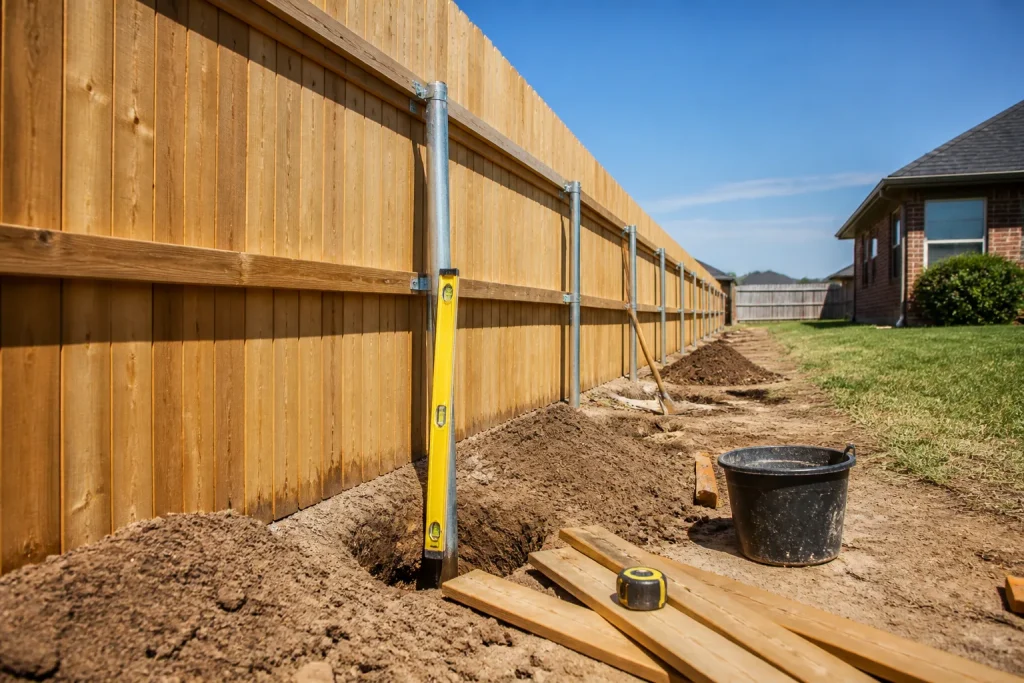
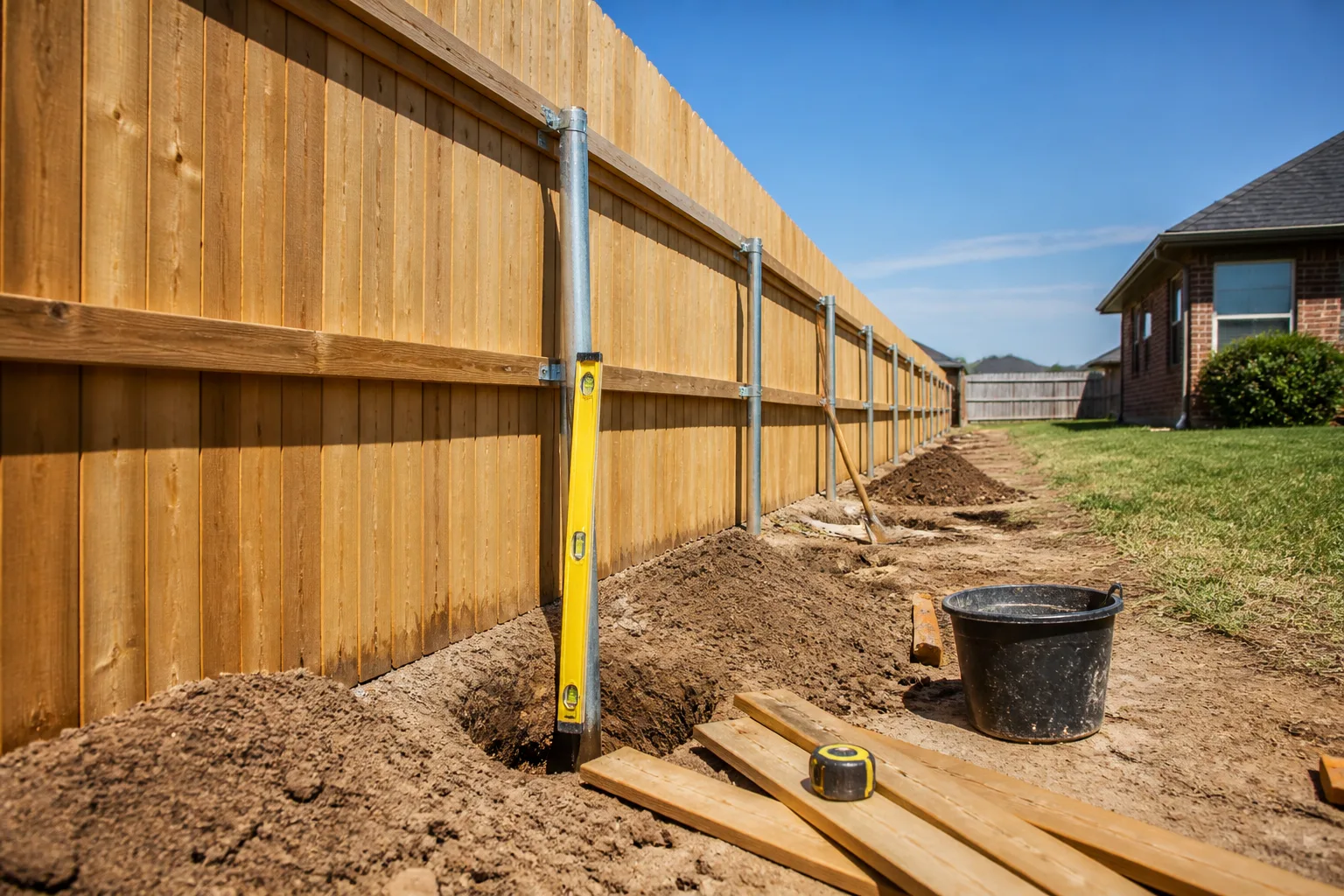
5 Mistakes to Avoid With Fence Installation
The five most expensive fence mistakes in Fort Worth happen before a single post goes in the ground. They’re planning errors: a skipped utility locate, a misread survey, a material that can’t handle our clay, a post hole poured too shallow, and a permit nobody filed. Texas 811 is free and legally required before you dig, yet we still find unmarked irrigation lines on roughly one in three residential fence jobs around Fort Worth. If you’d rather not gamble on a phone call to the locator service, call us at (833) 570-6084 and we’ll walk the line with you.
Mistake #1: Treating the 811 Call as the Whole Job
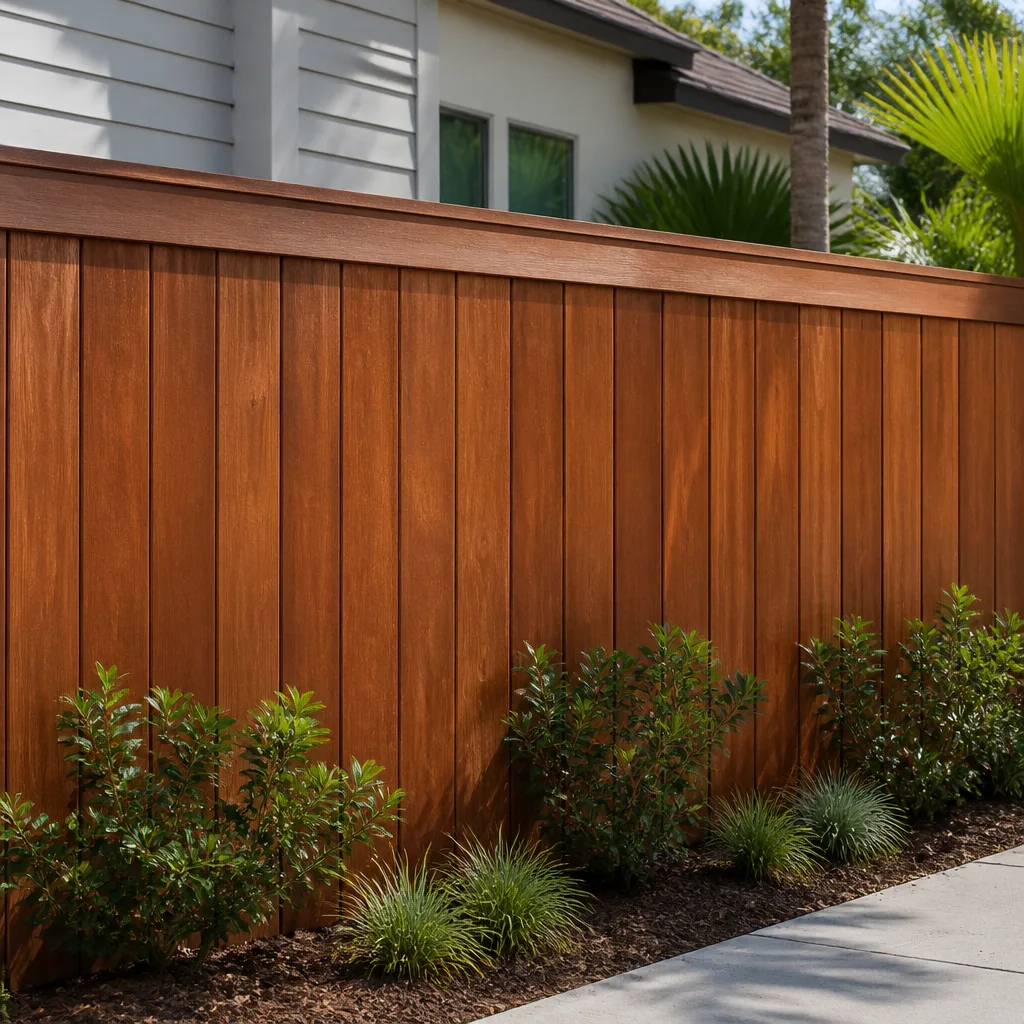
Texas 811 marks public utilities – gas, water mains, electric, telecom. That’s it. What it does not mark is everything running through your own yard: the irrigation zone lines you or a previous owner installed, low-voltage landscape lighting, a private water line to a hose bib, the invisible fence for a dog that’s been gone since 2019. We’ve cut through drip lines three times in the last month alone, and each one turned a Saturday morning fence job into a plumber’s invoice.
Here’s the sequence that actually works in Fort Worth:
- Call 811 at least two business days before digging. That’s the legal window in Texas, and it’s free.
- Schedule a separate private locate. Utility locating companies do this for a modest fee, or a good fence professional will have a referral. They trace irrigation, landscape lighting, septic, and anything else the public locator won’t touch.
- Walk the fence line with spray paint. Mark the intended path yourself, in person, and confirm it against what the locators flagged.
- Photograph the marked line before the crew arrives. If a line gets hit anyway, you have evidence of what was known and where.
We’ve seen homeowners in Tanglewood and Ridglea Hills skip the private locate because “the yard’s been the same since 1998.” The yard has not been the same. Sprinkler systems get added, moved, and abandoned. Locate them.
Mistake #2: Building Off the Survey Without Reading It
Your property survey plat – the drawing in your closing packet, usually titled something like “ALTA Survey” or “Boundary Survey” – shows your lot lines, easements, setback lines, and utility easements. It’s a legal document, and it tells you exactly where a fence is allowed. The trouble is that most homeowners glance at it, assume the back fence is the property line, and build six inches over.
A six-inch encroachment is not a small problem. In Fort Worth, correcting one after the fact usually means demolishing the affected fence section, restaking the line, rebuilding, and in some cases negotiating an easement or a purchase with the neighbor. We’ve seen the correction run $1,200 to $3,500 on a fence that originally cost $4,000 to build. The math is ugly.
Two things to do before any post goes in:
- Find the survey plat. If you don’t have it, the Tarrant County Clerk’s office has the recorded version, and many homeowners got a copy at closing.
- Locate the corner markers physically. A licensed surveyor can re-stake corners for a few hundred dollars. On any lot newer than 2010, this is worth every dollar.
Also check the plat for utility easements. In Fort Worth, a fence built across a recorded utility easement is technically the utility company’s to remove, at your expense, when they need access. Read the drawing before you dig.
Mistake #3: Using the Wrong Concrete and the Wrong Hole Depth
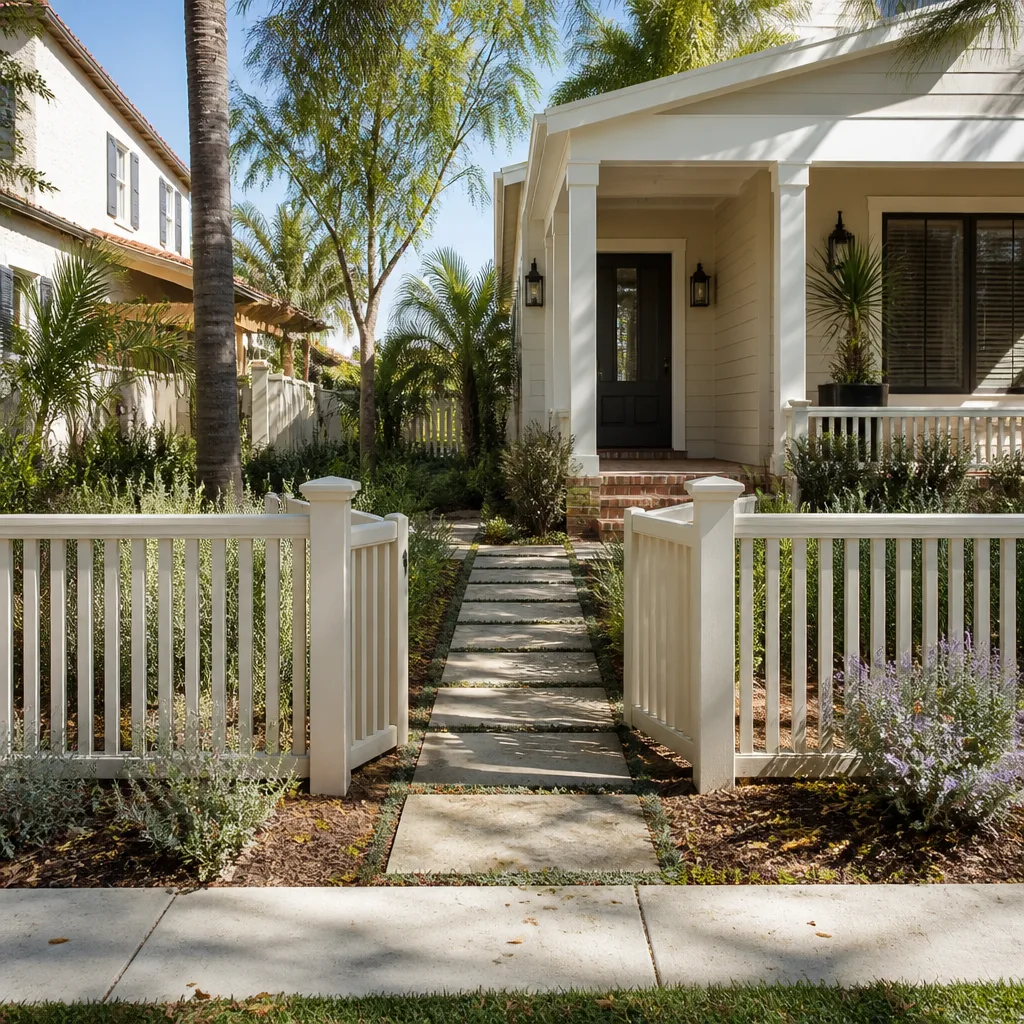
Fort Worth sits on expansive clay soil, and clay does one thing when it gets wet: it swells. When it dries, it shrinks. That movement is what cracks foundations, moves sidewalks, and heaves fence posts out of the ground when the wrong concrete mix and hole depth are used.
The common shortcut is fast-set concrete like Quikrete Fast-Setting, poured into a hole that’s barely wider than the post. It seems efficient. But fast-set concrete is designed to cure in about 20 to 40 minutes, and that quick cure doesn’t allow the concrete to key into the surrounding clay the way a slower-setting mix does. Pair that with a hole that’s only 8 inches across instead of 10 to 12, and you’ve built a post that will wiggle within two seasons of Fort Worth’s wet-dry cycle.
What we specify on Fort Worth fence jobs:
- Hole diameter: three times the post width, so a 4×4 post gets a 12-inch hole. A 6×6 gets 18 inches.
- Hole depth: one-third of the post’s above-ground height, plus a minimum of 24 inches below grade. Frost line in this part of Texas isn’t the issue – clay movement is.
- Concrete: standard high-strength mix (roughly 4,000 PSI), not fast-set, unless you’re repairing a single post in an emergency.
- Crown the concrete. Slope the top of the concrete away from the post so water runs off rather than pooling at the base. This single detail prevents more post rot than any paint or sealant.
Mistake #4: Missing the Fort Worth Permit Threshold
Fort Worth has specific triggers for when a fence permit is required, and most homeowners who call us haven’t checked. The general rule: a residential fence permit is typically required when the fence exceeds 6 feet in height, or when it’s located within the right-of-way, and there are additional restrictions on corner lots for sight-line visibility near intersections. The exact threshold and corner-lot rules are set in the city’s development code, and they’ve been revised in recent years – so the number that applied to your neighbor’s fence five years ago may not apply today.
Why it matters: an unpermitted fence over the trigger height can be cited by code enforcement, and in the worst case, the homeowner is required to remove or lower it at their own cost. We’ve seen it happen in the Fairmount and Ryan Place neighborhoods, where historic district guidelines add a second layer of review on top of the standard permit.
The right move is straightforward:
- Call the City of Fort Worth’s Development Services department before you buy materials, and confirm the current threshold for your specific lot.
- If your lot is in a historic district or a homeowner’s association, check those rules too – they can be stricter than the city code.
- If a permit is required, file it. The application is modest in cost relative to the fence, and the inspection is a check that the work was done right.
Under Clause 1 of the Haven Standard, we pull permits and pass inspections on every job where they’re required, and we deliver the inspection documentation as part of the project record. You shouldn’t have to chase that paperwork.
Mistake #5: Picking a Material That Can’t Handle the Soil
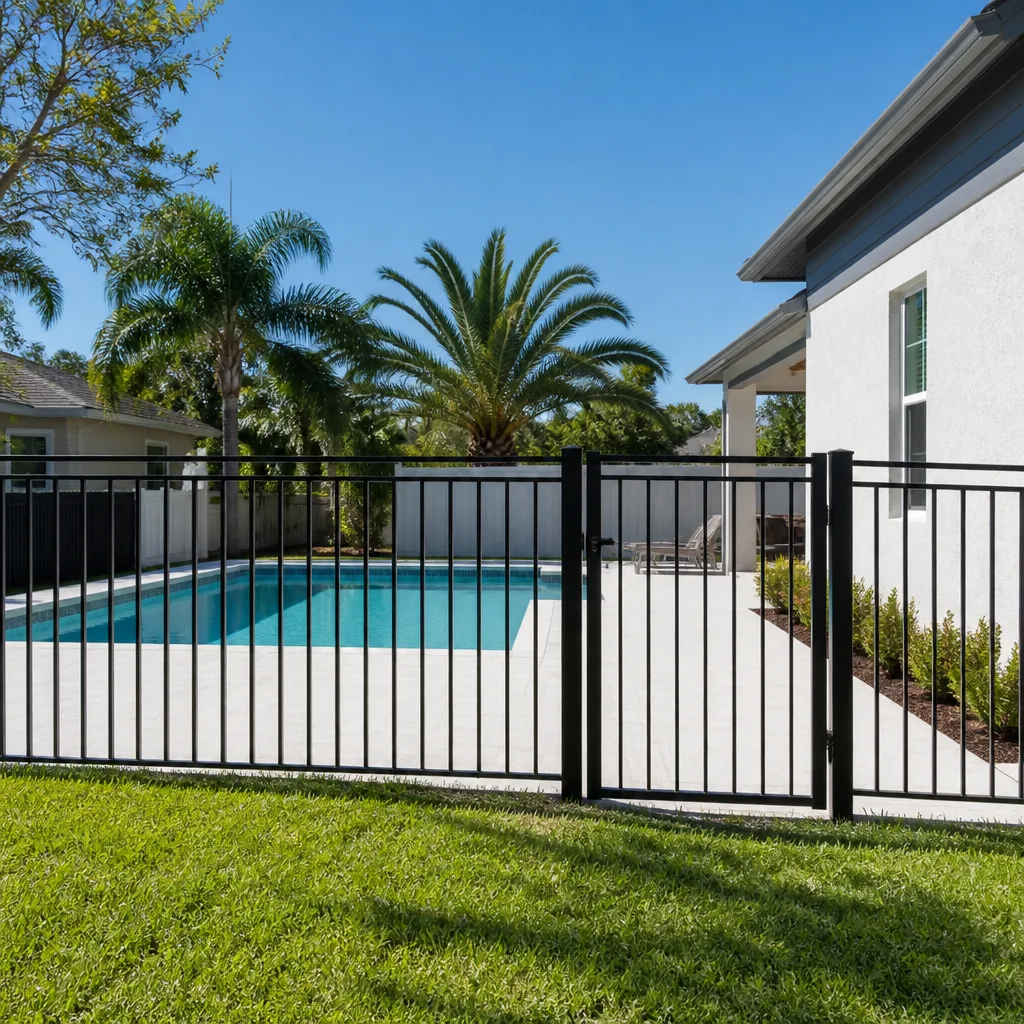
Untreated pine boards in Fort Worth fail in under five years when they’re in soil contact. We’ve pulled out fences in the Como and Northside neighborhoods where the posts were ordinary pine set directly in clay with no barrier – they were mush at the ground line and solid at the top, which is exactly what you’d expect when the moisture is coming from below.
The right specification is a pressure-treatment rating appropriate to the exposure, and for wood in ground contact, that’s UC4B at minimum – that’s the Use Category from the American Wood Protection Association, and it’s rated for ground contact and heavy moisture. UC4A is adequate for above-ground only. If the lumber yard label just says “pressure treated” without a UC rating, ask for the tag, because the rating isn’t the same across every board.
What holds up on Fort Worth lots:
- Cedar: naturally rot-resistant, handles our humidity well, and looks better unpainted than pine. More expensive per linear foot, but the lifespan math often wins.
- Pressure-treated pine rated UC4B: a solid budget option when the rating is correct and the post is set with a concrete crown.
- Composite and vinyl: dimensionally stable but check the manufacturer’s warranty against soil contact – some exclude in-ground use entirely.
- Metal posts (galvanized steel): often the smartest choice for the posts alone, paired with wood or composite panels above grade. No rot at the ground line.
Brands matter less than the UC rating and the install detail, but we spec materials from manufacturers whose warranties actually cover Texas clay exposure – CertainTeed and GAF both make products for our conditions, and we’ll name what we’re installing in the written quote. That’s not a slogan, it’s a line item.
When to Call a Pro
Most of the mistakes above are fixable by a careful homeowner with a weekend and a helper, but three situations almost always warrant a professional: any fence over 6 feet, any fence on a corner lot near a right-of-way, and any fence on a lot with a survey that shows an easement. In those cases, the planning and documentation work is more valuable than the digging. Our technicians have up to 19 years of experience, and we bring a documented photo record on every visit – so you know what was found and what was done, not just what we said about it.
Related services in Fort Worth: If you’re planning a fence along a driveway or a new patio, our Driveway & Pavers in Fort Worth team handles the hardscape side, and if the fence is part of a larger yard project, our Fence Installation in Fort Worth page covers the full scope. For a broader look at how fences tie into an addition or ADU layout, see our Home Additions & ADU in Fort Worth page, or visit our Rowan Construction Group Fort Worth home for the full list of trades.
The Bottom Line
Four of the five mistakes that cost the most on a Fort Worth fence happen in the planning phase – before anyone digs. Call 811, but don’t stop there; get a private locate. Read your survey. Specify the right hole depth and concrete mix for our clay. Confirm the current permit threshold with the city. And pick materials with the right UC rating for ground contact. Get those five things right, and you’ll spend the money on a fence that’s still standing in fifteen years, not on repairs in five.
If you’re in Fort Worth and need help, Rowan Construction Group Fort Worth offers free estimates – call (833) 570-6084. We’ll walk your line, read your survey with you, and hand you a written price before anything is dug. And if a competitor has already quoted you, bring it by – our Free Second Opinion on any written estimate is a standing offer.
Frequently Asked Questions
Yes. Texas law requires you to call 811 at least two business days before any excavation, and the service is free. But 811 only marks public utilities – it does not mark your private irrigation lines, landscape lighting, or private water lines, so a separate private locate is also smart. Call (833) 570-6084 if you want us to walk the line before digging.
A six-inch encroachment correction typically runs $1,200 to $3,500 once you account for demolition, re-staking, rebuild, and potential boundary negotiations. That’s why we always recommend re-staking the survey corners before any post goes in. Call (833) 570-6084 for a written estimate on your specific lot.
Standard high-strength concrete (around 4,000 PSI), not fast-set. The hole should be three times the post width in diameter and at least one-third of the post’s above-ground height plus 24 inches deep, with the concrete crowned to slope water away from the post. Fast-set mix plus a too-small hole is the recipe for clay heave. Call (833) 570-6084 to talk through your specific fence.
Often yes. Fort Worth typically requires a residential fence permit when the fence exceeds 6 feet in height or sits within the right-of-way, and corner lots have additional sight-line rules. Historic districts add a second review layer. Confirm the current threshold with the City of Fort Worth’s Development Services department before buying materials. Call (833) 570-6084 if you want us to handle the permit filing as part of your written project scope.
Written by the team at Rowan Construction Group Fort Worth.
Need Construction Help?
Call Rowan Construction Group Fort Worth - licensed & insured, here with fast after-hours help in Fort Worth.
(833) 570-6084