
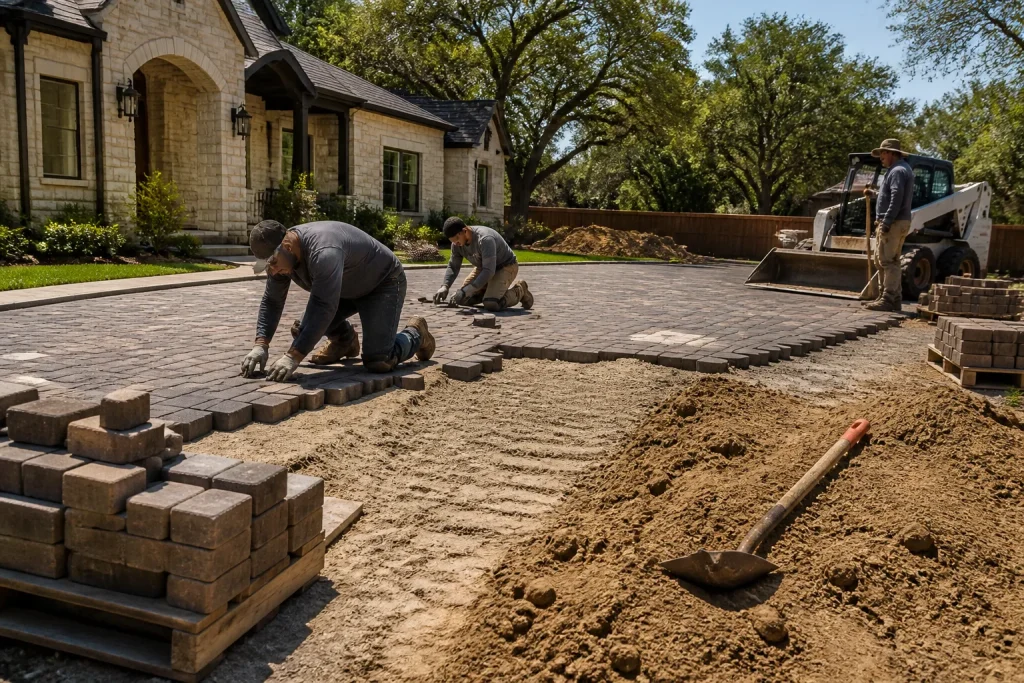
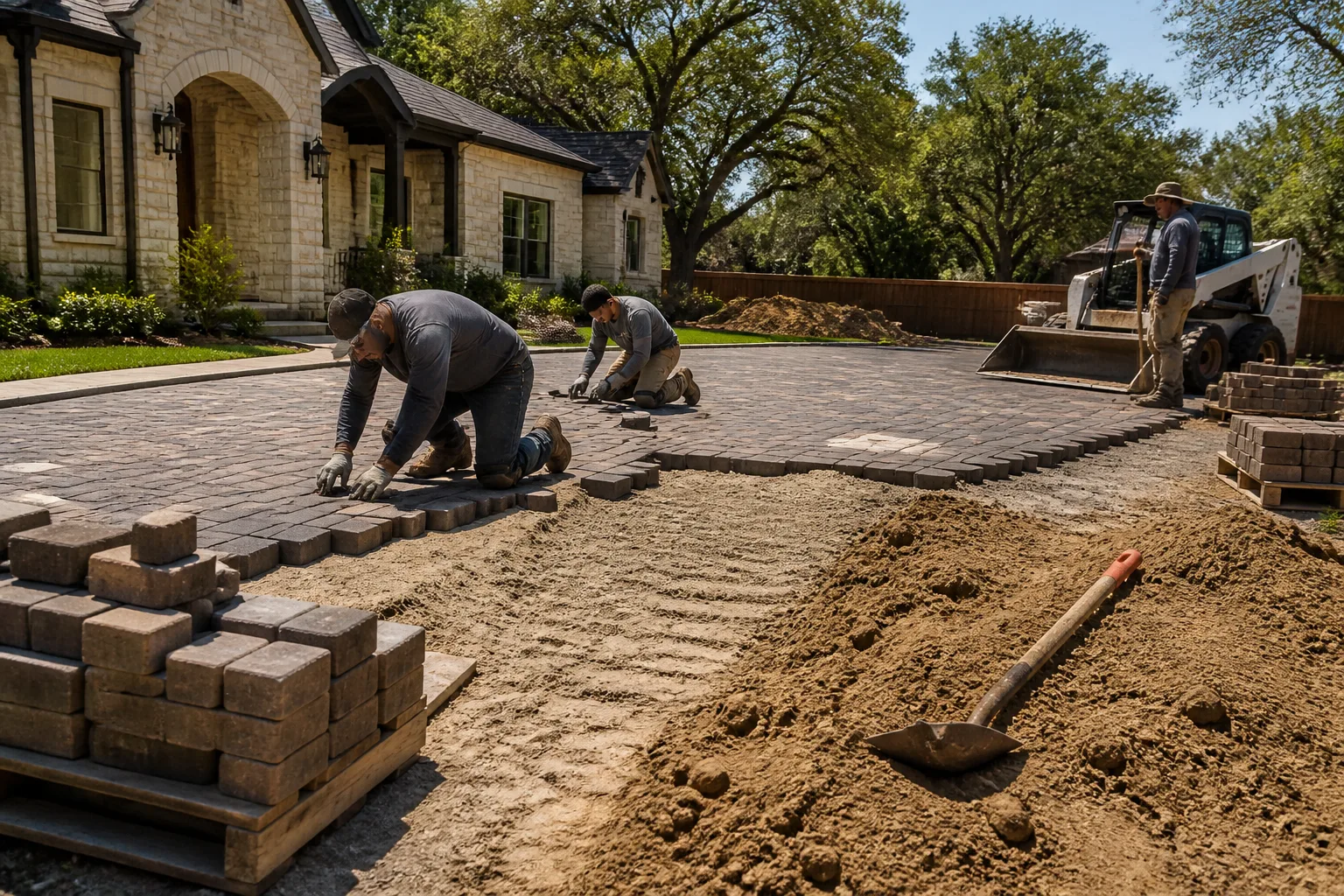
Emergency Driveway & Pavers Near Me: What Fort Worth Homeowners Should Do First
The most expensive driveway repair a Fort Worth homeowner can make is a fast one. Patching sunken pavers without diagnosing why the base moved costs the same labor twice, usually within 18 months. Most of what feels like a paver emergency in Fort Worth is a drainage or settling problem wearing a costume, and the smartest first move isn’t a phone call. It’s a five-minute inspection that tells you what you’re actually dealing with.
Key Takeaways
- Three conditions count as genuine emergencies: a trip hazard at a doorway threshold, water running toward the foundation, and a blocked drainage path.
- Cosmetic failures (wobbling pavers, loose sand joints, color fade) can be scheduled like any other project.
- A spreading sinking pattern usually points to subbase failure, not a single bad stone.
- Written scope and written price before work begins is non-negotiable, even under time pressure.
- Fort Worth summer heat makes same-day polymeric sand work risky. Ask about cure time upfront.
What Actually Counts as a Driveway Emergency in Fort Worth?
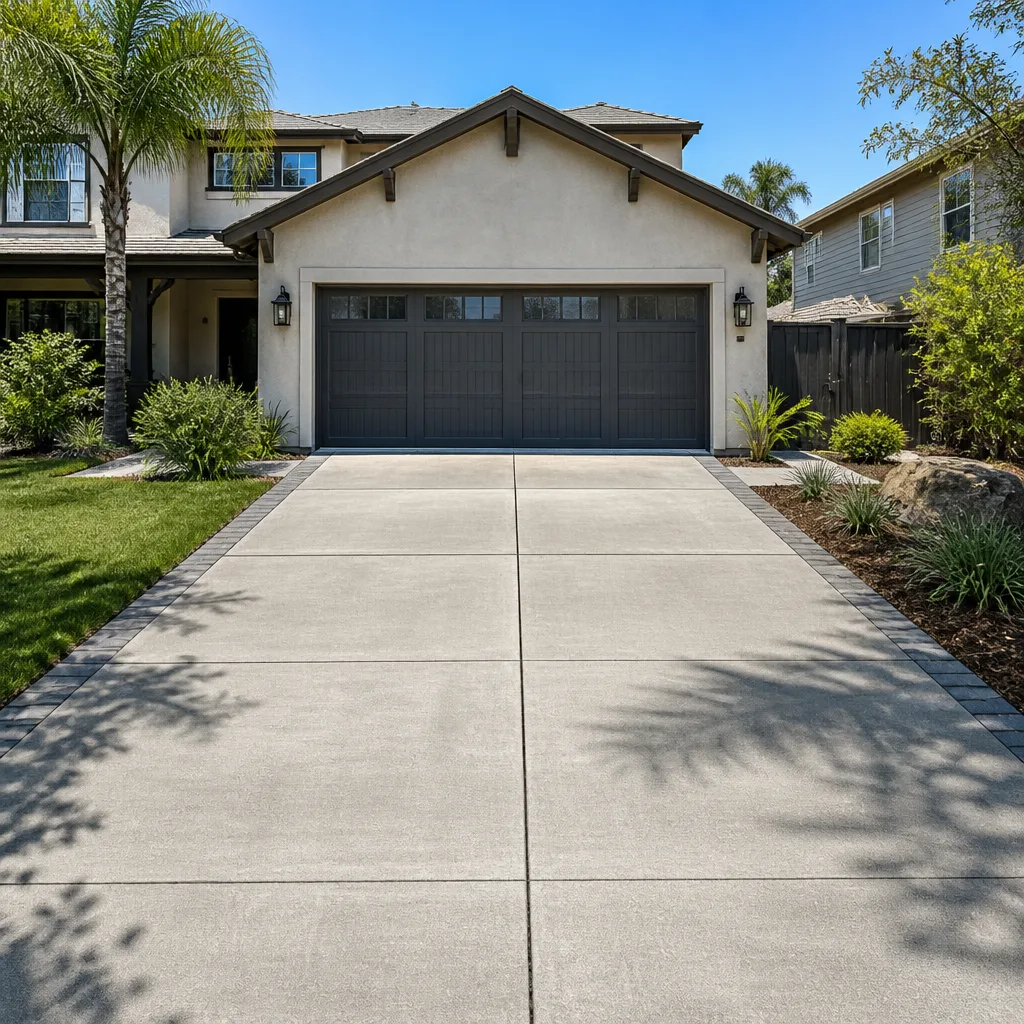
A driveway paver problem qualifies as an emergency when it creates a safety or water-damage risk right now, not when it looks bad. Three conditions meet that bar. Anything else can wait for a scheduled visit and a proper diagnosis.
- Trip hazard at a threshold. If a paver has lifted or dropped more than about a half inch where the driveway meets a garage slab, patio door, or sidewalk transition, that’s a fall risk, especially for older residents and delivery drivers. Fort Worth’s expansive clay soil heaves unevenly across seasons, so threshold lippage shows up most in late summer and after heavy spring rain.
- Water intrusion toward the foundation. If stormwater is pooling against the house or diverting toward the slab because a paver section has sunk, you have a foundation and moisture problem developing, not a pavement problem. In neighborhoods like Ridglea and Tanglewood, where lots slope gently toward the structure, this one shows up fast.
- Blocked drainage. Pavers that have heaved over a channel drain, swale, or french drain outlet can back water up and flood a garage or low spot on the property. If the drain is no longer moving water, that’s urgent.
Everything else: loose joint sand, one rocking stone, minor staining, faded color, small chips at the edges, is maintenance. It’s worth fixing, but it’s not going to damage your home while you get quotes.
The Five-Minute Self-Inspection Before You Call Anyone
Before you dial a contractor, walk the driveway and look for two things: whether the sinking is localized or spreading, and whether the cause is visible. Here’s the basic sequence we recommend.
- Mark the low spots. Drop a golf ball or a marble across the surface and see where it rolls. Note if one paver is low or if a whole cluster is dropping at the same angle.
- Check the joints. If polymeric sand is washed out around one stone, that’s a joint problem. If sand is missing from a wide pattern across several stones, water is getting under the pavement.
- Look at the edges. Push a finger against the edge restraint (the concrete or plastic border holding the pavers in place). If it’s loose, the pavers are spreading outward under load and there’s no fixing that without resetting the edge.
- Watch the water. On the next rain, or with a hose, see where water goes. If it runs toward the house, the drainage issue is the real problem.
- Photograph everything. Take wide shots and close-ups. Note the date and location on the driveway. This is the documentation you’ll hand off.
If the sinking is a single area no more than a couple square feet and the edge is tight, it’s likely a localized base issue. If a whole run of pavers is stepping down in a line and the edge is loose, you’re looking at subbase failure and it will repeat after any patch.
What Information to Have Ready When You Call
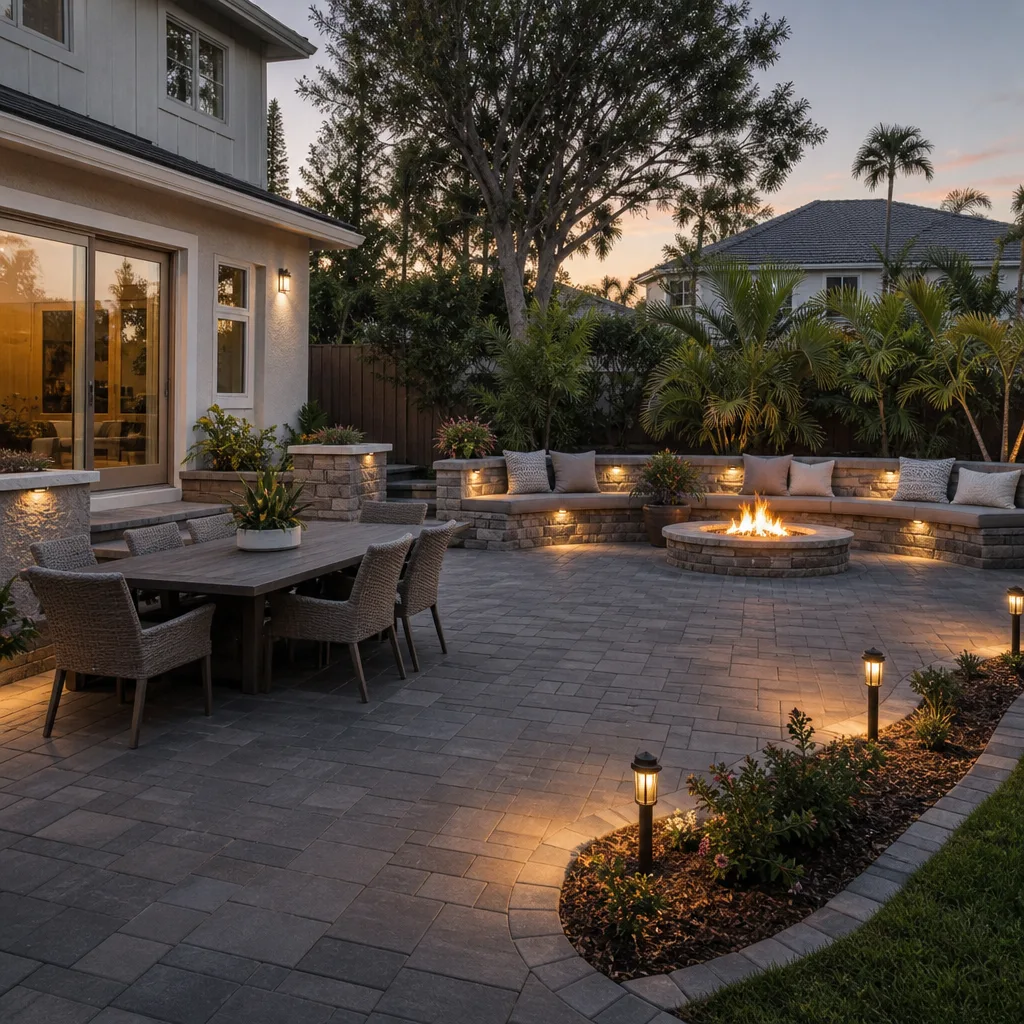
Contractors quote faster and more accurately when you’ve done this prep work. We’ve seen homeowners save a full site visit just by having the right details ready. Nothing frustrates a serious contractor more than showing up to quote a problem the homeowner can’t describe. Have these ready:
- The install date, if you know it. Pavers over 15 years old are near the end of typical polymeric sand life; newer installs may still be under a workmanship warranty.
- Any prior repairs. If a section was patched before, tell the contractor where and when. Recurring failure at the same spot is the clearest sign of a base problem.
- Whether the original contractor is reachable. Call them first if the install is recent. Belgard and Techo-Bloc pavers themselves have long lifespans, but installation warranties vary; ask the original installer before spending money on a fresh diagnosis.
- Photos and video. A short video walking the driveway with narration is faster than a phone description.
- Whether the driveway is a structural driveway or decorative. Structural pavers carry vehicles and demand a compacted base; decorative pavers at a walkway have different requirements. Tell the contractor which.
Under Clause 1 of the Haven Standard, we write the price and scope before any work starts. That applies even on a rushed job. If we don’t diagnose first, we don’t quote. Standing rule.
Why Fort Worth Heat Makes Same-Day Paver Work Risky
Fort Worth summers hit triple digits, and that changes everything about paver repair timing. Polymeric sand and jointing compounds cure by a combination of moisture and temperature. When surface temperatures push past about 90°F, those products can flash-cure at the surface while the sand beneath stays loose, and the joint fails within one rainy season.
That means the contractor making paver repairs on a 103°F August afternoon in Fort Worth has three choices: work early in the morning, work with a temporary sand-only joint and come back to finish later, or use a product rated for high-temperature application and slow the cure with shade and light misting. A legitimate contractor will tell you which one they’re doing. A fast one won’t mention it at all.
Under real heat, we’d rather schedule a paver reset at 6 a.m., set the joint in the cooler part of the day, and come back to inspect the cure before we call the job done. If a contractor promises a permanent polymeric sand fix at 2 p.m. in July, ask them how they’re protecting the cure. If they can’t answer, get another quote.
Written Scope Before Work Begins, Even in an Emergency
Here’s the part most homeowners skip when they’re stressed. Under time pressure, it’s tempting to accept a verbal promise and a handshake, but a written scope is what protects you if the fix fails. A legitimate paver contractor will put the following in writing, no exceptions:
- What was diagnosed. Not just “we’ll fix the pavers,” but “the section in front of the garage door has a settled base due to X.” Bedding sand, base compaction, edge restraint. Named.
- The written price. A flat number, not an hourly rate. If the price is “TBD,” walk.
- What’s excluded. If the contractor isn’t touching the base and only lifting and sanding the surface, that should be spelled out.
- Cure timeline. Hours before foot traffic, hours before vehicle traffic.
- A written warranty. Even if it’s short, it should be on paper with a phone number to call.
If a contractor won’t put the scope and price in writing before work starts, that’s the answer. Not the price, but the fact that there is no number to hold them to. You can also bring a written estimate from another bidder to us for a free line-by-line second opinion. We won’t pad the original bid, we’ll tell you what’s missing.
When to Call a Pro (and When Not To)
If your self-inspection turns up a genuine trip hazard, water moving toward the foundation, or a blocked drain, call a contractor now. Use the photo record you gathered, describe the pattern, and be specific about the sink location. For a spreading failure pattern, a proper diagnosis saves you the cost of patching twice. The alternative to a fast patch isn’t a long wait. It’s a proper base inspection followed by a written quote.
If the failure is cosmetic, loosen the schedule. Polymeric sand refill, a single rocking stone, and joint touch-ups don’t need a same-day call. They need a scheduled quote with a scope. That’s the difference between two professions at once: one that responds, and one that diagnoses.
Related services in Fort Worth: our Driveway & Pavers in Fort Worth page walks through how we handle base repair, edge restraint, and polymeric joint work. If the driveway problem is spilling into the yard or a fence line is also settling, we handle Fence Installation in Fort Worth with the same written-quote discipline. And if a failed driveway has you rethinking the whole front approach, Home Additions & ADU in Fort Worth covers the sitework side of that work. You can also start with our Rowan Construction Group Fort Worth home to see the seven trades we cover.
The Bottom Line
Most driveway paver “emergencies” in Fort Worth are drainage or subbase problems that need diagnosis, not a patch. The three true emergencies: threshold trip hazard, water toward the foundation, blocked drainage. The five-minute self-inspection and a photo record will save you the cost of the same repair done twice. Every quote should be written with a flat price and a written scope before any work starts. And in Fort Worth summer heat, ask how the contractor is protecting the polymeric sand cure before you sign anything.
Our technicians have up to 19 years of experience, we’re background-checked and uniformed, and a live person answers the phone 24/7 with a documented photo record included on every visit. The 365-Day Done Right Promise backs the work: if it isn’t done right, we make it right. Written price before work starts, every time. If you’re in Fort Worth and need help, Rowan Construction Group Fort Worth offers free estimates. Call (833) 570-6084 to schedule yours.
Frequently Asked Questions
Most genuine emergency repairs (trip hazard at a threshold, edge restraint reset, drain clearing) run $350 to $1,200 depending on the square footage and whether base work is involved. A full subbase repair typically runs $8 to $18 per square foot. Patching without diagnosis costs less upfront and more over time. Call (833) 570-6084 for an exact quote. Estimates are free.
No. Under Clause 1 of the Haven Standard, the price is written before anyone starts, and no change proceeds without a signed change order. That’s the reason our projects finish within a few percent of the number the customer agreed to. If a contractor won’t put a flat price in writing before work starts, walk. Call (833) 570-6084 for a free written estimate.
For paver resets that don’t change grade, drainage, or the driveway footprint, a permit usually isn’t required. For repairs that affect drainage direction or alter the footprint, the City of Fort Worth may require a permit. We confirm this during the quote so the scope matches what the city requires. Call (833) 570-6084 to get a straight answer on your specific case.
A single-area reset typically takes a day. A full base repair on a two-car driveway runs three to five days, plus 24 hours before vehicle traffic and up to a week for full polymeric sand cure in hot weather. We tell you the cure timeline in writing before we start. Call (833) 570-6084 for a written scope and timeline.
Written by the team at Rowan Construction Group Fort Worth.
Need Construction Help?
Call Rowan Construction Group Fort Worth - licensed & insured, here with fast after-hours help in Fort Worth.
(833) 570-6084