
Fence Installation: Repair or Replace? How Fort Worth Homeowners Decide
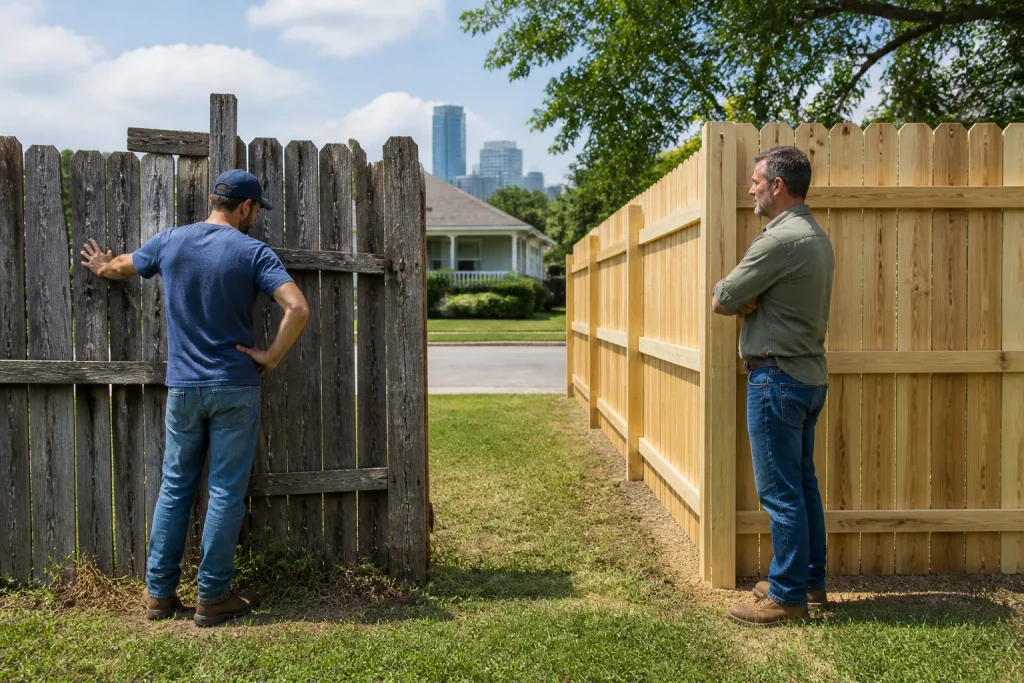
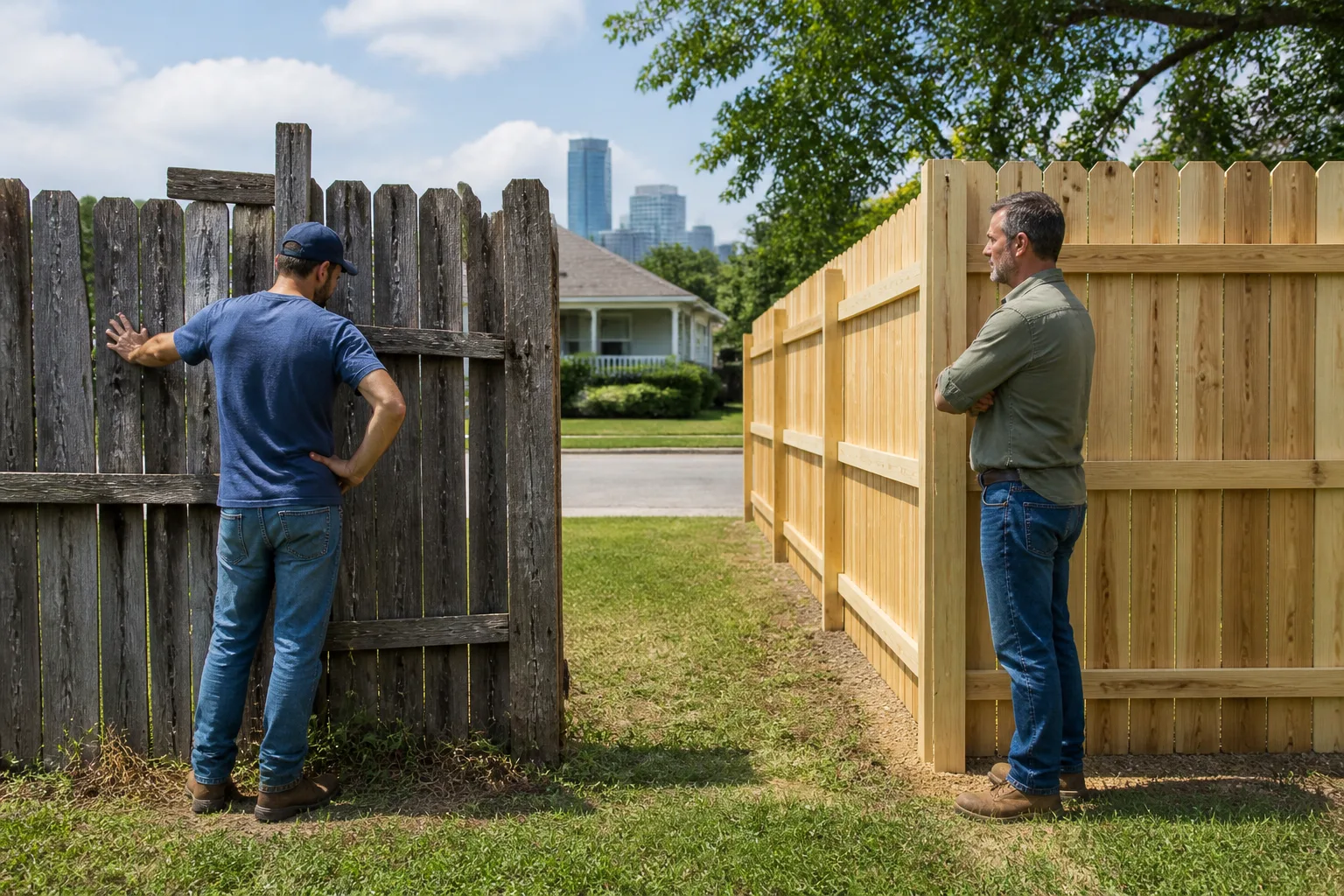
A fence post set less than 24 inches deep in Fort Worth’s expansive clay soil will heave within two to four seasons, no matter how fresh the boards look above grade. That single measurement decides most repair-or-replace calls here. If your posts are shallow and the wood at grade is soft, a board-only repair is money spent on a fence that’s already failing underneath. If the posts are deep and sound, repairing makes sense. Everything below helps you figure out which fence you actually have before you call anyone.
If you’d rather not crawl around your yard with a tape measure, call (833) 570-6084 and we’ll walk the line with you.
Key takeaways:
- Post depth and soil condition matter more than how the fence looks from the street.
- Fort Worth clay expands and contracts with every wet-dry cycle, and shallow posts pay for it.
- Once more than 30% of posts show rot at grade, full replacement usually costs less over 10 years.
- A tape measure and a screwdriver will tell you more than any contractor’s sales pitch.
Why Does Post Depth Matter More Than Curb Appeal in Fort Worth?
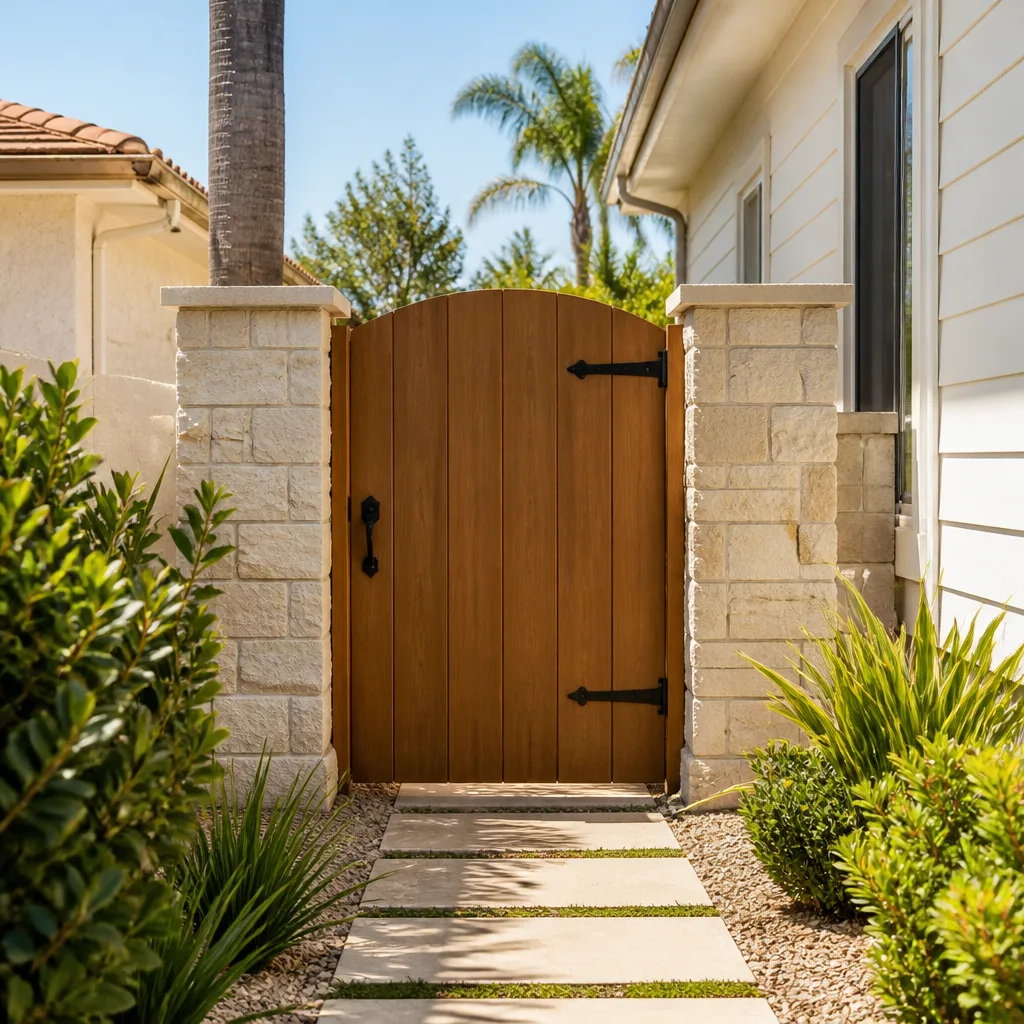
Because Fort Worth soil moves. The black and gray clay that runs through neighborhoods like Ridglea, Wedgwood, and the older blocks near TCU swells when it’s wet and shrinks when it dries, and that cycle repeats several times a year. A post buried 18 inches deep sits in the layer that does most of the moving. A post set 30 to 36 inches deep reaches stable ground and stays put.
When a shallow post heaves, the concrete collar cracks and water finds the seam. The wood wicks moisture from grade upward, and rot starts where you can’t see it. We’ve pulled posts in Fort Worth that looked fine above ground and crumbled at the six-inch mark. The boards were two years old. The structure was done.
Multiply that across a 150-linear-foot fence with 25 posts and you get the picture. Replacing boards on a line of heaving posts buys you one good season, maybe two. Then the new boards start racking and leaning because the anchors underneath never stopped moving.
What Is the Post-Depth Test, and How Do You Run It?
The post-depth test is a five-minute check with a tape measure and a flathead screwdriver that tells you whether your fence’s foundation is worth saving. You’re measuring two things: how deep the post is set and how sound the wood is at grade.
- Pick three posts spread across the run, including the worst-looking one and two that seem fine.
- Probe at grade. Push the screwdriver into the post an inch above the soil line, pressing firmly. If it sinks in more than a quarter inch or comes out with soft, stringy wood, that post is compromised.
- Check for a footer. Dig down 6 to 8 inches beside a post with a hand trowel. If you hit concrete, the post has a collar. If you hit loose soil all the way down, it doesn’t.
- Estimate depth. Measure the visible post height and compare it to the fence panel height. A 6-foot panel on a post that shows 5 feet above grade usually means about 12 to 18 inches buried. A post showing 6 feet 6 inches on the same panel suggests 2.5 feet or more below grade.
- Test for movement. Grab the post and push. Any rock at the base beyond a half inch is a failing anchor.
Do this on a dry day, at least a week after rain. Wet clay hides movement. If two or more of your three test posts fail any step, that’s your answer.
What Does Fort Worth Clay Do to Fence Posts Over 36 Months?
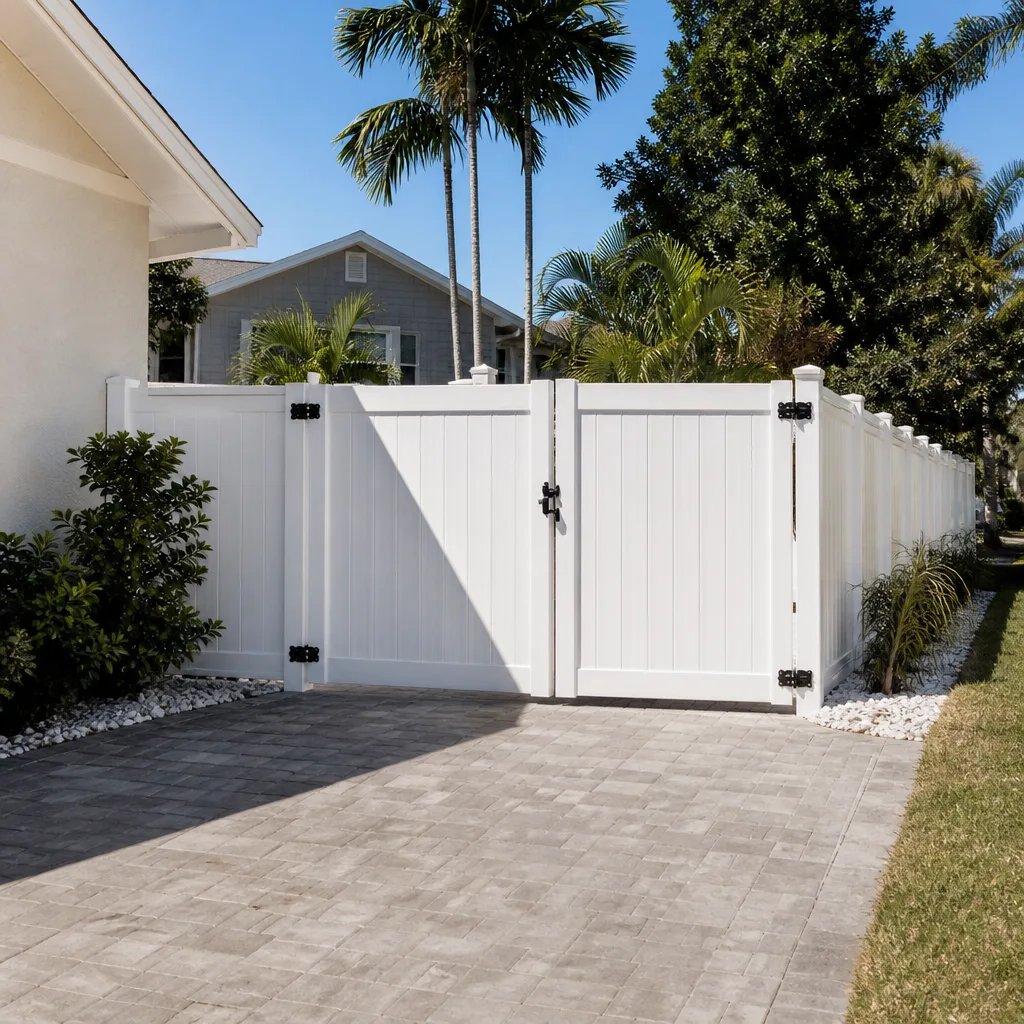
Fort Worth’s expansive clay can change volume by 3% to 6% between saturated and dry states, depending on the mix. On a post with a 10-inch concrete collar, that movement translates to roughly a quarter to half inch of vertical shift per wet-dry cycle. Three cycles a year for three years and you’re looking at two to four inches of cumulative heave on a shallow post.
What that looks like on your fence:
- Year one: Posts shift in spring after heavy rain. Boards on one or two panels start cupping or gapping at the seams.
- Year two: Leaning becomes visible. Gates drag. The concrete collar cracks, letting water straight to the wood.
- Year three: Rot at grade on posts that never dried out. Board fasteners pull loose because the wood around them has softened.
We see this pattern constantly in Fort Worth, especially in older subdivisions where fences went in decades ago under looser depth standards. Newer builds in areas like Walsh Ranch and Morningstar usually fare better because the builders are setting posts to current spec. Usually.
Repair or Replace: What Are the Real Numbers Per Linear Foot?
Here’s a plain cost comparison for a typical 6-foot cedar privacy fence in Fort Worth. Prices will vary with material choice and site conditions, but these are the ranges we quote most often.
| Scope of Work | Cost per Linear Foot | What’s Included |
|---|---|---|
| Board and picket replacement only | $9 – $14 | New boards on existing rails and posts |
| Board and rail replacement, posts kept | $16 – $23 | New boards, rails, and pickets, reusing sound posts |
| Full post-and-board replacement | $28 – $42 | New posts set to depth, new rails, new boards, cleanup |
| Full removal and reinstall | $32 – $48 | Old fence hauled off, new fence installed, gates included |
A 150-foot fence runs roughly $1,350 to $2,100 for a board-only repair, or $4,200 to $6,300 for a full replacement with proper post depth. That’s a wide gap, and it’s why the 30% rule matters.
What Is the 30% Rule for Fence Replacement?
If more than 30% of your posts show rot at grade or fail the movement test, full replacement is cheaper over a 10-year horizon than repairing in stages. That threshold is arithmetic, not a sales tactic.
Run the math on a 25-post fence. If 8 posts are compromised, that’s 32%. You can replace those 8 posts and their adjacent boards now, and spend $1,800. But the other 17 posts are the same age, sitting in the same clay, and most will fail within four years. You’ll spend another $1,200 then, plus another $1,500 after that, and you’ll live with a patched-together fence the whole time. Full replacement often comes out $500 to $1,000 cheaper over a decade, and the fence looks right the entire time.
Under 30%, patch it. Replace the failed posts and the damaged boards, and put the savings toward a gate rebuild or a new top rail. That’s a real repair, and it’s worth doing.
If you’re also planning hardscape work, our team handles Driveway & Pavers in Fort Worth and can coordinate the fence line with a new patio or walkway so the grading is right on both sides.
How Do Fort Worth HOA Rules Change the Cost Calculation?
In many Fort Worth subdivisions, the HOA has opinions about what your replacement fence can be, and those opinions cost money. Common restrictions we run into:
- Material limits. Some HOAs require cedar or a specific composite; others ban chain-link entirely on visible elevations.
- Height caps. 6 feet is common in front-facing sections; back lines sometimes allow 8 feet.
- Color and finish. Stained versus natural, and which stain colors are approved.
- Style requirements. Board-on-board versus side-by-side, dog-ear versus flat-top pickets.
A composite fence that meets HOA spec often runs 40% to 60% more per linear foot than cedar. So the repair-versus-replace math shifts: a $6,000 cedar replacement might become an $8,500 composite replacement once the HOA gets a vote. Get the restrictions in writing before you pick materials. Check the deed restrictions, not just the HOA website.
Whether you’re repairing or replacing, current Fort Worth code requires a permit for fences over 8 feet and for any fence in a floodplain or on a corner lot in the sight-triangle zone. We pull permits and pass inspection as part of the job, and the inspection record is part of the photo documentation you keep.
When Should You Call a Pro?
Call a professional if any of these apply:
- More than 30% of your posts fail the depth or movement test.
- Your fence line sits close to buried gas, water, or electrical service, and you’re not certain where those lines run.
- The replacement fence must meet HOA spec, and you’d rather not argue with the ARC (architectural review committee) yourself.
- You want a written flat price before anything moves, rather than a per-hour estimate that grows.
The last one matters more than people expect. Fence work is a diagnostic job until the posts are out of the ground. A contractor who quotes per hour has no incentive to find the good news. Our technicians have up to 19 years of experience, and every Rowan project starts with a written flat price and a written scope before anyone picks up a shovel. No work proceeds on a change until you sign a change order, and the photo record of what we found and what we did comes with the job. That’s the Haven Standard, and it’s how we’ve kept projects within a few percent of the agreed cost across 4,000-plus jobs.
Brands we trust on Fort Worth fences include CertainTeed for composite lines and Sterling for gates and hardware hardware, both of which hold up in our climate. If a competitor quotes something else, we’ll review their written estimate line by line at no charge. Our free second opinion is a standing offer.
Related services in Fort Worth: if your fence project is part of a bigger yard or home plan, take a look at Fence Installation in Fort Worth and Home Additions & ADU in Fort Worth. You can also start at our Rowan Construction Group Fort Worth home page for the full list of trades.
The Bottom Line
Whether to repair or replace a Fort Worth fence comes down to post depth and soil condition, not curb appeal. Run the post-depth test, count how many posts fail, and let the 30% rule give you the answer. Under 30%, repair. Over 30%, replace, because the remaining posts will fail soon and staged repairs cost more over a decade. Factor in HOA material rules before you commit to a price, and never skip the permit for a fence over 8 feet.
If you’re in Fort Worth and want a written flat price on either path, Rowan Construction Group Fort Worth offers free estimates – call (833) 570-6084. All crews are background-checked and uniformed, a live person answers calls around the clock, and every visit includes a documented photo record.
Frequently Asked Questions
Expect roughly $4,200 to $6,300 for a full post-and-board replacement at current Fort Worth rates, assuming cedar and standard 6-foot height. Composite or HOA-required materials can push that to $8,000 or more. Call (833) 570-6084 for an exact written quote – estimates are free.
Not without your signature. Every Rowan project is quoted as a flat written price, and no work proceeds on a change until the change order is signed. That discipline is why our projects finish within a few percent of the number the customer agreed to.
A typical 150-foot Fort Worth residential fence takes two to four working days, weather permitting. Clay soil slows excavation after heavy rain, so scheduling matters. Call (833) 570-6084 and we’ll walk through the timeline for your specific lot.
You need a permit if the fence exceeds 8 feet, sits in a floodplain, or is in the sight-triangle zone on a corner lot. We pull the permit and pass inspection as part of the job, and the inspection record goes into your photo file. Call (833) 570-6084 to confirm your property’s requirements.
Written by the team at Rowan Construction Group Fort Worth.
Need Construction Help?
Call Rowan Construction Group Fort Worth - licensed & insured, here with fast after-hours help in Fort Worth.
(833) 570-6084