
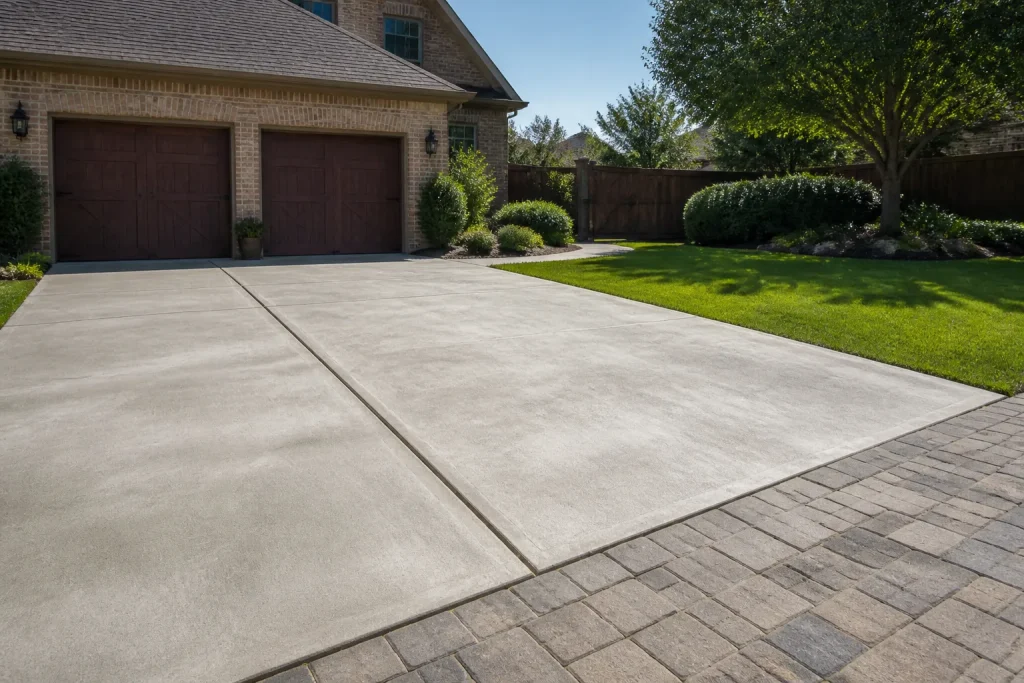
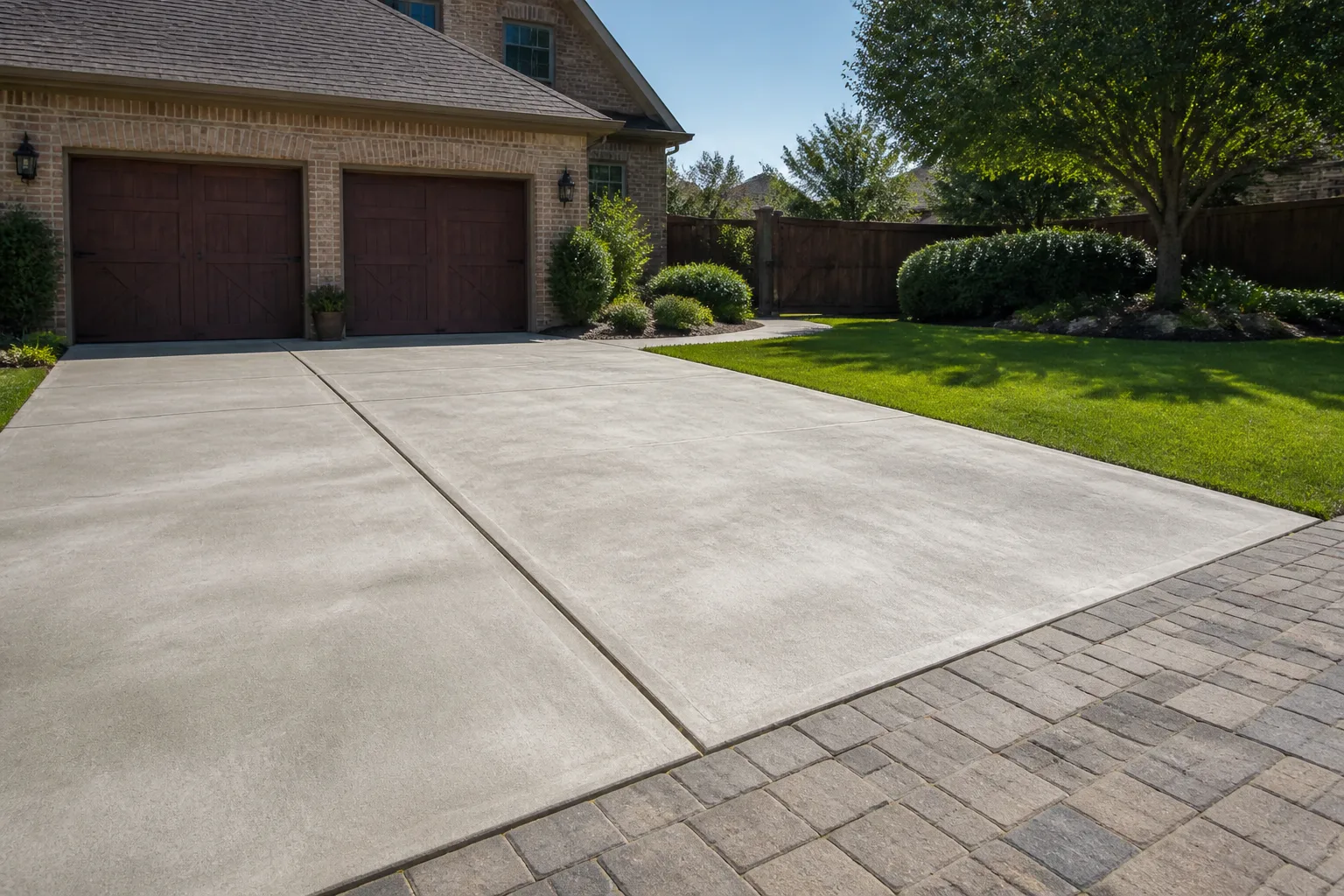
Quikrete Driveway & Pavers in Fort Worth: A Homeowner’s Guide
Quikrete’s bag instructions assume a 70°F day. Fort Worth runs above 95°F for roughly 90 days a year, which shortens working time, speeds water loss, and changes the entire order of operations on a paver or concrete job. The product on the shelf at every Fort Worth home center is fine. The instructions printed on it were written for a climate Fort Worth doesn’t have. Here’s what professionals do differently with the same bags, and where the line falls between a weekend project and a call to a pro.
If you’d rather not spend three weekends learning this the hard way in August, call (833) 570-6084 for a free estimate.
Which Quikrete Products Actually Belong Under a Fort Worth Driveway?
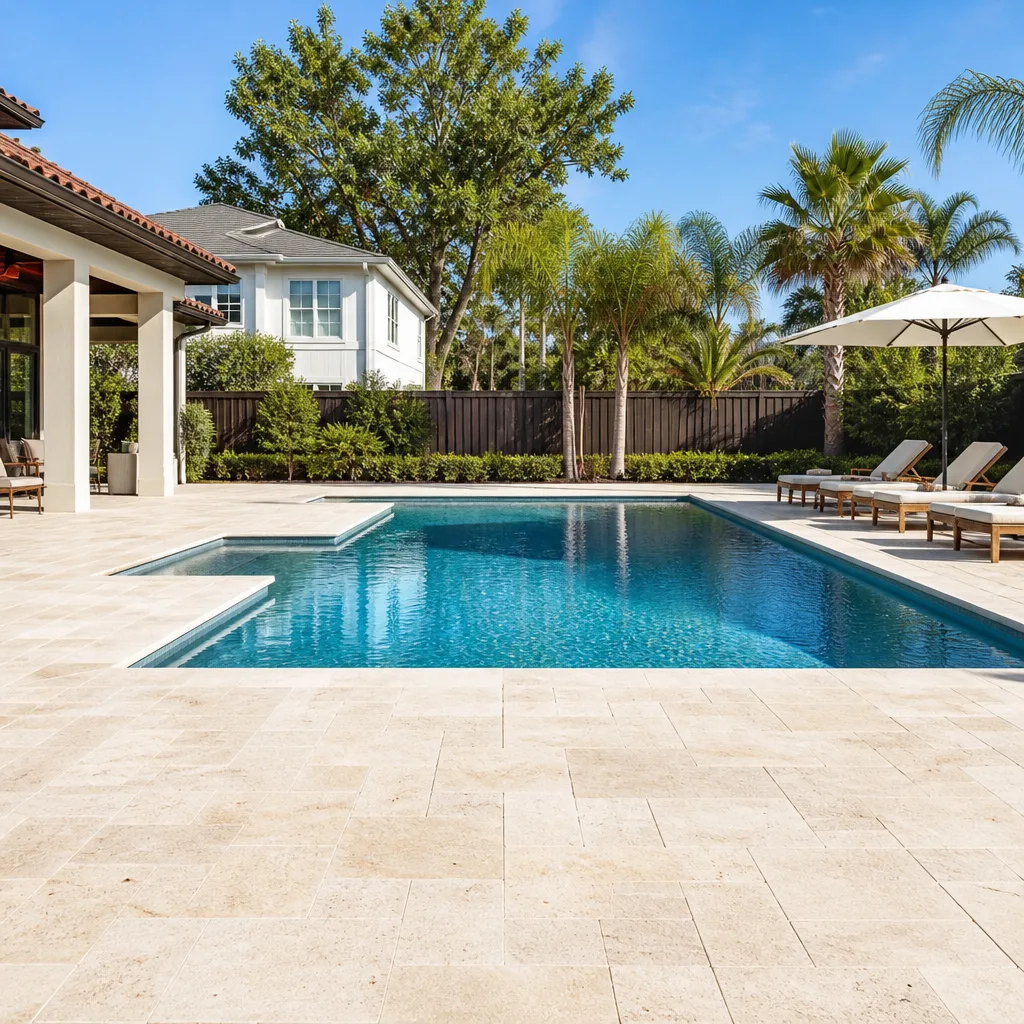
Quikrete sells a wide catalog, and not all of it holds up on a Fort Worth driveway. The distinction matters because the bags are shelved side by side, and the marketing language on each one reads more broadly than its engineering supports.
- Paver Base and sand products are the right fit for bedding and jointing under a modular paver driveway. These are graded and washed, and they behave predictably when the base beneath them is correct.
- Concrete mix (the standard 80-lb bags) is fine for small pours and repairs, not for a full driveway slab over Fort Worth’s clay. A driveway slab needs reinforcement, control joints, and a mix design that accounts for soil movement. Bagged mix does not get you there.
- Polymeric jointing sand is the product most Fort Worth homeowners underrate. It resists washout, which matters every spring when the rain comes in bursts rather than soaking in.
- Rapid-set and anchoring products are formulated for cooler working conditions. In Fort Worth summer heat, they can go off before you’ve finished placing them.
The common mistake we see: a homeowner buys standard Quikrete concrete mix to lay a paver border and assumes it’s the same as the base material. They’re different products performing different functions, and mixing up the two is the fastest way to a driveway that rocks loose within a season.
How Does Fort Worth Heat Change Quikrete’s Mix Ratio and Cure Window?
Heat accelerates the chemical reaction in cement-based products and drives off the water that reaction needs. In practice, that means the water-to-mix ratio printed on the bag is a starting point, not a fixed rule, and the working time collapses as the ambient temperature climbs.
The thresholds that matter, based on what we see on Fort Worth jobs:
- Below 80°F: Quikrete’s standard working time applies. You have roughly the window the bag promises.
- 80 – 90°F: Lose about a third of your working time. Mix in smaller batches and don’t mix more than you can place before it stiffens.
- Above 90°F: Working time drops to near half or less. Water evaporates from the surface faster than the mix can cure, which causes plastic shrinkage cracks. Successful Fort Worth summer pours happen early morning, before the slab or paver bed has time to heat up.
- Above 95°F with direct sun: Many professionals won’t pour a structural concrete mix at all without shade, ice water, or a retarder. The risk of a failed cure is too high.
Where the professional difference lives: controlling the mix water temperature, pre-wetting the subbase so it doesn’t steal moisture from the concrete, and covering fresh work so the Fort Worth sun doesn’t dry the surface before it’s set.
What Does Subbase Prep Look Like on Fort Worth’s Expansive Clay?
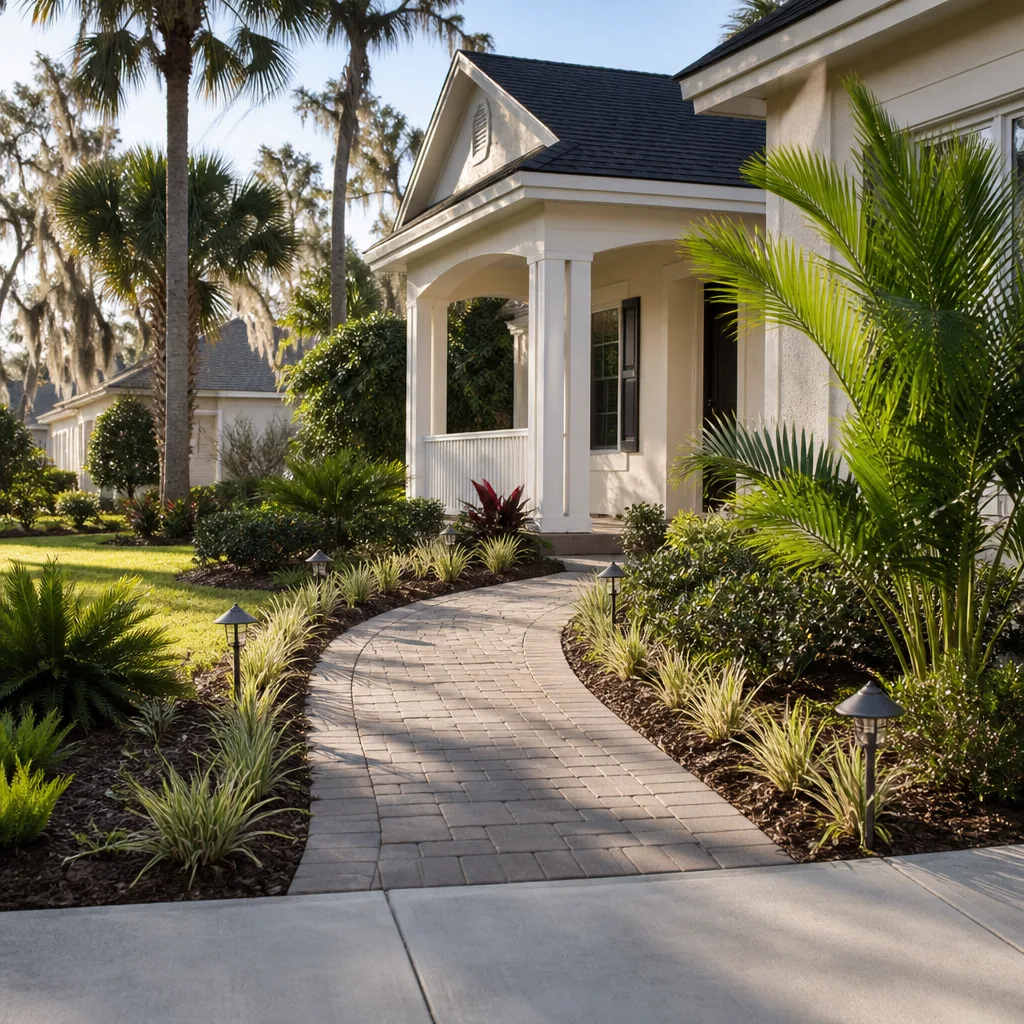
Quikrete’s bag instructions tell you how to mix and place the product. They don’t tell you how to build the base underneath it. On Fort Worth’s clay soils, the base is where driveways succeed or fail.
Fort Worth sits on expansive clay that swells when wet and shrinks when dry, and the swing between seasons is significant. A paver driveway built on clay without proper subbase prep will shift, heave, and separate at the joints within a couple of seasons. The prep work that professionals do, and that bag instructions underspecify:
- Excavate to depth. A paver driveway needs a base of 6 to 8 inches of compacted aggregate beneath the bedding sand, more where the drive will see heavy loads.
- Grade for drainage. Fort Worth rain comes in bursts. The finished surface needs to shed water away from the house and off the drive.
- Compact in lifts. Aggregate gets placed and compacted in 2- to 3-inch layers with a plate compactor, not dumped and graded once. Each lift is compacted before the next goes down.
- Edge restraint. Paver edges are held by a restraint system anchored into the base. Skip this and the driveway spreads.
We’ve seen homeowners lay pavers directly over existing clay after a light grading and a bag of sand. It looks right for a season. After a Fort Worth winter and a wet spring, the joints open and the pavers rock.
Where Quikrete Fits in a Professional Paver Installation
Quikrete has a real place on a professionally installed paver driveway, just not the place many homeowners assume. The products perform best as support materials, not structural shortcuts.
- Bedding sand under the pavers: Quikrete’s graded sand is the correct product, layered at about 1 inch over the compacted base.
- Polymeric joint sand in the paver joints: this is where Quikrete earns its money on a Fort Worth driveway. It resists erosion and reduces weed growth between pavers.
- Repair mortar for localized repairs: spalling edges, a reset paver, a patched corner.
Where it’s being misapplied: as a substitute for a proper concrete slab, as a filler for deep base layers, and as a shortcut for patching settled areas without fixing the base. Each of those applications trades a small price saving now for a redo within a few years. The savings from skipping the base prep and pouring bagged mix over ungraded clay are real, but so is the failure that follows.
Because a driveway is the largest visible hardscape on most Fort Worth properties, the material brand matters less than the base prep and the installation sequence. When we quote a driveway, we name the material brand in the written scope, but the scope leads with subbase depth, compaction, and restraint. That’s where the price honest numbers come from. For the fuller picture of how a driveway gets specified from the base up, see our Driveway & Pavers in Fort Worth service page.
What Can You Realistically DIY With Quikrete on a Fort Worth Driveway?
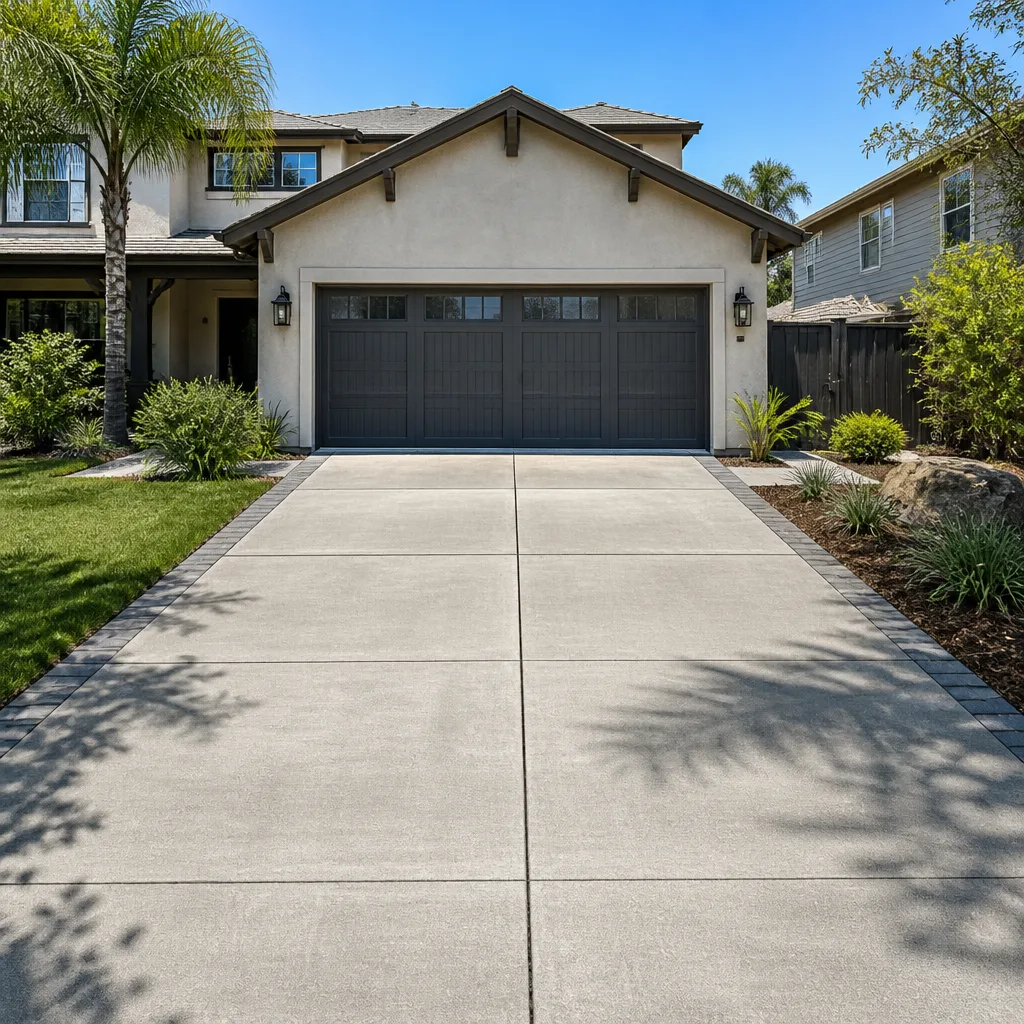
Some Quikrete work is well within reach of a Fort Worth homeowner with a free weekend. Some is not, and the line is clearer than most home center aisle displays suggest.
Reasonable DIY projects:
- Re-sanding joints on an existing paver driveway with polymeric sand (do it in the morning on a cooler day).
- Spot repairs to a single settled or cracked paver.
- A small patio, walkway, or garden border where the base is easily excavated and loads are light.
Where DIY costs more than it saves:
- A full driveway from excavation to finish. The plate compactor, the edge restraint, the depth calibration, and the timing against Fort Worth heat are all beyond a first-time job.
- Any pour over an expansive clay subbase without engineering a base.
- Anything more than a very small batch of standard concrete mix in summer heat. The bag working time doesn’t account for Fort Worth’s temperatures, and a mix that goes off mid-placement is a total loss.
When to Call a Pro
Draw the line before you buy materials, not after. If your project requires excavation, a compacted aggregate base, edge restraint, or a full-load driveway surface, the money you save on bags gets spent on the redo. The same is true on adjacent projects: a fence line sharing a driveway edge, or a paver walkway leading to an addition, where poor base prep undermines the larger structure. Our Fence Installation in Fort Worth and Home Additions & ADU in Fort Worth teams see this constantly on Fort Worth properties. The Rowan Construction Group Fort Worth home page lays out the seven trades we work in if you want to see where driveways fit with the rest.
Our technicians have up to 19 years of experience, and we’ve watched enough Fort Worth redo jobs to know where the DIY line sits. A free second opinion on any written estimate is available if you’ve got a competitor’s quote in hand and want it reviewed line by line. We’ll also tell you honestly when a project is within your reach and the materials are the only thing you need to buy.
The Bottom Line
Quikrete products are not the problem on a Fort Worth driveway. Climate, subbase prep, and installation sequence are. Standard concrete mix and rapid-set products struggle in Fort Worth heat. Polymeric joint sand and graded bedding sand belong on any paver drive and perform reliably when the base beneath them is compacted and properly restrained. The bag instructions tell you how to mix; the site tells you how to build. Those are two different jobs.
Every driveway quote we write is a flat written price with a written scope and warranty before any work begins. No work proceeds on a change without a signed change order, and if something isn’t done right, the 365-Day Done Right Promise covers it. If you’re in Fort Worth and need help, Rowan Construction Group Fort Worth offers free estimates. Call (833) 570-6084.
Frequently Asked Questions
A properly built paver driveway in Fort Worth typically lands in the range of $12 to $22 per square foot installed, depending on paver type, base depth, and drainage requirements. The subbase is a substantial share of that number because it’s what makes the job last. Call (833) 570-6084 for an exact quote on your driveway – estimates are free and the price is written before any work starts.
No. Standard Quikrete concrete mix in 80-lb bags is designed for small pours and repairs, not for a full driveway slab over Fort Worth’s expansive clay. A driveway slab needs reinforcement, control joints, engineered subbase prep, and a mix design that accounts for soil movement. Bagged mix does not provide any of that. Ground stakes and sand hold up better than a thin bagged-mix pour, and a properly built paver driveway holds up better still.
The bag’s cure time assumes about 70°F ambient temperature. Fort Worth runs above 95°F for roughly 90 days a year, which reduces working time, speeds surface drying, and can cause plastic shrinkage cracks in a pour. The solution is to work in early morning, pre-wet the subbase, mix in smaller batches, and cover fresh work. Many professionals won’t place structural concrete above 95°F in direct sun without a retarder or shade.
The base. Quikrete’s bag instructions cover mixing and placing but say little about excavation depth, aggregate compaction in lifts, edge restraint, and drainage grading. Those are the steps that determine whether a Fort Worth paver driveway holds through clay movement and seasonal rain. A DIY job that skips them can look correct for a season and fail within two. Call (833) 570-6084 for a written quote if you’d like to compare the numbers before deciding.
Written by the team at Rowan Construction Group Fort Worth.
Need Construction Help?
Call Rowan Construction Group Fort Worth - licensed & insured, here with fast after-hours help in Fort Worth.
(833) 570-6084