Last updated November 18, 2026


Free written scope consultation - allowances, timeline, and change-order rules on paper before a single trade is scheduled
Bathroom Remodeling Troubleshooting: Common Problems and How to Fix Them
Grout cracking at the floor-to-wall transition within 12 months of a bathroom remodel isn’t a grout product failure. It’s movement between two substrates that weren’t allowed to cure independently before tile was set. Re-grouting that joint without addressing the substrate adds $400 – $600 to a problem that will come back within another year. We’ve opened up enough failed bathrooms in Fort Worth to know that almost every failure traces back to one of three skipped steps: waterproofing membrane continuity, exhaust fan undersizing, or tile set over an uncured substrate. This guide maps the symptom you’re seeing to the root cause behind it, with repair cost ranges so you know what you’re walking into before you call anyone.
Quick Answer
Most bathroom remodel failures fall into three categories: water intrusion from a broken waterproofing layer (soft substrate behind tile, efflorescence at grout joints), moisture buildup from an undersized exhaust fan (peeling paint at the ceiling line, foggy mirrors that stay foggy), or movement-related cracking from tile installed before the substrate cured. Diagnosis starts with the symptom, not the repair. A hollow-sounding tile and a soft-backed tile look similar but require completely different repair scopes and budgets.
Styles & brands we work with
- Kitchen remodeling
- Bathroom remodeling
- Home additions & ADU
- Roofing
- Windows & doors
- Driveway & pavers
- Fence
Table of Contents
- Tile Failure: Waterproofing or Installation Error?
- Is Your Exhaust Fan Actually Sized for the Bathroom?
- Toilet Rocking and Wax Ring Failure
- Shower Valve Temperature Instability
- Water Staining Below a Second-Floor Bathroom
- Grout Cracking at Transitions and Corners
- Fixing Problems During a Renovation: What Order to Address Them
Tile Failure: Waterproofing or Installation Error?
Not all tile failures are the same, and the diagnosis matters because waterproofing failures are a gut-renovation problem while installation failures are often a spot repair. We use two tests to tell them apart before we ever pick up a hammer.
The tap test. Tap the face of the tile with the handle of a screwdriver or a coin. A tile with full-bed adhesive coverage sounds solid and dense across its whole surface. A tile with spot-bed adhesive – adhesive applied only at the corners or center – sounds hollow in the unsupported areas. If hollow spots are clustered, the original installer used the wrong adhesive method. That’s an installation error.
The efflorescence check. White, chalky powder at the grout joints is efflorescence – mineral salts pushed to the surface by water moving through the substrate. It means water is getting behind the tile and has nowhere to drain. That’s a waterproofing failure, and it’s usually more serious than a hollow tile.
Here’s the distinction in practice:
- Hollow tap sound, no efflorescence, no soft substrate: installation error. Re-setting the affected tiles with proper full-bed coverage typically runs $300 – $700 for a small area.
- Efflorescence, soft or crumbly backing board, grout that crumbles when scraped: waterproofing failure. The tile, backer board, and membrane all come out. Full shower rebuild usually runs $4,500 – $9,000 depending on size and finish level.
- Both symptoms present: the waterproofing failed and the installer also spot-bedded. Treat it as a full rebuild.
Fort Worth’s expansive clay soils move seasonally, and slab-on-grade bathrooms in neighborhoods like Ridglea and Wedgwood are especially prone to hairline cracks that propagate into the tile assembly. That doesn’t excuse a poor waterproofing job, but it does mean a crack isolation membrane over the substrate is worth specifying on any Fort Worth bathroom remodel.
Is Your Exhaust Fan Actually Sized for the Bathroom?
An undersized exhaust fan is one of the most common – and most ignored – problems in Fort Worth bathrooms. The building code requires a fan sized to the room’s cubic footage, and most builder-grade fans fail that test. Here’s how to check yours without buying equipment.
The tissue paper test. Turn on the fan and hold a single square of toilet paper against the grille. A properly sized and clean fan holds the paper firmly for several seconds. A weak fan lets it flutter or drop immediately. This test won’t tell you the exact cubic feet per minute (CFM) the fan moves, but it separates “obviously undersized or blocked” from “probably adequate.”
The CFM calculation. Measure the bathroom’s length, width, and ceiling height in feet, then multiply them to get cubic feet. The fan should move at least 1 CFM per square foot of floor area, and more if the ceiling is above 8 feet. A 5′ × 8′ bathroom with an 8-foot ceiling is 320 cubic feet, so you need a fan rated at 80 CFM minimum – most builders install 50 CFM units because they’re cheaper and they pass inspection on a technicality.
What undersizing looks like on the walls:
- Paint peeling or blistering along the ceiling line near the shower
- Mirror condensation that persists more than 15 minutes after a shower
- Musty odor that returns within a day of cleaning
- Dark staining on the ceiling paint or at the drywall corners
- Mold colonization at the caulk line where wall meets tub or shower pan
A replacement fan sized correctly for the room, with a proper duct run to the exterior, runs $350 – $800 installed in a Fort Worth bathroom. That’s cheap compared to the drywall and paint repairs an undersized fan causes over five years.
Toilet Rocking and Wax Ring Failure
A toilet that rocks when you sit on it isn’t a comfort issue – it’s a wax ring failure waiting to happen, and in Fort Worth the repair cost depends entirely on which of two causes you’re dealing with.
Cause 1: The flange sits below the finished floor. When a tile floor is installed over an existing subfloor without accounting for the toilet flange height, the flange ends up recessed. The toilet rocks because the base doesn’t sit flat, and the wax ring compresses unevenly until it fails. Repair is typically a flange extension or a thicker wax ring – usually $200 – $350.
Cause 2: The flange itself is broken. Cast iron flanges in older Fort Worth homes crack, and PVC flanges can break if a previous toilet was set with too much force. A broken flange requires cutting out the old flange and installing a repair ring or replacing the section of drain pipe. That runs $400 – $600 and involves opening the ceiling below or the floor around the toilet.
How to tell which one you have before you call: lift the toilet’s decorative caps and check whether the bolts are tight. If the toilet still rocks with the bolts snug, the flange is likely recessed or broken. If the bolts spin freely, the flange is broken. Either way, a rocking toilet should be fixed before the wax ring fails and water damages the ceiling below – which it will, and that ceiling damage is a separate repair.
Shower Valve Temperature Instability
Shower temperature swings in Fort Worth are frequently blamed on the water heater, but the more common culprit is a non-pressure-balancing valve reacting to municipal supply pressure fluctuations. Fort Worth’s water system pressure can vary noticeably across neighborhoods and times of day, and an older two-handle or single-handle valve without pressure balancing amplifies those swings into a scald risk.
Two valve types solve this, at different price points:
- Pressure-balancing valve: senses pressure changes on the hot and cold lines and adjusts the mix to hold temperature steady. Most major brands – Kohler, Moen, Delta, Toto – make them. Installed cost typically $700 – $1,200 depending on access and whether the wall has to be opened.
- Thermostatic valve: actively maintains a set temperature, which is better in homes with tankless water heaters or multiple simultaneous draws. Installed cost typically $1,200 – $2,200.
If the temperature problem only happens when another fixture runs – someone flushes a toilet or starts the washing machine – the valve is the issue. If it happens even with nothing else running, check the water heater’s dip tube and mixing valve first. Either way, a valve that scalds is a safety problem and worth a professional diagnosis before someone gets hurt.
Water Staining Below a Second-Floor Bathroom
A stain on the ceiling below a second-floor bathroom can come from three sources, and each one requires a different trade to fix. Getting the diagnosis right saves you from paying the wrong contractor to open the wrong wall.
Here’s the diagnostic sequence we run in Fort Worth bathrooms:
- Isolate the supply. Turn off every fixture in the bathroom for 12 hours and check whether the stain grows. If it does, a supply line – often a toilet or sink shutoff valve – is leaking. A plumber fixes this.
- Run the shower for 10 minutes and check. If the stain appears or grows, the source is the shower drain connection or the shower pan itself. Fill the shower base with an inch of water and let it sit for an hour – if the stain grows, the pan membrane has failed and the tile has to come out.
- Flush the toilet and check. If the stain appears after flushing, the wax ring is the likely source, and the diagnosis follows the section above.
- Check after a heavy rain. If the stain appears only during storms, the source is exterior – a roof or flashing leak, not the bathroom plumbing at all. That’s a roofing contractor call, not a bathroom contractor call.
In Fort Worth, we’ve seen ceiling stains that turned out to be three different problems at once – a slow supply weep, a failing pan membrane, and a hairline roof flashing gap above the same bathroom. Each one needs its own fix, and the diagnostic order above keeps you from tearing out tile for a leak that lives in the attic.
Grout Cracking at Transitions and Corners
Grout cracking at the floor-to-wall transition, at the inside corners of a shower, and at the tub-to-tile junction is not a grout product failure. It’s movement between two substrates. The floor moves slightly relative to the wall, and rigid grout can’t accommodate that movement. Re-grouting with the same rigid material will fail again within a year – which is why we recommend a flexible sealant at every change-of-plane joint instead of grout.
The good news: this is one of the least expensive bathroom fixes on the list. Raking out the old grout and installing a color-matched silicone sealant at all change-of-plane joints typically runs $400 – $600 for a standard tub or shower surround.
The bad news: if the cracks are in the field of the tile (not at a corner), you’re looking at a different problem. Field cracking means the substrate is moving – either the backer board wasn’t properly fastened, the joist structure deflects too much, or the tile was set over a floor that hadn’t cured fully. That kind of movement needs a substrate repair, not a sealant, and the diagnosis should come from someone who can check the joist deflection before recommending a fix.
Fixing Problems During a Renovation: What Order to Address Them
If you’re remodeling a Fort Worth bathroom and want to fix underlying problems while the walls are open, the order matters. Fixing the wrong thing first just means tearing it open again later.
- Address structural and substrate problems first. Fix joist deflection, floor elevation issues, and any rot or water damage before a single tile goes down.
- Upgrade the exhaust fan and its duct run. Do this while the ceiling is open. A correctly sized fan ducted to the exterior – not into the attic – is the single most effective mold-prevention step in a Fort Worth bathroom.
- Replace the shower valve and toilet flange. Both need wall or floor access, so do them before the finishes go in.
- Install the waterproofing membrane correctly. Continuity at corners, penetrations, and the curb is the difference between a shower that lasts and a shower that fails in 18 months. This is not the place to save money.
- Set tile only after the substrate has fully cured. Backer board and thinset have a cure window – 24 to 72 hours depending on the product. Rushing this step is how grout cracks at corners start.
- Use flexible sealant at all change-of-plane joints. Grout at corners is a guaranteed callback.
- Test everything before closing out. Run the shower, flush the toilet, run the fan and the tissue test, and check for ceiling stains below. The test should happen before the final payment, not after.
If you’re planning a broader renovation around these fixes, our Rowan Construction Group Fort Worth home page covers how we structure a written scope and price before any work starts, and our Home Additions & ADU in Fort Worth service handles the cases where bathroom problems trace back to structural work outside the bathroom itself.
Common Mistakes to Avoid
- Re-grouting corners instead of using sealant. Grout is rigid; corners move. Every callback we’ve seen on a crack at the floor-to-wall transition traces to this shortcut, and the fix recurs within a year.
- Installing tile over a substrate that hasn’t cured. Backer board and thinset need their full cure window before tile goes down. In Fort Worth’s humid summers, that window is at the long end of the range, not the short end.
- Buying a 50 CFM fan because it’s $20 cheaper. The fan will be undersized for any bathroom over 50 square feet, and the paint peeling and mold that follow cost far more than the fan.
- Skipping the wax ring check on a rocking toilet. A rocking toilet with a failing wax ring damages the ceiling below within months. Fix the flange before the wax ring fails, not after.
- Blaming the water heater for temperature swings. A non-pressure-balancing valve is the more common culprit, and a $700 – $1,200 valve replacement is cheaper than a new water heater that doesn’t solve the problem.
- Installing a shower pan without a pre-slope. Fort Worth code requires the pan to drain fully toward the weep holes. A pan without a pre-slope holds water against the membrane and fails early.
- Ducting the exhaust fan into the attic. We see this in Fort Worth homes regularly. It moves moisture from the bathroom into the attic, where it causes a much more expensive problem in the roof deck.
For related exterior work that often accompanies a bathroom remodel – if a venting or drainage problem is affecting the exterior – see our Driveway & Pavers in Fort Worth and Fence Installation in Fort Worth pages.
See the difference
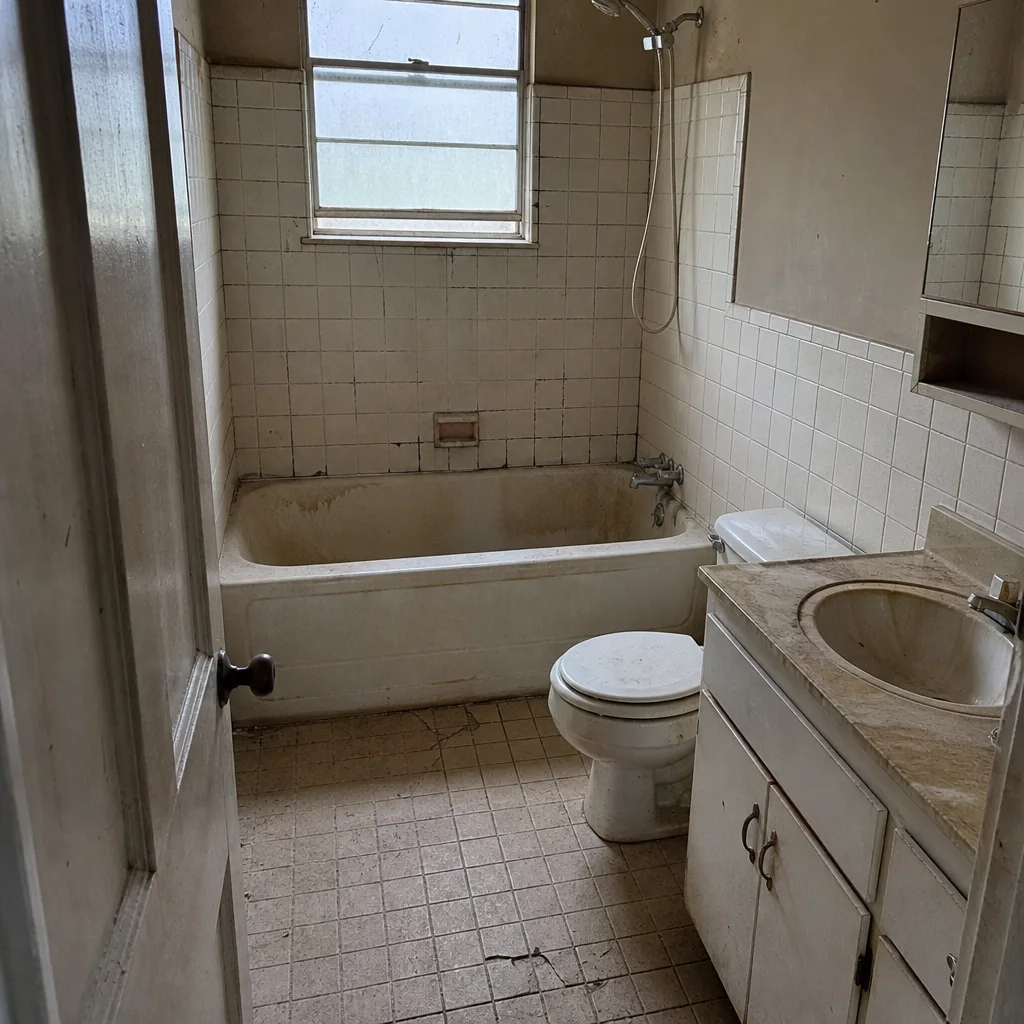 Before
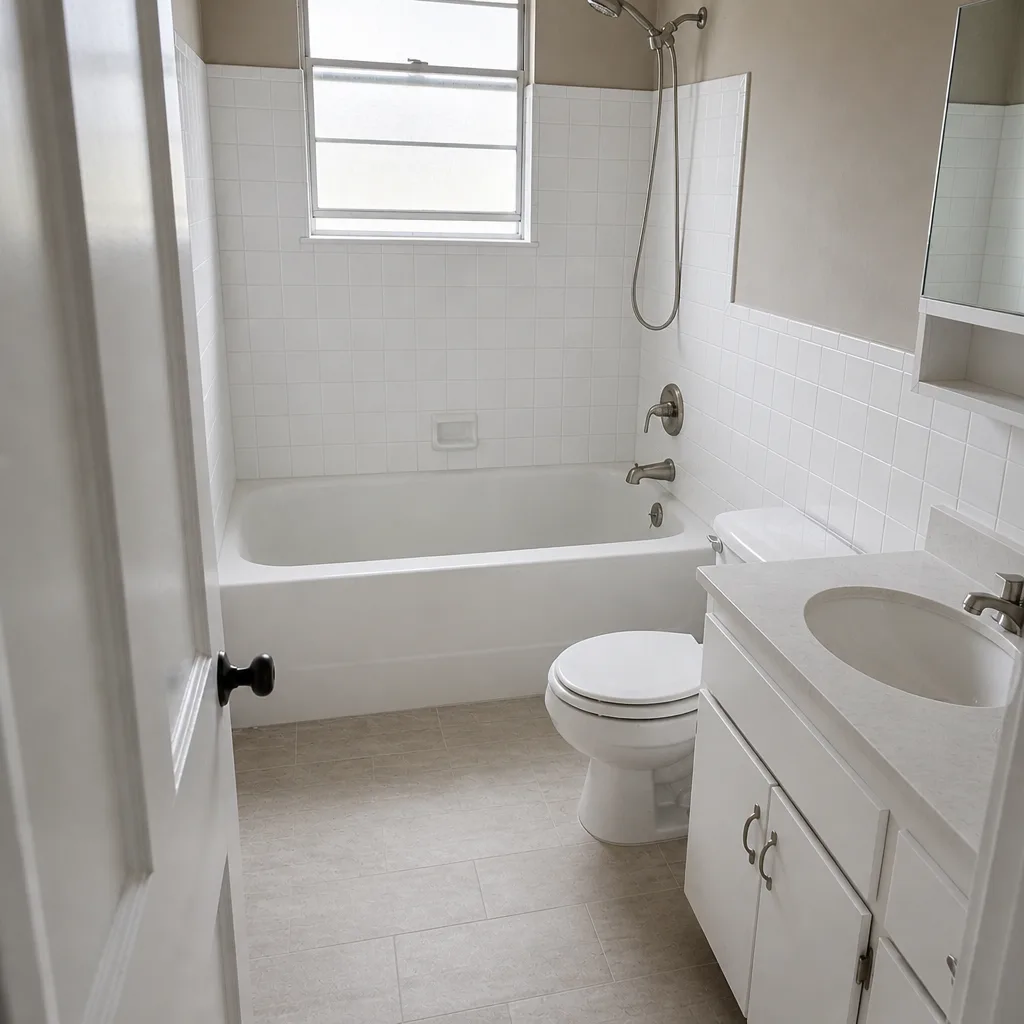 After
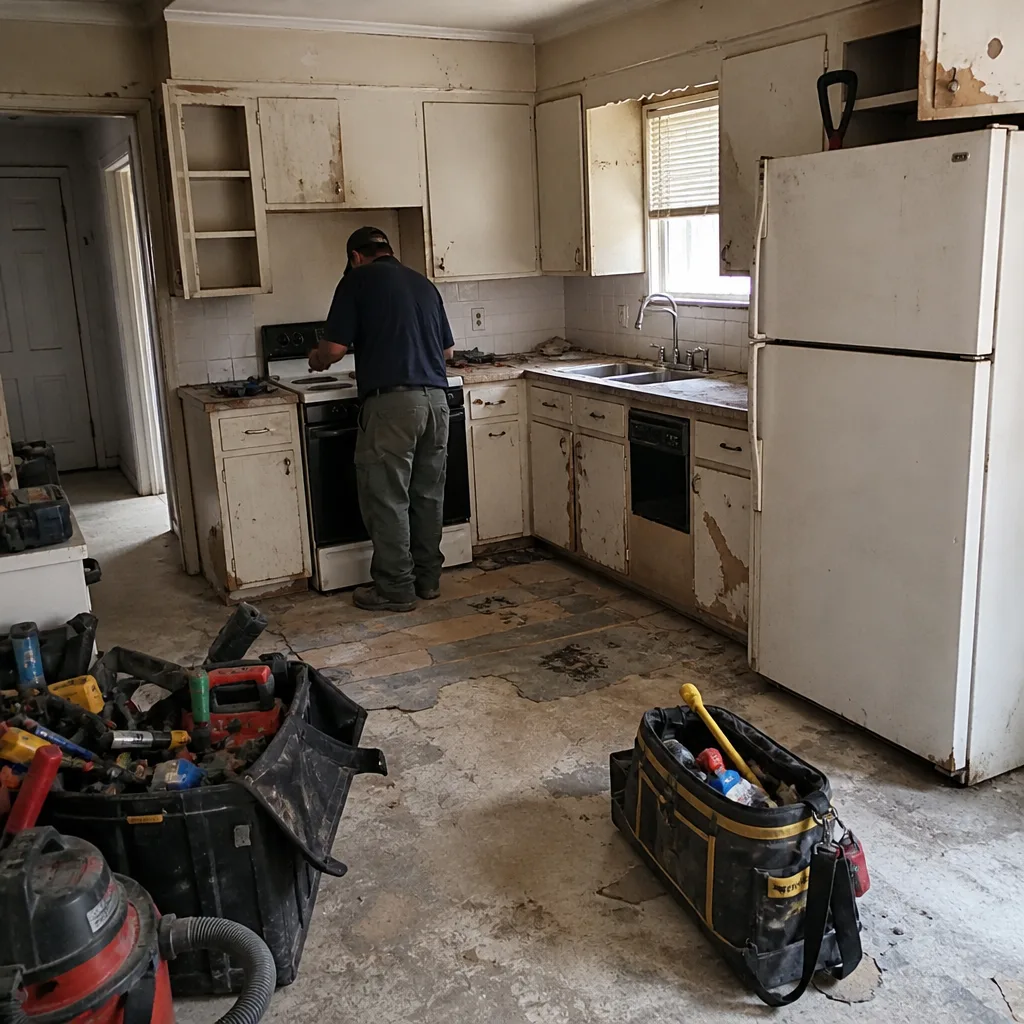 Before
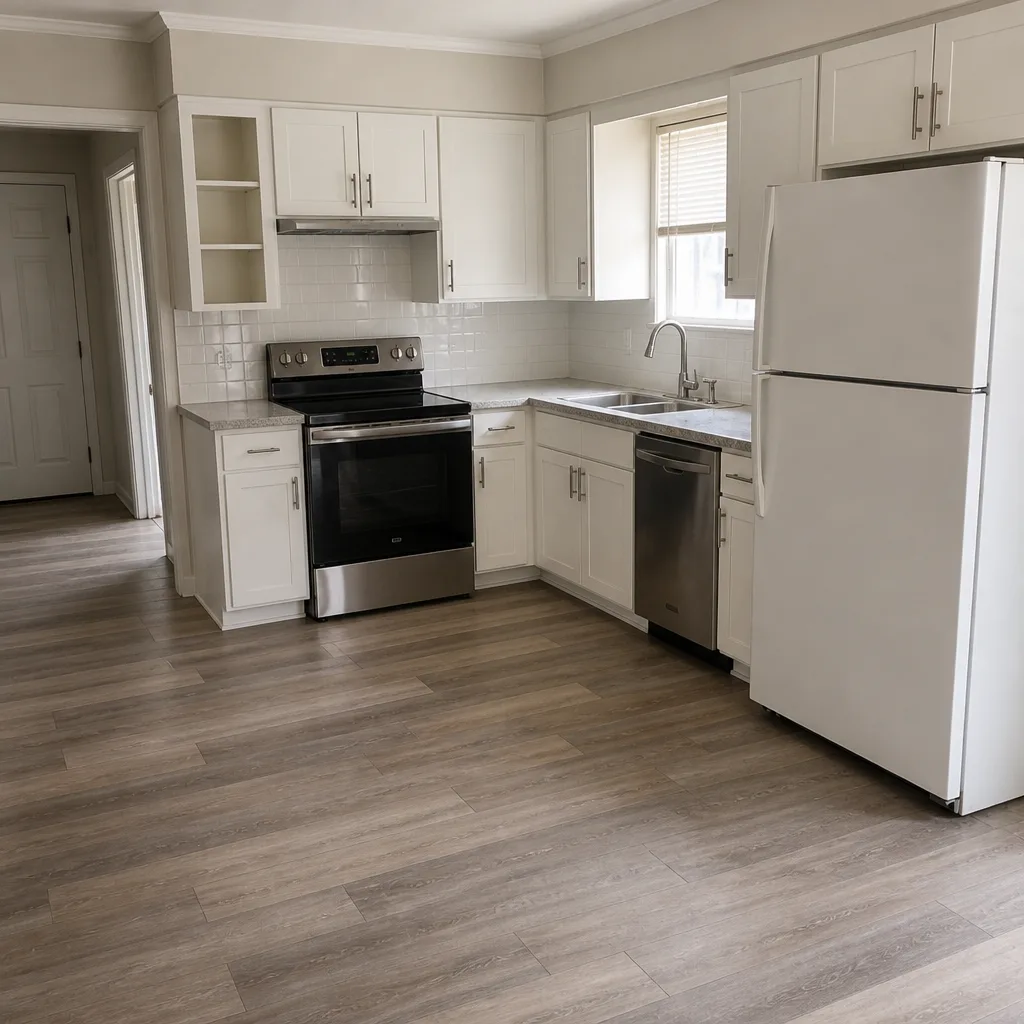 After
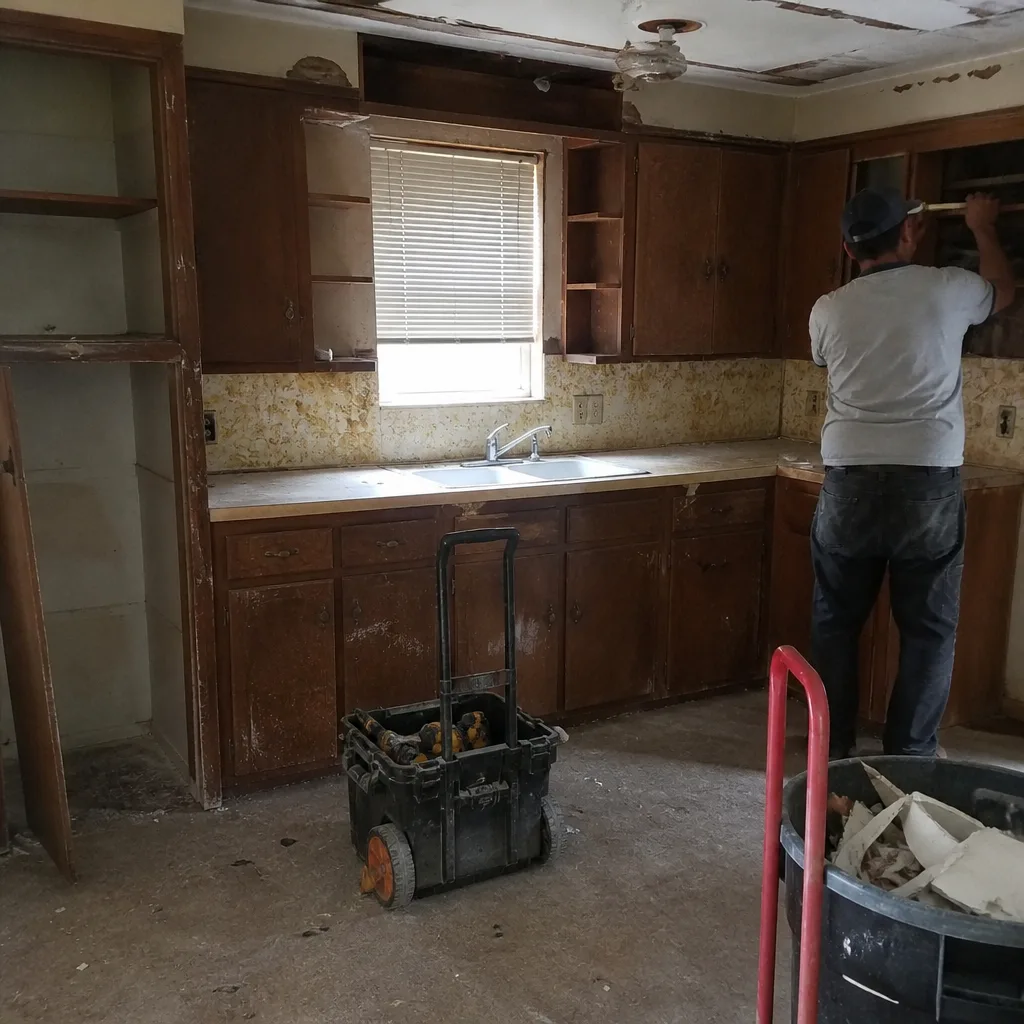 Before
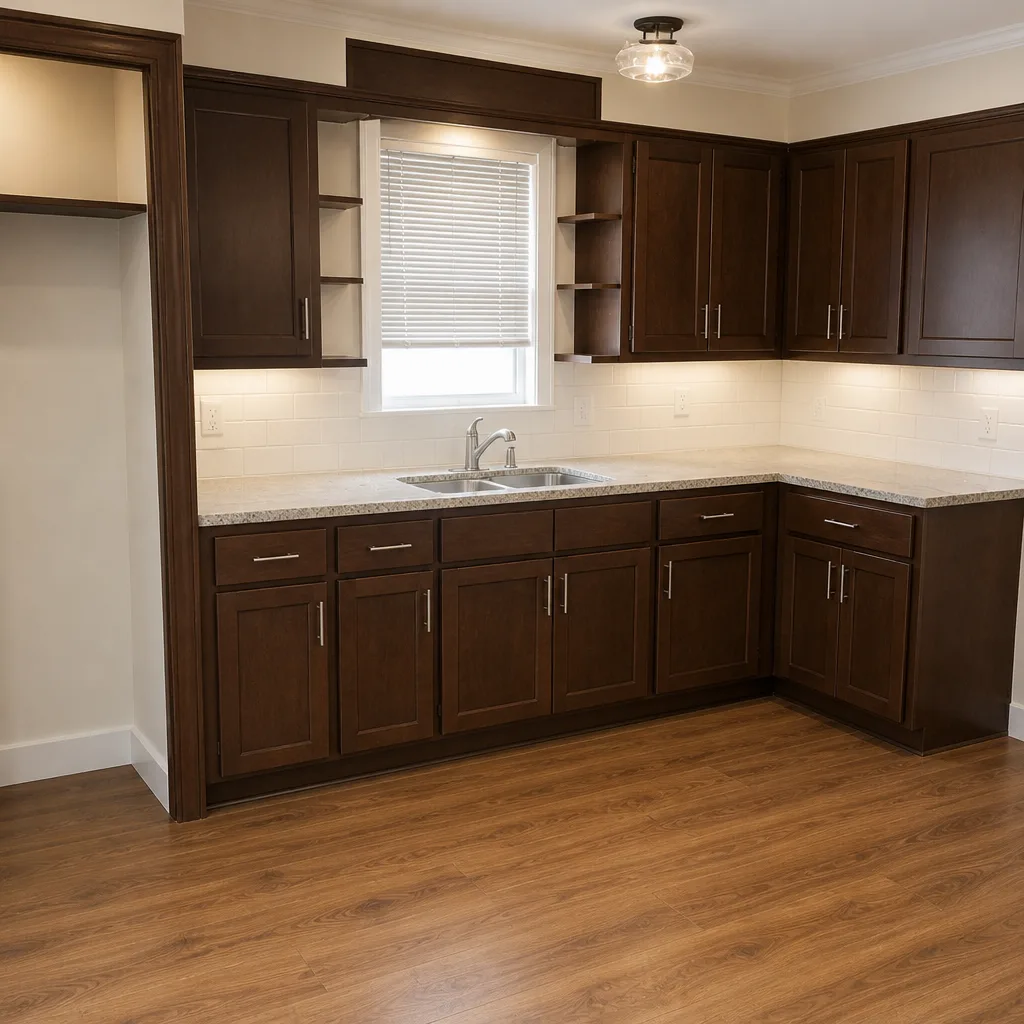 After
When to Call a Professional
Some of the fixes above are homeowner-level – a tissue paper test, a tap test, a visual check for efflorescence. Others are not. Call a professional when you’re dealing with anything that involves opening a wall or floor, replacing a shower valve, pulling a toilet to check a flange, or diagnosing a ceiling stain that could be a pan membrane failure. The safety rule is simple: shower valve replacement, electrical work, and any repair that requires opening the waterproofing layer should be done by a trained professional. A shower valve that scalds is a genuine safety risk, and a shower pan membrane that’s been opened and improperly resealed will fail again.
Rowan Construction Group Fort Worth offers free estimates in Fort Worth – call (833) 570-6084 to schedule yours. Our technicians have up to 19 years of experience, crews are background-checked and uniformed, and every visit comes with a documented photo record of what we found and what we did. We quote a flat written price before work starts, no change proceeds without a signed change order, and the 365-Day Done Right Promise backs the work – if it’s not done right, we make it right.
Frequently Asked Questions
A diagnostic visit and written scope typically runs $0 – $250, and many contractors – including ours – roll that into the repair estimate. The repair itself ranges from $300 – $700 for a spot tile reset up to $4,500 – $9,000 for a full shower rebuild. Call (833) 570-6084 for an exact quote – estimates are free.
Not without a signed change order. Our written price and written scope are set before work begins, and no work proceeds on a change until you’ve signed off on it. That discipline is why projects finish within a few percent of the number you agreed to. Call (833) 570-6084 to see a written quote for your bathroom issue.
Do the tap test and check for efflorescence. A hollow tap sound with no white powder means installation error and a spot repair. Efflorescence with a soft or crumbly backing board means waterproofing failure and a full rebuild. Call (833) 570-6084 for a professional diagnosis and a free second opinion on any written estimate you’ve already received.
The fan is undersized for the room or its duct is blocked or vented into the attic. Calculate your bathroom’s cubic footage and confirm the fan is rated at 1 CFM per square foot minimum. Replacing an undersized fan runs $350 – $800 installed in Fort Worth. Call (833) 570-6084 to schedule an assessment.
Sometimes – if the leak source is a shower valve or drain connection accessible from behind the wall. If the pan membrane has failed, the tile and pan have to come out. The diagnostic order in this guide isolates the source before any demolition. Call (833) 570-6084 for a free estimate on the diagnostic visit.
Yes – permits are pulled and inspections passed on every bathroom remodel we quote in Fort Worth. Plumbing, electrical, and structural changes all require permits, and we handle the process as part of the written scope. Call (833) 570-6084 to discuss what your specific project requires.
The Bottom Line
Bathroom remodel problems almost always trace back to three skipped steps: waterproofing membrane continuity, exhaust fan sizing, and tile installed before the substrate cured. Each failure mode has a distinct symptom – efflorescence and soft substrate mean waterproofing failure, hollow tap sound means installation error, peeling paint at the ceiling line means an undersized fan. Diagnose the symptom before you pay for the repair, because a $400 sealant fix and a $9,000 shower rebuild can look similar on the surface. In Fort Worth, add the seasonal soil movement and the humidity to the list of reasons to specify a crack isolation membrane and a correctly sized fan. The repair cost ranges in this guide are real, written-price numbers – not estimates that grow once work starts.
Call Rowan Construction Group Fort Worth at (833) 570-6084 for a free estimate. We deliver a written price before any work starts, a documented photo record on every visit, background-checked and uniformed technicians, and the 365-Day Done Right Promise on the work. If it’s not done right, we make it right – and if you already have a competitor’s written quote, we’ll review it line by line at no charge.
Written by the team at Rowan Construction Group Fort Worth.