Last updated November 18, 2026




Free written scope consultation - allowances, timeline, and change-order rules on paper before a single trade is scheduled
DIY vs Professional Bathroom Remodeling: What’s Safe to Do Yourself
Replacing a toilet is a legal DIY task in Fort Worth and takes about 45 minutes with a wax ring, a shutoff valve you’ve already checked, and a level. Moving the drain two inches to center it under a new vanity requires a licensed plumber, a city inspection, and a permit that most homeowners don’t know exists until the wall is already open. That gap between “I can do this” and “this changes what the house is allowed to do” is where bathroom projects quietly go wrong. This guide doesn’t sort tasks by skill level. It sorts them by consequence: what triggers a permit violation, what voids an insurance claim, and what turns a weekend saving into a repair that costs three times what the labor would have.
Quick Answer
In Fort Worth, painting, swapping fixtures, replacing a toilet within its existing rough-in, hanging a mirror, and installing accessories are genuinely safe to do yourself and save real money. Anything that moves plumbing, electrical, or the shower pan’s waterproofing layer requires a licensed trade and usually a city permit. Tile setting sits in a gray zone: the installation isn’t permitted, but the waterproofing behind it is a workmanship liability that’s expensive to fix and hard to prove afterward.
Styles & brands we work with
- Kitchen remodeling
- Bathroom remodeling
- Home additions & ADU
- Roofing
- Windows & doors
- Driveway & pavers
- Fence
Table of Contents
- The three risk tiers of bathroom work
- Task-by-task breakdown: permit, license, insurance risk
- What’s genuinely safe to do yourself
- Why tile work sits in a gray zone
- Rough-in dimensions: the line that separates a weekend from a $7,000 scope
- How to read a Fort Worth residential permit requirement yourself
- Common mistakes to avoid
- When to call a professional
The three risk tiers of bathroom work
The useful question isn’t whether you’re handy. It’s what happens if the task fails. We sort every bathroom scope item into one of three tiers based on consequence, not difficulty.
Tier 1 – zero regulatory risk. Cosmetic and finish work. If you get it wrong, you repaint or rehang. No permit, no inspector, no insurance question. This is where DIY saves the most money per hour of your time.
Tier 2 – liability risk without permit obligation. The task itself isn’t inspected, but a failure causes water damage that an adjuster will investigate. Tile and shower waterproofing live here. A failed membrane behind wet-area tile can run $4,000 to $9,000 in structural and mold remediation, and the adjuster’s first question is who installed it.
Tier 3 – regulatory and insurance risk. Moving a drain, adding a circuit, relocating a vent stack, converting a tub to a walk-in shower with a new pan. These require a Fort Worth permit, a licensed trade, and an inspection. Done without a permit, the work is unpermitted construction. When you sell, that’s a disclosure item. When a pipe fails, that’s a claim the insurer can reduce or deny because the installation was never inspected.
Most homeowners we talk to in Fort Worth have already mentally sorted these by skill. A confident DIYer assumes the whole project is Tier 1. That’s the mistake that surfaces mid-demo, when the drain location doesn’t match the new vanity and the wall is already open. If your scope includes anything in Tier 3, the honest first move is a conversation with a Rowan Construction Group Fort Worth home team that has walked this exact sequence hundreds of times, not a trip to the home center.
Task-by-task breakdown: permit, license, insurance risk
This is the table homeowners ask for. Fort Worth permit requirements below reflect the city’s residential code as it applies to typical single-family bathroom work. Always confirm current requirements with the Fort Worth Development Services Department before you start, since code language gets revised.
- Painting walls and ceiling – Permit: No. Licensed trade: No. Insurance-void risk: None. Safe DIY.
- Replacing a toilet within existing rough-in – Permit: No. Licensed trade: No. Insurance-void risk: None if the flange and seal are sound. Safe DIY in about 45 minutes.
- Swapping a vanity top or faucet – Permit: No. Licensed trade: No for a like-for-like faucet swap on existing supply lines. Insurance-void risk: Low, but a leaking supply line behind a cabinet can run for weeks before you notice.
- Hanging a mirror, shelving, or accessories – Permit: No. Licensed trade: No. Insurance-void risk: None. Safe DIY.
- Replacing a light fixture on an existing circuit – Permit: No in most cases if the wiring and box are unchanged. Licensed trade: Recommended if the box is undersized or the circuit is shared. Insurance-void risk: Low but real if the box can’t carry the fixture weight or amperage.
- Adding a GFCI outlet or a new circuit – Permit: Yes. Licensed trade: Yes (electrician). Insurance-void risk: High without permit and inspection.
- Moving a drain or supply line – Permit: Yes. Licensed trade: Yes (plumber). Insurance-void risk: High. This is the single most common line that flips a weekend project into a licensed scope.
- Relocating a vent stack or tying in a new fixture – Permit: Yes. Licensed trade: Yes. Insurance-void risk: High.
- Removing a tub and installing a walk-in shower with a new pan – Permit: Yes in Fort Worth for the drain relocation and pan. Licensed trade: Yes (plumber). Insurance-void risk: High if the pan leaks and the installation was never inspected.
- Tile setting over existing substrate – Permit: No. Licensed trade: No. Insurance-void risk: Moderate. See the gray-zone section below.
- Waterproofing membrane behind wet-area tile – Permit: No, but the failure risk is real. Licensed trade: Recommended. Insurance-void risk: Moderate to high depending on the adjuster’s read of the installation.
- Structural changes (moving a wall, widening a doorway) – Permit: Yes. Licensed trade: Yes (engineer and contractor). Insurance-void risk: High.
If your scope touches anything in the bottom half of that list, the written-price conversation matters more than the DIY question. A line-item scope from a Home Additions & ADU in Fort Worth team that handles full structural and plumbing scope gives you something to compare against, and something to hand an inspector if you decide to go it alone on the cosmetic work.
What’s genuinely safe to do yourself
We’re not going to talk you out of work you can do well. There’s a real list here, and the savings are real. A typical Fort Worth homeowner spending a Saturday on Tier 1 work can save $800 to $1,800 against a contractor’s labor line, and the finish is often better because you’re the one who cares about the paint cut at the ceiling.
- Paint. Walls, ceiling, trim, and cabinet boxes. A bathroom needs a bath-rated paint with a mold-resistant additive, and a satin or semi-gloss sheen. About $60 to $120 in materials for a standard 5×8 bathroom. Nothing about it requires a permit, and a mistake dries and gets repainted.
- Replace the toilet within its existing rough-in. If the new toilet’s rough-in dimension matches the old one – 12 inches is the standard in most Fort Worth homes built after 1970 – this is a 45-minute job. Check the flange before you buy the toilet. A cracked flange is the one thing that moves this task into Tier 3 because it means breaking the floor.
- Swap the faucet and showerhead. Like-for-like replacement on existing supply lines. Turn the water off at the shutoff, use plumber’s tape on the threads, and check for drips after the first hour. If the shutoff valve under the sink doesn’t fully close, stop and call a plumber – that valve needs replacing first, and that’s a licensed task.
- Hang mirrors, shelving, towel bars, and accessories. Use the right anchors for the substrate. A 30-pound mirror on drywall with toggle anchors is fine. A 30-pound mirror on tile is not – it needs to hit a stud or a blocking plate.
- Regrout and recaulk. Grout and caulk are wear items and replacing them every 3 to 5 years is normal maintenance in Fort Worth’s humidity. Scrape, clean, prime, and reapply. A failed caulk line at the tub edge is one of the most common hidden sources of water damage we open walls to find.
- Refinish or repaint the vanity cabinet. Sand, prime, and paint. Cheap, reversible, and doesn’t touch the plumbing or electrical.
Notice what’s not on that list: moving a drain, adding a circuit, building a shower pan, or installing a shower valve behind a finished wall. Those are the tasks where a mistake isn’t cosmetic. They’re also the tasks where a written price from a vetted contractor often comes in lower than a homeowner expects, because the scope is smaller than the fear.
Why tile work sits in a gray zone
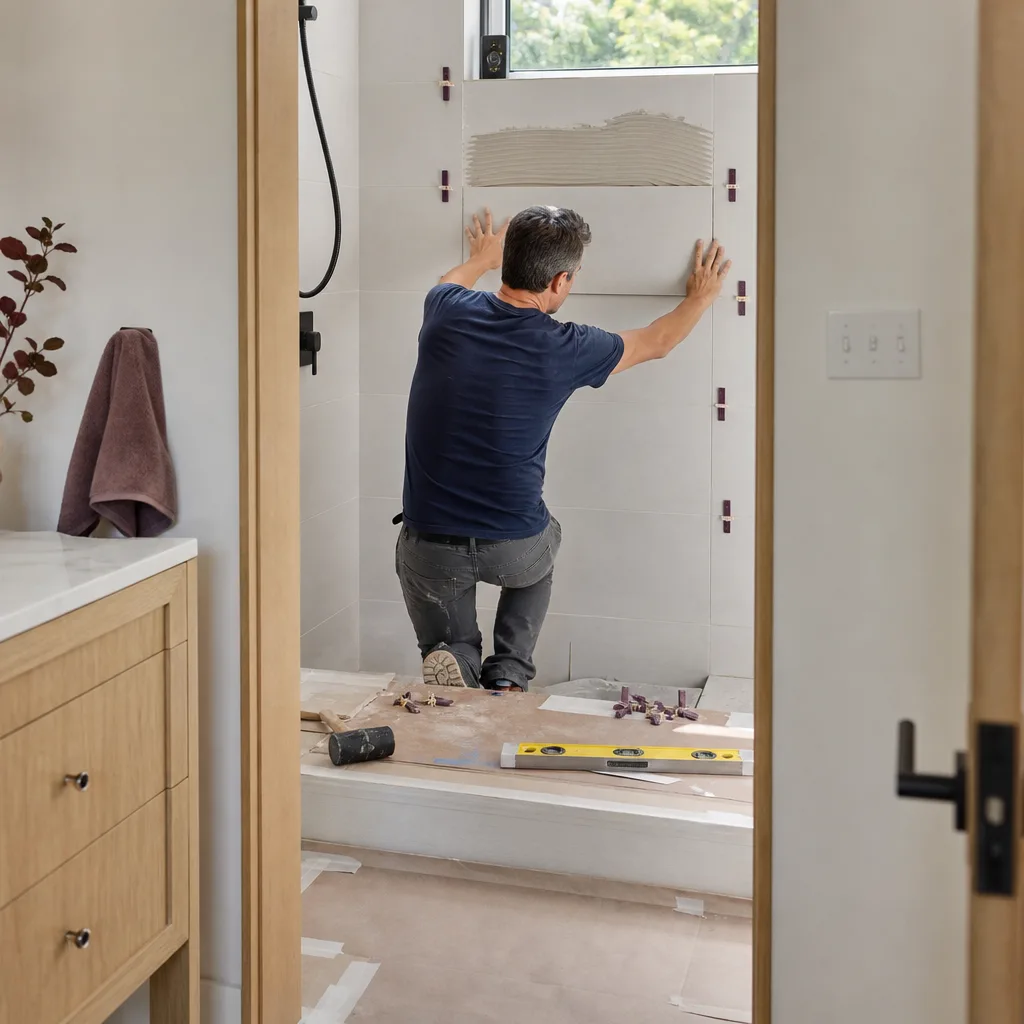
Tile setting is the most misunderstood category in bathroom work. The act of pressing tile onto a substrate isn’t permitted in Fort Worth. No inspector signs off on the grid pattern or the grout line width. But what’s behind the tile – the waterproofing membrane, the backer board, the slope of the shower pan – is the part that fails, and it fails quietly, over months, behind a finished surface you can’t see.
This is why tile sits in Tier 2. The installation itself has no permit obligation. The failure has a real cost. A shower pan that wasn’t sloped correctly leaks at the perimeter over 18 to 36 months. The first sign is usually a soft spot in the adjacent floor or a stain on the ceiling below. By then you’re looking at $4,000 to $9,000 in remediation: tear-out, reframing if the studs have softened, mold treatment, and reinstallation.
The hard part for an adjuster is proving who did what. If the homeowner installed the membrane, the claim gets complicated. If a contractor installed it and the failure appears within a year, the 365-Day Done Right Promise on a Rowan project covers the correction – the guarantee is printed on the page and backed by a terms page, not an asterisk. That’s the difference between a gray-zone task done with documentation and one done on faith.
If tile is in your scope and you’re weighing it, our advice is this: tile the walls if you want. Leave the shower pan and the wet-area membrane to someone whose work you can document, because that’s the part the next owner’s inspector will ask about. Fort Worth homes in neighborhoods like Ridglea and Arlington Heights often have original 1950s mud-set shower pans that look intact until the first remodel opens them up, and a pan that’s 70 years old needs replacing whether or not the tile above it looks fine.
Rough-in dimensions: the line that separates a weekend from a $7,000 scope
Rough-in dimensions are where the plumbing stub-outs sit before the fixture goes on. For a toilet, the rough-in is the distance from the finished back wall to the center of the drain. The standard is 12 inches. A 10-inch or 14-inch rough-in exists in older homes, and the toilet you buy has to match the rough-in you have, or you’re moving the drain.
We’ve watched this exact scenario happen more times than we can count. A homeowner buys a new vanity that’s 48 inches wide to replace a 36-inch vanity. The new vanity needs a centered drain. The old drain sits 6 inches off-center. Centering it means cutting concrete or opening the subfloor, rerouting the drain, adding a permit, and calling a plumber. The scope goes from $400 in materials to $3,000 to $7,000 in licensed work, and the vanity sits in the garage while it happens.
The same logic applies to the shower valve. A new pressure-balance valve sits at a different depth than the old two-handle valve. Moving the valve means opening the wall, sweating or pressing new connections, and getting it inspected. If you’re pricing a scope that includes any fixture change, measure the rough-in before you buy anything:
- Measure from the finished wall to the center of the toilet drain bolt caps. That number, rounded to the nearest inch, is your rough-in.
- Measure the width and depth of the existing vanity footprint and the center point of the drain stub-out behind it.
- Measure the shower valve center height from the floor, then confirm the replacement valve’s required center.
- Confirm the electrical outlet locations against where the new vanity and mirror will sit. A GFCI that lands behind a mirror is a real problem and a common one.
If those four measurements match your new fixtures, your scope is smaller than you think. If they don’t, you’re in licensed-trade territory, and the honest thing to do is price it before you demo. A free second opinion on any written estimate is exactly the tool for that decision – bring a competitor’s quote and we’ll review it line by line at no charge. That’s also the point where a call to the Fence Installation in Fort Worth team isn’t relevant, but the same written-price standard applies across every trade under our roof, so it’s worth knowing how the process works before you sign anything.
How to read a Fort Worth residential permit requirement yourself
You don’t have to guess. Fort Worth publishes its residential permit requirements through the Development Services Department, and reading them takes about 15 minutes if you know what to look for. Here’s the sequence we use.
- Start with the scope, not the permit. Write down exactly what changes. “Replace tile” and “move drain” are different scopes even when they end up looking the same on the finished wall.
- Check the trade category. Plumbing, electrical, and structural changes each have their own permit requirements. Finish work (paint, tile, cabinetry) generally doesn’t require one. The city’s permitting portal lists which trades require permits by category.
- Look for the word “relocation” or “new.” Permit triggers in residential bathrooms usually appear as language about relocating a fixture, adding a new circuit, extending a drain line, or changing the structure. Replacing like-for-like usually doesn’t trigger a permit. Moving something does.
- Check your HOA or historic district. If the home is in a Fort Worth historic district – Fairmount and parts of the Near Southside come up often – exterior changes and some interior structural work need an additional review that runs on a separate timeline.
- Verify the license of the trade you hire. Fort Worth requires licensed plumbers and electricians for permitted work. Ask for the license number, verify it through the state lookup, and confirm it’s on the written quote.
- Get the inspection on the record. A permit isn’t complete until the inspection passes. The inspection report is a document you’ll want at resale.
If that reads like a lot of work, it is. The reason we lead with a written price and a written scope before work starts is that most of this gets resolved during the estimate, not after. Under Clause 1 of the Haven Standard, the price is written before anyone starts, and that means the permit question gets answered while it’s still cheap.
One more Fort Worth-specific note. Our clay soils shift seasonally, and that movement telegraphs through slab-on-grade foundations in older neighborhoods. A drain that was level when the house was built may not be level now. If your permit scope includes relocating a drain, the plumber should be checking fall and slope against the current floor, not the original drawings. That’s a detail that doesn’t show up in a permit checklist and does show up in a leak 18 months later. The same quality standard shows up in Driveway & Pavers in Fort Worth work, where soil movement is the first thing we look at – a paver job that ignores the base fails the same way a drain that ignores the slab does.
Common Mistakes to Avoid
- Starting demo before measuring the rough-in. The wall is the cheapest thing to open and the most expensive thing to open twice. Measure the drain center, the vanity footprint, and the valve height before the first hammer swing, not after.
- Assuming tile is Tier 1 because it’s not permitted. The membrane behind wet-area tile is the failure point, and it’s the part that costs $4,000 to $9,000 to fix. Fort Worth’s summer humidity accelerates mold growth behind a failed membrane, so a leak found in August escalates faster than one found in January.
- Skipping the permit to save a few hundred dollars. Unpermitted work becomes a disclosure item at resale, and an insurance adjuster can reduce or deny a water-damage claim when the installation was never inspected. The permit is the cheaper line item by a wide margin.
- Buying the vanity before confirming the drain location. A 48-inch vanity replacing a 36-inch vanity is the most common scope-expansion trigger we see in Fort Worth bathroom projects. The vanity ends up sitting in the garage for three weeks while the plumber reroutes the drain.
- Trusting the shutoff valve under the sink. Old gate valves seize open. Turn the water off at the main before you touch the supply lines, or you’ll discover the valve doesn’t close with the cabinet already emptied and the towel down.
- Reusing the toilet flange when it’s cracked. A cracked flange is the one 45-minute task that stops being 45 minutes. If the flange is broken, the floor comes up and the scope flips to Tier 3.
- Painting over a failing caulk line at the tub edge. Caulk is a wear item, and a failed bead lets water wick into the wall cavity without any visible sign. Scrape and recaulk every few years rather than paint over the seam.
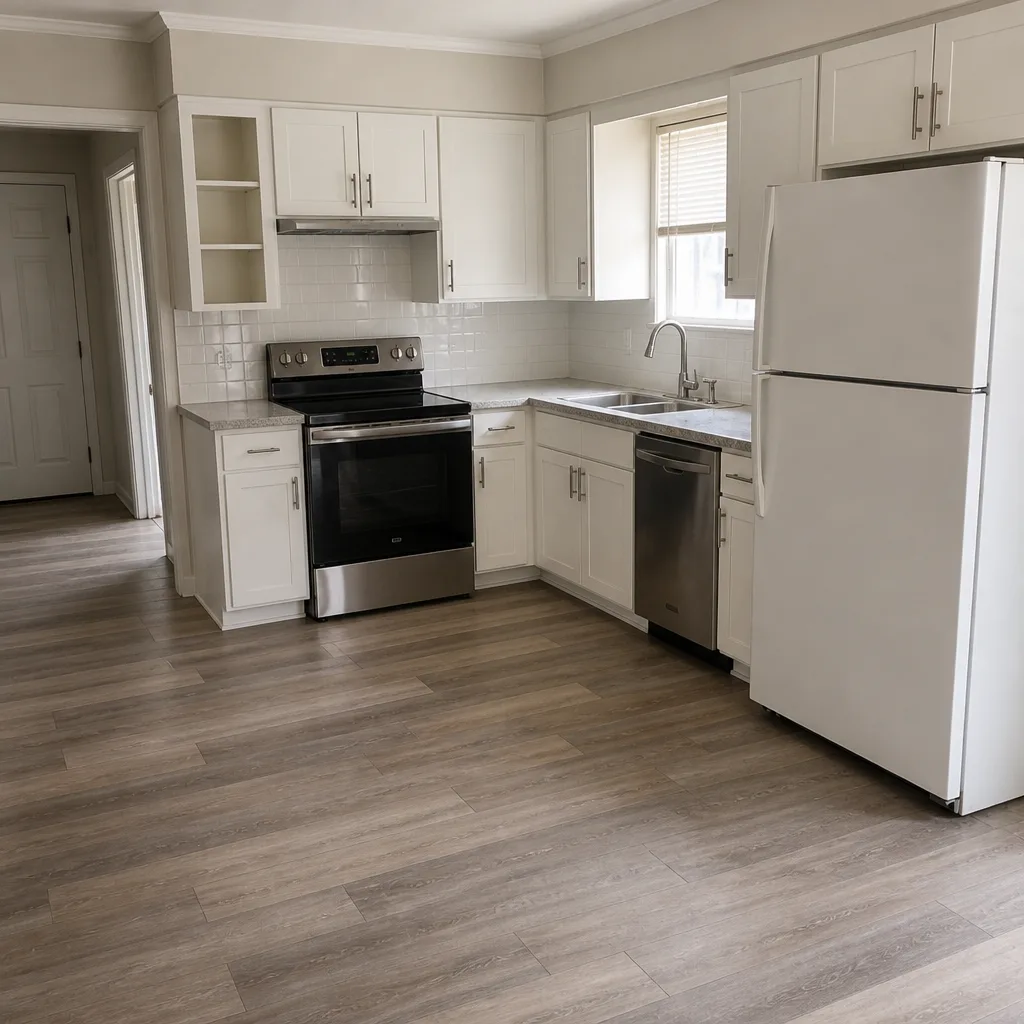
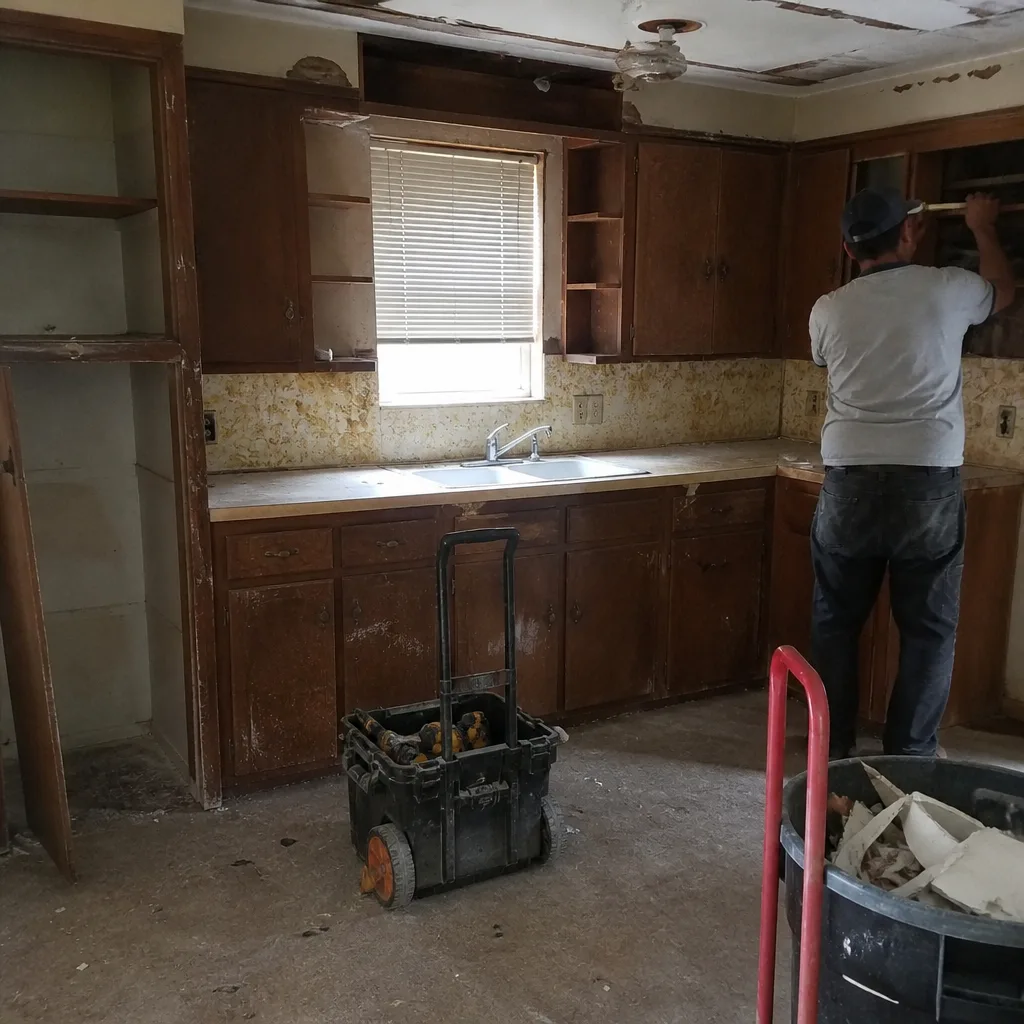
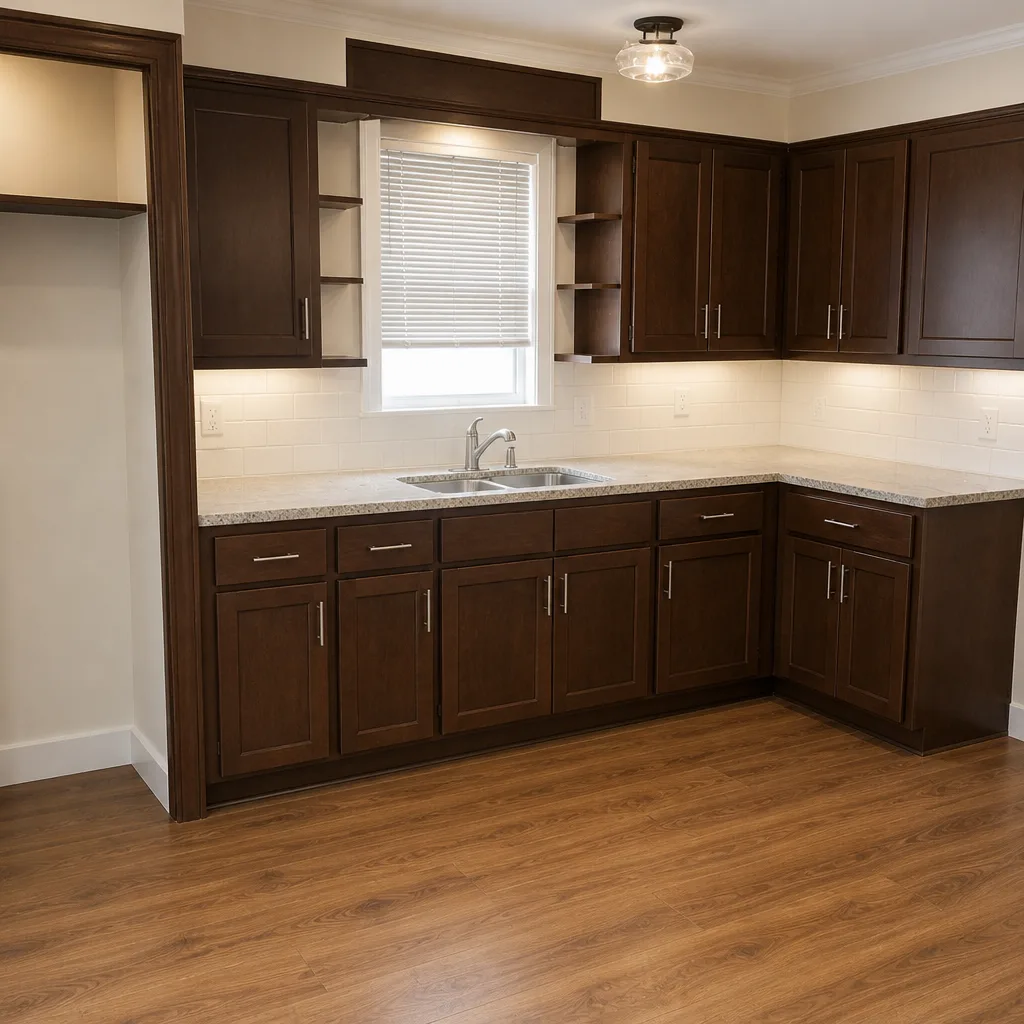
See the difference
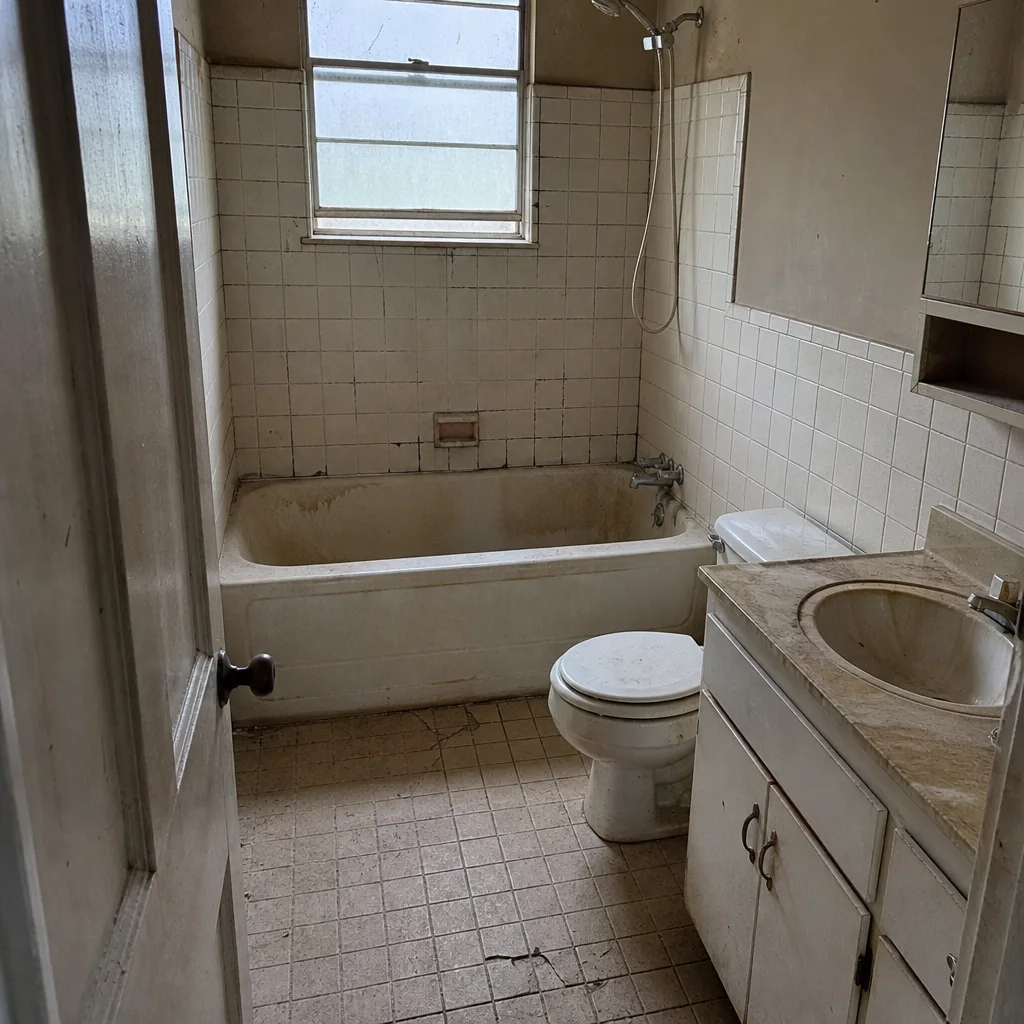 Before
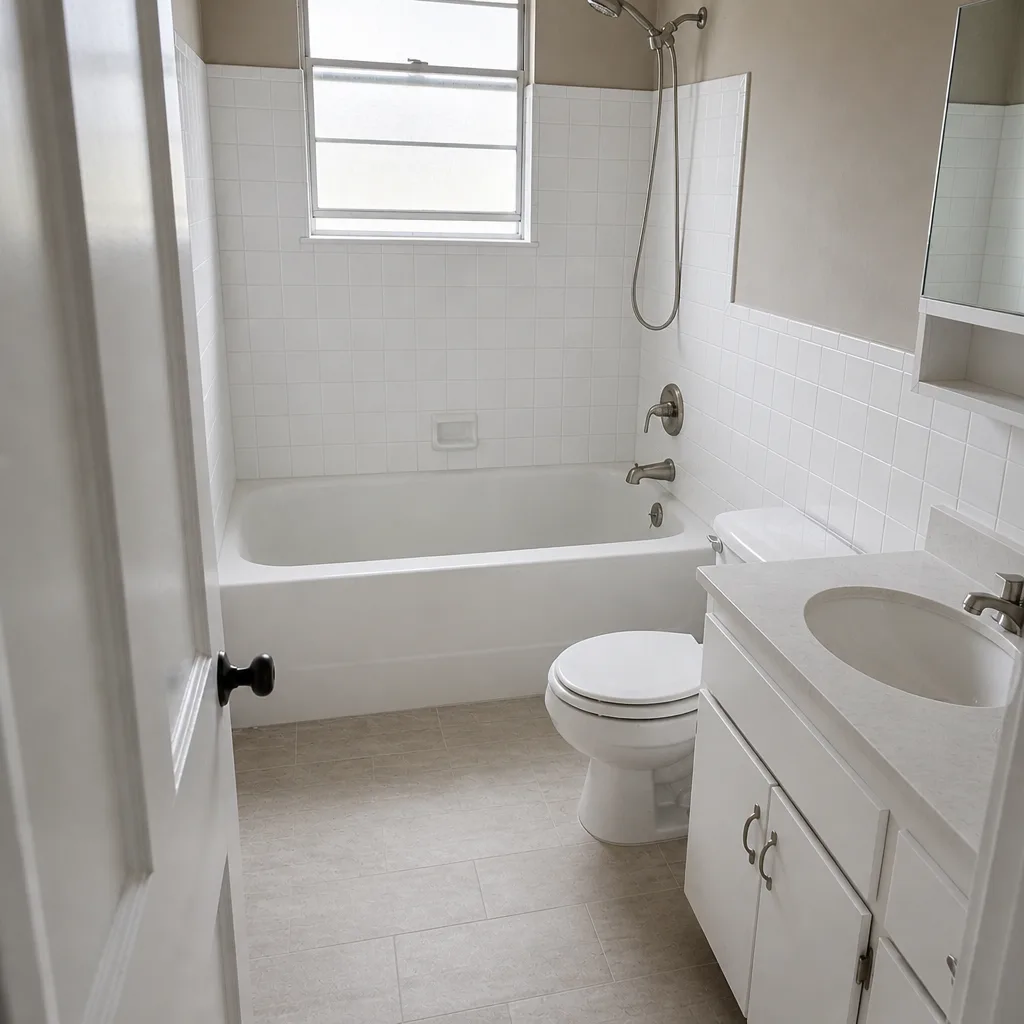 After
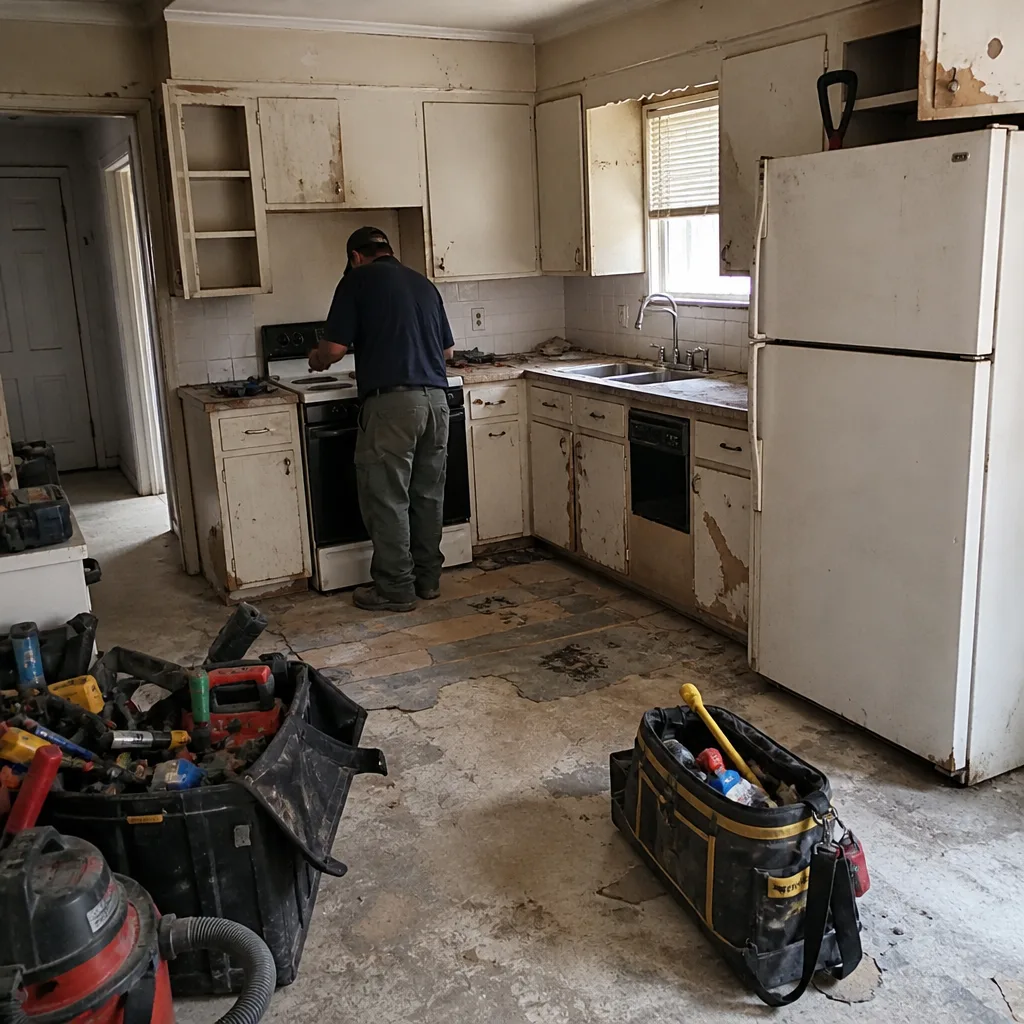 Before
 After
 Before
 After
When to Call a Professional
Call when the scope includes moving a drain or supply line, adding a circuit, relocating a vent stack, converting a tub to a walk-in shower with a new pan, or any structural change. Call when the rough-in dimensions of your new fixtures don’t match the rough-in you have. Call when the toilet flange is cracked, when the shutoff valve doesn’t close, or when a shower pan is older than about 30 years. And call when the scope is genuinely mixed – some Tier 1 work and some Tier 3 work in the same project – because sequencing the licensed trades around the DIY work is the part that’s easy to get wrong and expensive to redo.
Rowan Construction Group Fort Worth offers free estimates in Fort Worth – call (833) 570-6084. Every quote is a flat written price with a written scope and a written warranty before any work starts, and if you’ve already got a competitor’s estimate, bring it and we’ll review it line by line at no charge under our Free Second Opinion offer.
Frequently Asked Questions
Yes. Replacing a toilet within its existing rough-in doesn’t require a permit or a licensed plumber in Fort Worth, and it’s a 45-minute job with basic tools. The one qualification is the flange: if the flange is cracked or the drain needs to move, that’s plumbing work with a permit and a licensed trade. Call (833) 570-6084 if you want the flange checked before you buy the toilet – estimates are free.
Yes. Any relocation of a drain or supply line requires a plumbing permit and a licensed plumber in Fort Worth. The two-inch move is exactly the kind of small change that feels trivial during demo and is documented at inspection. Skipping it means unpermitted construction, which becomes a resale disclosure item and a possible insurance claim problem. Call (833) 570-6084 for an exact quote on the licensed scope – estimates are free.
Tile on walls and floors over a sound substrate is genuinely doable for a careful homeowner, and the installation itself doesn’t require a permit. The waterproofing membrane behind wet-area tile is the part that fails, though, and a leak in the shower pan can run $4,000 to $9,000 in remediation once it reaches the framing. If tile is the only thing left in your scope, we’d rather price the wet area and leave you the walls. Call (833) 570-6084 for that quote.
It depends on whether the work was permitted and whether the failure traces to faulty installation. Sudden failures (a supply line that bursts) are usually covered. Slow leaks from an unpermitted, uninspected installation are more likely to be investigated, reduced, or denied. The safest posture is to permit anything that requires a permit and keep the inspection report with your home records. Call (833) 570-6084 if you want a licensed plumber to inspect existing DIY work before it becomes a claim.
A full bathroom remodel in Fort Worth with licensed plumbing and a properly waterproofed shower typically runs $14,000 to $28,000 depending on fixture quality, tile selection, and whether the drain or valve moves. A cosmetic-only refresh (paint, fixtures, accessories, with you doing the labor) runs $1,200 to $3,200 in materials. The $3,000 to $7,000 line that separates the two is almost always the rough-in work. Call (833) 570-6084 for a written line-item price on your exact scope – estimates are free.
If the project moves a drain or supply line, adds a circuit, relocates a vent stack, changes the structure, or installs a new shower pan with a relocated drain, it needs a permit in Fort Worth. If it’s finish work, like-for-like fixture swaps, or tile over an existing sound substrate, it generally doesn’t. The Fort Worth Development Services Department publishes current requirements by trade, and a written scope from a licensed contractor resolves the question in the estimate rather than after demo. Call (833) 570-6084 if you’re unsure – we’ll walk the scope with you at no charge.
The Bottom Line
The right question isn’t whether you’re capable. It’s what a mistake on that task costs – in permit violations, voided insurance claims, and repairs that run three times the labor you saved. Paint, swap fixtures, replace the toilet within its existing rough-in, hang the mirror, and recaulk. Leave anything that moves plumbing, electrical, or the shower pan’s waterproofing to a licensed trade, and price that scope before demo, not after. In Fort Worth, the line between a weekend project and a $7,000 professional scope is almost always the rough-in dimension of a single fixture. Measure first, then decide.
Rowan Construction Group Fort Worth offers free estimates on every bathroom scope, a written price before any work starts, and a Free Second Opinion on any competitor’s written estimate. Call (833) 570-6084 to schedule yours.
Written by the team at Rowan Construction Group Fort Worth.