Last updated November 18, 2026


Free written scope consultation - allowances, timeline, and change-order rules on paper before a single trade is scheduled
Seasonal Construction Care for Fort Worth: Year-Round Homeowner’s Guide
Concrete poured or patched when ambient temperatures exceed 90°F can lose up to 30 percent of its design strength if it isn’t actively cured. In Fort Worth, that’s not a rare condition – it describes roughly 90 days a year, June through August, when the ground stays hot well past sunset. That single fact reshapes how you should think about exterior maintenance here. This guide schedules Fort Worth home construction care around two narrow working windows in spring and fall, two dangerous stretches of summer heat and winter ice, and the specific inspection points that matter for North Texas soil, piers, and flatwork.
Quick Answer
In Fort Worth, the best months for exterior caulking, concrete repair, mortar repointing, and paint are mid-March through early May and late September through mid-November, when temperatures sit between 50°F and 85°F and humidity allows proper curing. Summer work needs hot-weather concrete protocols under ACI 305, and winter work needs freeze prep on pipes, expansion joints, and unheated crawlspaces. Everything else is inspection: check foundation drainage after spring storms, before June soil shrinkage starts.
Styles & brands we work with
- Kitchen remodeling
- Bathroom remodeling
- Home additions & ADU
- Roofing
- Windows & doors
- Driveway & pavers
- Fence
Table of Contents
- Why Fort Worth Really Has Two Construction Seasons, Not Four
- The Cure Windows: Exact Months for Caulk, Concrete, and Mortar in North Texas
- Spring: Foundation Perimeter Drainage Before Soil Shrinkage Begins
- Summer: Verifying Hot-Weather Concrete and Heat Safety on Your Project
- Winter: Ice Event Prep for Pier-and-Beam Homes and Flatwork
- Fall: Five Repairs Ranked by Cost-to-Ignore Before the Freeze Window
- The Full-Year Maintenance Schedule in One Table
Why Fort Worth Really Has Two Construction Seasons, Not Four
Most homeowner maintenance calendars assume four equal seasons. Fort Worth doesn’t work that way. We get a long, hot summer with sustained stretches above 100°F and a winter that’s mostly mild until a polar air mass drops in and the temperature falls 40 degrees in a day. Between those extremes sit two short, real working windows.
The problem is that the materials in your home don’t read a calendar. They read temperature and moisture. Caulk won’t skin over and cure below about 40°F. Mortar that’s troweled on a 100°F afternoon with a dry south wind can lose its working time before it bonds. Concrete placed at 95°F ambient temperature without added water or shade can set too fast to finish properly.
So the guide below doesn’t tell you “maintain your home in spring and fall.” It tells you exact months, exact temperatures, and exact inspection points. Fort Worth sits on expansive clay soils that move with moisture – Fort Worth foundation behavior is driven by a wet spring and a dry summer, and the construction calendar has to respect that cycle.
Key takeaways:
- Prime exterior repair windows: mid-March to early May, late September to mid-November.
- Two dangerous seasons: June-August heat (curing problems) and December-February ice events (freeze damage).
- The most expensive thing you can do is defer fall repairs past the first hard freeze.
The Cure Windows: Exact Months for Caulk, Concrete, and Mortar in North Texas
Here’s the concrete answer to “when can I actually do exterior repair work in Fort Worth?”
Caulking and sealants: Apply when ambient temperature is 50°F to 85°F and no rain is forecast for 24 hours. In Fort Worth that’s roughly March 15 to May 5 and September 25 to November 10. Mid-summer jobs applied at 95°F often skin over before they tool, leaving a poor bond. Winter jobs below 40°F won’t cure at all. Latex and siliconized latex are more forgiving than pure silicone in the shoulder months.
Concrete patching and small pours: Ideal air temperature is 50°F to 75°F ideal, and up to 85°F with hot-weather provisions. Cement hydration generates its own heat, so a 90°F afternoon pour needs shade, cool mix water, and misting or wet cover curing. Professional crews treating summer pours under ACI 305 will do exactly that. If you pour in Fort Worth in July without protection, expect surface cracking and reduced strength.
Mortar repointing and masonry: Same principle, slightly tighter. Between 50°F and 80°F, and cured under damp burlap for 72 hours minimum. Mortar placed on a 95°F brick wall dries before it bonds, and the joint chalk-cracks within a year.
If you’re planning a bigger exterior project – a new patio, a paver drive, a porch – these windows determine when crews can actually start. Our Driveway & Pavers in Fort Worth page covers why this matters for hardscape installation specifically.
Spring: Foundation Perimeter Drainage Before Soil Shrinkage Begins
Fort Worth averages about 34 inches of rain a year, and much of it lands in spring. Then the tap shuts off, the clay soil shrinks, and foundations move. The work you do between April and mid-June determines how much that seasonal movement costs you.
Inspect these five points after the last spring storm and before June:
- Gutter discharge points. Every downspout should move water at least 6 feet away from the foundation. A downspout that dumps at the slab edge is dumping water into the same clay that expands and contracts under your footing.
- Grade and slope. Soil should slope away from the house at roughly 6 inches over the first 10 feet. In Fort Worth, sprinkler runoff and mulch beds often create a low spot that reverses the slope.
- Expansion joint condition on flatwork. Driveways and walkways need their joints sealed before summer heat closes them tight and before fall rain gets in. Cracked joints let water under the slab, and that’s where pumping and settlement begin.
- Pier-and-beam crawlspace moisture. Check for standing water, damp insulation, and evidence of wood movement after the wet months. This is the single best moment to inspect because the evidence is fresh.
- Roof and wall flashing. Spring storm season in Fort Worth produces hail and wind-driven rain. Roof-to-wall transitions and window flashing are where failures show first. Our Fence Installation in Fort Worth guide covers how storm damage affects the fence line as a secondary signal – damaged fence posts after a storm often mean saturated soil shifting throughout the yard.
The point is timing. Inspections done in May catch drainage problems before shrinkage begins in June. Inspections done in July catch cracks, not causes.
Summer: Verifying Hot-Weather Concrete and Heat Safety on Your Project
When a contractor works on your Fort Worth home in July or August, the difference between a 2-year slab and a 30-year slab is usually one decision on the day of placement. You should know what to look for.
ACI 305 (Guide to Hot Weather Concreting) isn’t a marketing term. It’s the industry standard for how to place concrete when ambient temperature is above 90°F or when concrete temperature at placement exceeds 95°F. It requires specific adjustments:
- Cooling the mix: chilled water, ice, or aggregate cooling – not just adding more water at the site.
- Placement timing: early morning or evening, avoiding the worst of the afternoon heat.
- Curing method on the day: wet burlap, plastic sheeting, or a curing compound applied immediately after finishing.
- Wind breaks and shade: a dry 15 mph wind on a 95°F day will dry the surface faster than the mix can set.
In our experience, the crews that skip hot-weather provisions aren’t being lazy – they’re just trying to finish before the truck leaves. But it’s your slab. Ask these three questions before the day of placement:
- What’s the concrete temperature at placement, and are you keeping it under 95°F?
- What curing method will be used, and who applies it?
- What time of day will placement start, and will there be shade or wind cover?
The same applies to roofing and exterior work in extreme heat. Asphalt shingle installation above 85°F can mar the surface, and crews working above 100°F need rotation and hydration plans – anyone installing a new roof on a Fort Worth home in August should confirm it.
Winter: Ice Event Prep for Pier-and-Beam Homes and Flatwork
Fort Worth’s winter danger isn’t prolonged cold – it’s sudden cold. A February ice event can drop the temperature into the teens for 48 hours with limited warning, and the homes that fare worst are the ones that assumed a mild winter.
Here’s what to check by December 1 in Fort Worth:
Pipe exposure in pier-and-beam homes. The crawlspace is the vulnerable spot. Insulate exposed supply lines, seal crawlspace vents on the north side, and verify that the access hatch closes tightly. Pipes that sit in an unheated crawlspace with no pipe insulation are the most common winter failure point in Fort Worth.
Unheated space insulation. IRC Section R303 establishes minimum light, ventilation, and heating requirements for habitable spaces – it’s the code section that governs why a converted garage or unheated sunroom behaves so differently from the main house in a freeze. Review what’s in your unheated rooms before winter.
Expansion joints on flatwork. Water that gets into open joints and freezes will widen them. Seal driveways and patios in the fall (see the fall section) so that winter ice has nowhere to work.
Outdoor fixtures and hose bibs. Disconnect hoses, drain them, and insulate exterior spigots. The single most common Fort Worth plumbing call during a February ice event is a split hose bib.
Attic and crawlspace inspection. Cold air penetration shows up as condensation on pipes. If you’ve added a home addition or ADU in Fort Worth, check that the new construction’s thermal envelope was properly sealed – additions built in a different season often run hotter and colder than the core house.
Fall: Five Repairs Ranked by Cost-to-Ignore Before the Freeze Window
Fall is for the repairs that become three times more expensive if they get deferred past the first hard freeze. This list is ranked by cost-to-ignore, not by how visible the damage is.
- Roof flashing and missing shingles – rank 1. A small leak in October becomes an attic deck replacement in January once ice gets in. Fort Worth roofers are booking fall weeks out for a reason. Our team sees this every November. This is the repair that costs the most to skip.
- Exterior caulking at windows and doors – rank 2. Caulk applied in the fall window (late September to mid-November) actually cures, so it holds through the freeze. Caulk applied in August cracks by February.
- Driveway and patio joint sealing – rank 3. Water in a joint freezes and pries the slab apart. One weekend of sealing prevents a $1,200 slab patch.
- Gutter cleaning and downspout checks – rank 4. Full gutters + a freeze event = ice damming and fascia damage. Cheap to prevent, expensive to repair.
- Foundation drain verification – rank 5. Confirm your perimeter drainage still works before the wet winter. In Fort Worth, late fall soil moisture sets up the movement that shows up as foundation cracks in February.
Rank by cost-to-ignore, not by urgency of appearance. That’s the discipline. A frayed shingle looks worse than a slightly cracked joint, but missing shingles at rank 1 will cost 5 to 10 times the joint repair money if winter gets into them.
The Full-Year Maintenance Schedule in One Table
Print this. Tape it inside a cabinet.
- March 1-15: Post-winter inspection. Roof flashing, gutters, foundation perimeter, caulk joint inspection.
- March 15-May 5: Caulk and sealant window. Concrete patching and small pours. Mortar repointing. Exterior paint.
- May 15-June 15: Drainage verification. Confirm slope, downspout discharge, expansion joint condition before soil shrinkage.
- June-August: Hot weather. No exterior caulking, mortar, or concrete above 90°F without hot-weather provisions. Verify any contractor follows ACI 305.
- September 25-November 10: Second caulk and concrete window. Fall priority list ranked above. Joint sealing. Roof repairs. Winterization prep.
- December 1: Freeze prep complete. Pipe insulation, crawlspace vents, hose bibs, gutter cleaning.
Common Mistakes to Avoid
- Caulking in July because “it’s a nice day.” A beautiful Fort Worth day at 92°F is a bad caulking day. The sealant skins before it tools.
- Pouring concrete in August without a curing plan. Without shade, cool water, or wet cover, you can lose up to 30 percent of design strength. Ask about ACI 305 before the truck arrives.
- Ignoring drainage in April. Waiting until you see foundation cracks in July means you’ve missed the causal window. Fix drainage before the dry season starts.
- Deferring roof leaks past October. The most expensive repair in this guide. A $400 flashing fix in fall becomes a $4,000 deck replacement in winter.
- Skipping the crawlspace before winter. Most Fort Worth pipe failures happen in pier-and-beam homes where exposed supply lines weren’t insulated.
- Assuming a mild winter. A 40-degree overnight drop to the teens in February is not unusual. Prep by December 1.
- Not asking for the documentation. Insist on a written scope, a flat price, and a photo record of the work – the same standard our crews hold on every project.
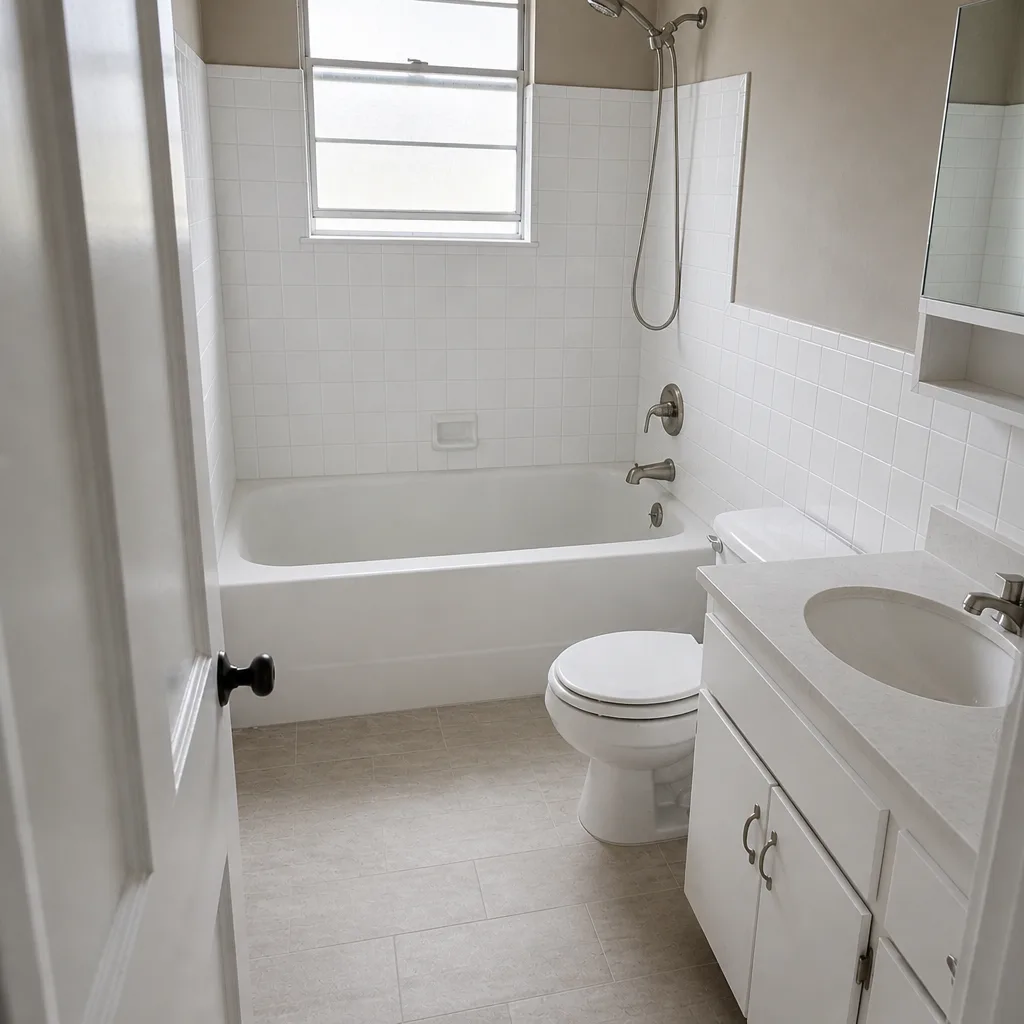
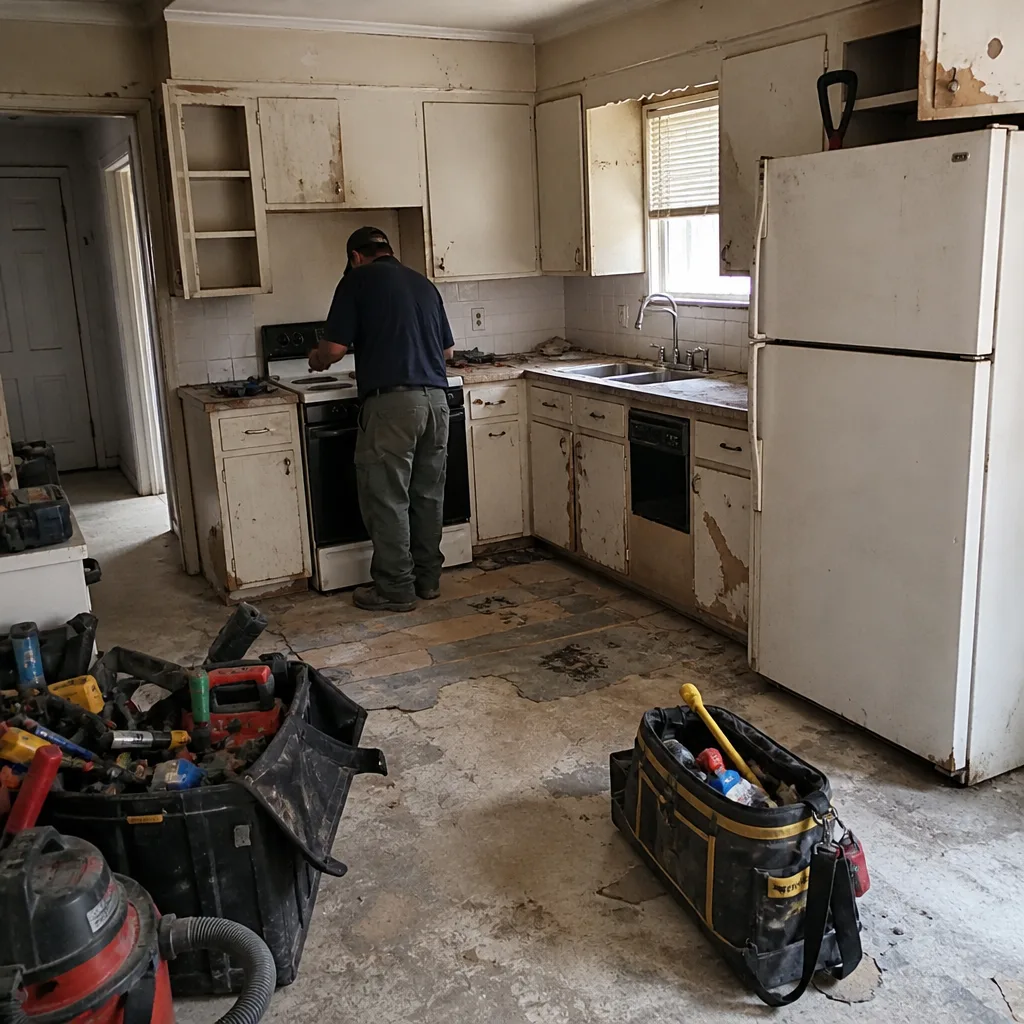
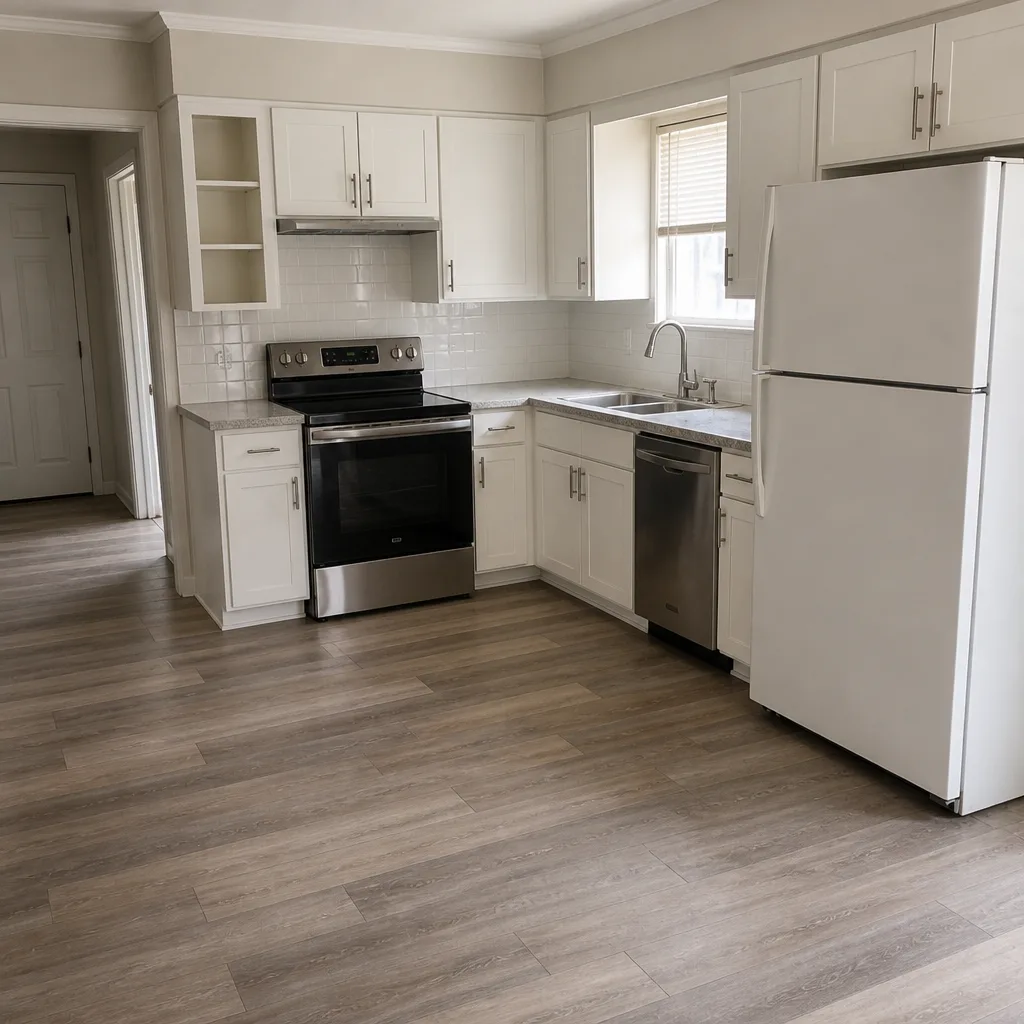
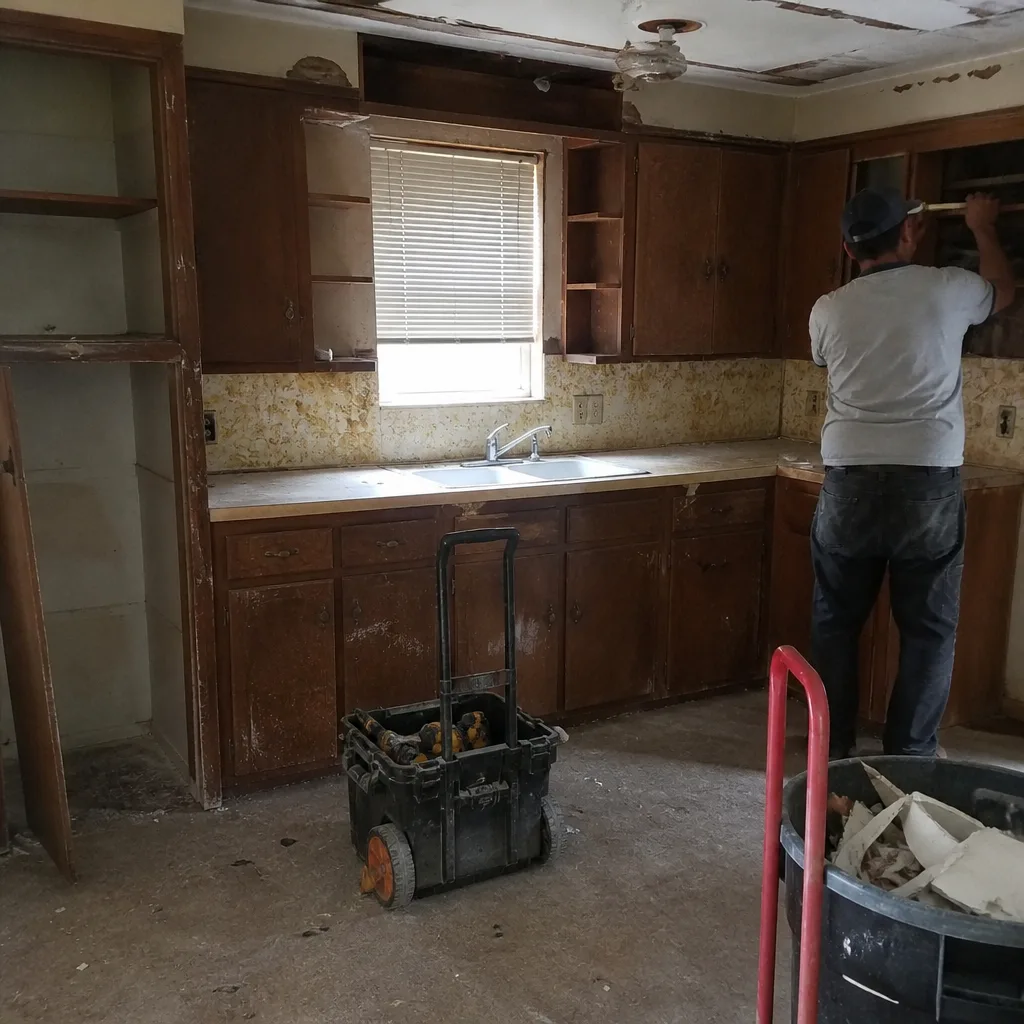
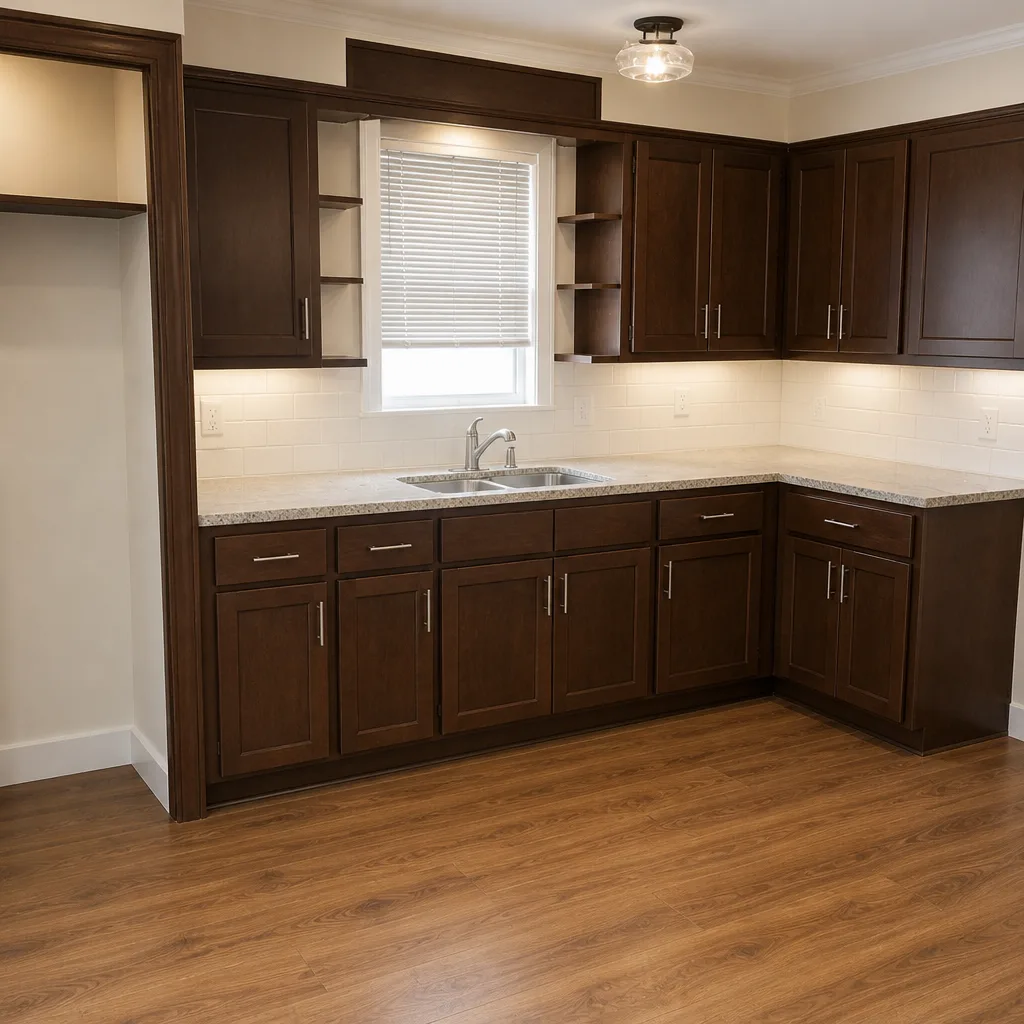
See the difference
 Before
 After
 Before
 After
 Before
 After
When to Call a Professional
Some of this you can inspect yourself with a flashlight and an afternoon. Others you shouldn’t touch. If the work involves roof access above a single story, a concrete pour larger than a small patch, structural repair, foundation piers, or any electrical or plumbing inside a wall – call a professional. Fort Worth’s climate adds one wrinkle: work done in the wrong month fails regardless of how good the crew is. The difference between a crew that understands ACI 305 and one that doesn’t shows up two summers later in a cracked slab.
At Rowan Construction Group Fort Worth, we put the price in writing before anyone picks up a tool, on every trade. If you’ve got a competitor’s written estimate and you’re not sure what you’re looking at, we’ll review it line by line at no charge. Call (833) 570-6084 to schedule your free estimate.
Frequently Asked Questions
The best months are mid-March through early May and late September through mid-November, when temperatures stay between 50°F and 85°F and rain isn’t forecast for 24 hours. Outside those windows, caulk either doesn’t cure or skins before it tooled properly. If you’re planning exterior weatherproofing across several windows or doors, call (833) 570-6084 – free estimates, written price before any work starts.
Perimeter drainage repair typically runs from a few hundred dollars for gutter and downspout corrections up to a few thousand for re-grading and French drain installation, depending on the length of the run and how far the slab is out of slope. The inspection itself – confirming whether you even need drainage work – is the step to do first, before the summer soil shrinkage begins. Call (833) 570-6084 for a written estimate on your specific perimeter.
Yes, but only with hot-weather provisions under ACI 305: cool mix water or ice, early morning or evening placement, shade, wind breaks, and immediate wet curing or curing compound. Without those provisions, concrete placed above 90°F can lose up to 30 percent of design strength. Ask your contractor what their placement temperature is, what time of day they’ll start, and how they’ll cure. Call (833) 570-6084 for an estimate.
Insulating the exposed supply lines in the crawlspace. That single step prevents the most common winter pipe failure in Fort Worth, and it’s cheap to do in November. Seal crawlspace vents on the north side and make sure the access hatch closes tight. Call (833) 570-6084 for a free estimate on crawlspace work.
Ask three questions before the crew starts: what’s the concrete temperature at placement, what curing method will be used, and what time of day does placement start. Any crew following ACI 305 can answer those in specific terms with numbers. Crews that answer in generalities aren’t following the standard. We recommend getting any written quote reviewed – call (833) 570-6084 and we’ll look at a competitor’s estimate before you sign.
The full priority list – roof flashing, caulk, joint sealing, gutters, foundation drain check – usually takes 2 to 3 weeks to work through in sequence, assuming material availability and dry weather. The window before the first hard freeze (roughly November 10 to December 1) is tight, which is why the list is ranked. Call (833) 570-6084 to schedule your written estimate in the window.
The Bottom Line
Fort Worth doesn’t reward a four-season maintenance calendar – it rewards a two-season one. Do the exterior work in the March-to-May and late-September-to-mid-November cure windows when temperatures let caulk, mortar, and concrete actually bond. Inspect drainage in May before soil shrinkage, insist on ACI 305 provisions for any summer concrete placement, and prepare pipes, joints, and crawlspaces by December 1. Rank fall repairs by cost-to-ignore, not urgency of appearance – roof flashing first, then caulk, joints, gutters, drainage. The cheapest repair in Fort Worth is always the one done in the right month.
Written by the team at Rowan Construction Group Fort Worth.