Last updated November 18, 2026
Free written scope consultation - allowances, timeline, and change-order rules on paper before a single trade is scheduled
DIY vs Professional Fence Installation: What’s Safe to Do Yourself
The most expensive DIY fence mistake in North Texas isn’t bad carpentry. It’s hand-digging post holes 24 inches deep in clay soil when the correct depth is 42 inches, and no amount of finish skill compensates for that once the clay starts moving. We’ve pulled enough leaning fences out of Fort Worth backyards to know the pattern: the boards look straight, the gate swings fine, and the posts are the reason the whole run is failing. This guide separates fence installation into the two jobs it actually is – post work, which needs equipment and soil knowledge, and board-and-rail work, which a careful homeowner can do well – so you can decide what’s safe to take on and what to hand off.
Quick Answer
Board-and-rail work – hanging rails, setting pickets, installing trim and a gate – is genuinely DIY-safe for a careful homeowner with the right nail gun and a spacing jig. Post work is not. In Fort Worth’s Blackland clay, posts need to be set roughly 42 inches deep with an adequate concrete collar, and reaching that depth means a two-person gas auger, not a shovel. Get the posts wrong and everything above them fails on a schedule, usually within three to five years.
Styles & brands we work with
- Kitchen remodeling
- Bathroom remodeling
- Home additions & ADU
- Roofing
- Windows & doors
- Driveway & pavers
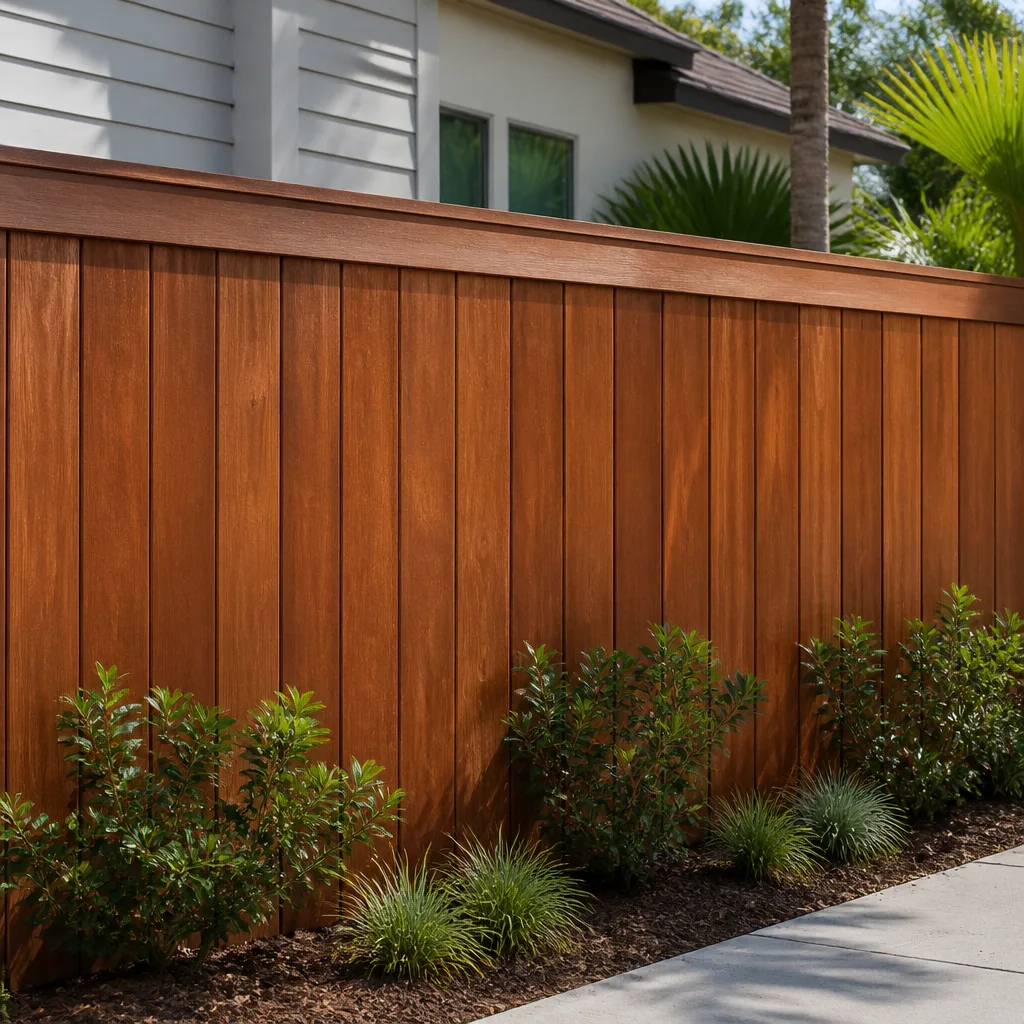
- Fence
Table of Contents
- The Real Divide: Post Work vs. Board Work
- Post Layout and String Line: DIY-Safe
- Hand Digging vs. Auger Rental in Clay Soil
- Concrete Mixing and Placement
- Rails and Boards: Where a Homeowner Shines
- Permits, Property Lines, and HOA Sign-Off
- DIY vs. Professional Cost, Per Linear Foot
- The DIY Failure Modes Unique to Fort Worth
The Real Divide: Post Work vs. Board Work
Most DIY fence advice treats installation as one continuous task with one skill level, and that’s why so many homeowner-built fences fail. The work splits cleanly. Post work is foundation work: it depends on equipment you probably don’t own, soil behavior you probably haven’t seen, and depth tolerances measured in inches. Board-and-rail work is finish work: it depends on patience, a straight eye, and consistent spacing.
Here’s how a task-by-task assessment shakes out:
- Post layout and string line: DIY-safe. A string line, stakes, and a tape measure are the whole kit. This is the step that decides whether the fence is straight, and a homeowner can do it to a professional standard with an afternoon of care.
- Post holes: Not DIY-safe in Fort Worth. More below.
- Concrete mixing and placement: DIY-safe if you use the right mix ratio and enough volume per hole.
- Rail installation: DIY-safe. Rails carry the boards and are mostly a matter of level and fastener placement.
- Board installation: DIY-safe with a nail gun set to the right depth and a spacing jig to keep pickets even.
The practical takeaway: a Fort Worth homeowner can reasonably own everything from the rails up. The foundation below grade is a different trade. If your project is part of a larger yard plan, our Fence Installation in Fort Worth page covers the full scope a professional crew handles, and it’s worth reading next to this one.
Post Layout and String Line: DIY-Safe
Layout is the one phase where DIY work is not just acceptable but often better, because you’re the one who cares about the corner post lining up with the driveway. Do this carefully and the rest of the fence has a fighting chance.
- Pull your string line the full length of the run, offset about 6 inches from the fence face so the string doesn’t interfere with the auger.
- Mark post centers at 8 feet on center for standard panels, or at your chosen spacing if you’re building board-on-board with tighter posts.
- Square the corners using the 3-4-5 method: measure 3 feet down one leg, 4 feet down the other, and adjust until the diagonal between them reads 5 feet. Do it at every corner.
- Confirm the line against your property survey before you dig a single hole. More on that below.
- Drive stakes at each post center and spray-mark the ground so the auger operator has a visible target.
One Fort Worth-specific note: in older neighborhoods around Ryan Place and Mistletoe Heights, alleys and easements don’t always run square to the lot, and a string line pulled off the house can be several degrees off the property line. Trust the survey, not the house wall.
Hand Digging vs. Auger Rental in Clay Soil
This is where DIY fence installations in Fort Worth go wrong most often. Blackland clay is dense, sticky when wet, and hard as a brick when dry. A homeowner with a post-hole digger can punch a hole 24 inches deep and feel like the job is going well. Twenty-four inches is roughly half the depth a fence post needs in this soil, and the top of the post will feel solid right up until the first wet season moves the clay and the whole run leans.
The equipment reality:
- Rental source: Sunbelt and Home Depot both have Fort Worth locations with two-man gas augers on the lot. Reserve one a few days ahead, especially in spring.
- Rental cost: $120 to $180 per day for a two-man towable auger, plus a bit for the auger bit and fuel.
- Production rate: In Blackland clay, expect 12 to 18 holes per day, realistically. In sandy soil the same machine and crew will punch 25 to 30. That gap is the clay, not the operator.
- Crew: A two-man auger takes two people. One runs the throttle, one guides the bit. It is not a one-person tool, and the safety manual will tell you the same thing.
When rental makes sense: a short run under about 100 feet, a weekend with two capable adults, and ground you can actually reach with a machine. When it doesn’t: long runs, tight access where a towable auger won’t fit (common in Fort Worth lots with narrow side yards), or rocky fill soil where the auger binds. In those cases the time you save renting evaporates, and a crew with the right equipment finishes in a day.
Safety note: post-hole augers have no clutch that saves a hand caught in the flighting. Never clear a bound bit while the engine is running, and keep loose clothing and gloves away from the turning shaft. If you’re not comfortable running one, don’t.
Concrete Mixing and Placement
Concrete is one place a homeowner can do the work to a professional standard, provided they get volume right. Undersized concrete collars are the second-most-common DIY fence failure we see in Fort Worth, right behind shallow posts.
- Mix ratio: A standard fence mix is one part Portland cement to two and a half parts sand to four parts gravel, or a bagged high-strength mix if you’re working small. Bagged mix is easier to keep consistent and is what most homeowners should use.
- Volume per hole: Plan on roughly one 80-pound bag of mix for every 2 to 3 inches of hole depth around an 8-inch hole. A 42-inch-deep, 10-inch-diameter hole typically takes three to four bags. Underfill and the post has no lateral support when the clay swells.
- Placement: Pour the mix dry into the hole around the post, then add water and rod it with a stick to work out air pockets. Sloping the concrete crown up and away from the post sheds water.
- Curing: Keep the posts undisturbed for 24 to 48 hours before hanging rails. Concrete reaches usable strength in a couple of days and full strength over weeks.
One detail that costs nothing and gets skipped constantly: crown the top of the concrete so it drains away from the post. A flat or dished collar holds water against the post and accelerates rot at the ground line.
Rails and Boards: Where a Homeowner Shines
Above grade, a patient homeowner can build a fence every bit as clean as a professional crew. Two tools make the difference: a nail gun set to drive the fastener just flush without overdriving into the wood, and a spacing jig – a simple block cut to your picket gap – to keep boards even down the whole run.
For a cedar board-on-board fence, which is the standard privacy style in Fort Worth, the sequence is straightforward:
- Set the bottom and top rails level on each post pair, fastening through the post face with structural screws or ring-shank nails.
- Start the first board plumb at a corner, using a level on the face and a spacer at the bottom to set your ground clearance.
- Work down the run with the jig, alternating boards on the front and back of the rails for the board-on-board overlap.
- Cut the top of each board to a consistent height using a string line as a guide, and treat every cut end with an end-grain sealer.
- Hang the gate last, on a post braced against the swing direction, and check the latch line as you go.
Board material matters for longevity. Cedar holds up well in North Texas humidity if the end grain is sealed. If your yard project extends to the hardscape around the fence, our Driveway & Pavers in Fort Worth page walks through how pavers and fence lines get coordinated so the two don’t fight each other at the property edge.
Permits, Property Lines, and HOA Sign-Off
This is the section most DIY installers skip entirely, and it’s the one that causes the most expensive problems later – not during the build, but during a home sale, when a buyer’s title company asks for documentation and there isn’t any. In Fort Worth, standard residential fences under 6 feet in a rear or side yard typically don’t require a building permit, but height, placement, and corner-lot visibility rules vary by zoning, and a fence in a front yard or over 6 feet usually does require one. Confirm with the city before you dig.
The documentation that matters:
- A surveyed property line, not an assumed one. A survey costs a few hundred dollars and settles every argument about whose dirt the fence sits on. Neighbors who assumed a line from the old fence are sometimes off by a foot or more.
- Written neighbor sign-off on a shared fence. Texas has rules around shared fence cost-sharing, and a short written note signed by both households saves a dispute when one side wants to replace the fence six years later.
- HOA pre-approval in writing. Fort Worth has a lot of deed-restricted subdivisions where fence height, material, and stain color are all specified. Get approval in writing before materials are ordered.
If your project is part of a larger addition or yard build, our Home Additions & ADU in Fort Worth page covers how site work and documentation get sequenced on bigger projects. The same discipline applies here.
DIY vs. Professional Cost, Per Linear Foot
The cost comparison people actually want is per linear foot, materials in and labor out, and it changes with the length of the run because rental and tool costs are fixed.
- DIY cedar board-on-board, materials only: roughly $14 to $22 per linear foot for posts, rails, boards, concrete, fasteners, and end-grain sealer, depending on cedar prices that swing in Fort Worth trade yards.
- DIY tool and rental add-on: $120 to $180 for the auger day, plus nails or screws, plus end-grain sealer, plus a spacing jig or nail gun if you don’t own one. Call it $300 to $500 in one-time costs.
- Professional installed cedar board-on-board: roughly $32 to $48 per linear foot in the Fort Worth market, all in, with posts set to depth, concrete sized correctly, and a written warranty.
The break-even math is different than it looks. On a short run, the fixed rental and tool costs make DIY a clear win on dollars. But as the run grows, the fixed costs get spread thin, and the DIY number converges on the professional number once you account for the weekend hours, the second person’s time, and the risk of redoing posts. In our experience, once a run gets past roughly 150 feet, the professional installed price starts to look competitive once time cost is honestly counted – and well past that, DIY stops making sense for most homeowners.
Every quote from us is a written price before any work starts, so the comparison is real numbers side by side. Bring a competitor’s written estimate and we’ll review it line by line, free.
The DIY Failure Modes Unique to Fort Worth
Most DIY fences in Fort Worth don’t fail on the day they go up. They fail on a schedule, and if you know the schedule you can spot the warning signs early.
- Posts set too shallow for clay activity: Typical failure becomes visible in year two to four, when the first wet season swells the clay and the run starts leaning. Once the posts move, there’s no fix short of pulling them.
- Inadequate concrete volume: Post has little lateral support. Failure shows up when a windstorm pushes the top of the fence and the post rotates in a hole that’s mostly soil. Usually year three to five.
- Untreated end grain on cut boards: The bottom edge of the pickets and every field cut wicks moisture. Rot starts at the bottom and works up. Visible in year four to six on cedar, sooner on untreated pine.
- Wrong fastener depth from an overdriven nail gun: Overdriving punches a dented hole that holds water. Shows up as surface rot in year three or four, often clustered in one section where the gun pressure was set too high.
- No gate post bracing: The gate post carries the swing load, and without cross-bracing it sags in the first season.
If you’ve got a fence that’s already leaning or losing pickets at the bottom, we’ve seen every version of this in Fort Worth. A photograph is worth more than a guess – we document findings with a photo record on every visit, which means you know exactly what’s failing before you decide whether to repair or replace.
Common Mistakes to Avoid
- Digging post holes by hand in Blackland clay. It feels productive and it produces holes about half as deep as you actually need. Rent the auger or hire a crew.
- Skipping the survey and pulling the string line off the existing fence. Existing fences are wrong more often than homeowners expect, and a survey settles ownership before a dig, not after.
- Using too little concrete. Three to four bags per hole is the number for a properly sized hole; one bag is a hole that will leak water around the post.
- Not sealing the end grain on cut boards. Cedar cut faces need sealing just like cedar field surfaces, and the bottom edge is the one that rots first.
- Forgetting HOA approval. Fort Worth has plenty of deed-restricted neighborhoods where a fence color or height change triggers a violation letter, and the fix means re-doing the fence.
- Hanging the gate on an unbraced post. A gate post takes more load than any other post in the run, and it needs diagonal bracing in the direction of the swing.
- Doing a two-man auger job solo. It’s not a shortcut, it’s an injury waiting to happen. The machine needs a second person on the guide handle.
See the difference
 Before
 After
 Before
 After
 Before
 After
When to Call a Professional
A few specific situations tip the balance toward hiring out. Long runs over roughly 150 feet, where the fixed tool and rental costs stop being an advantage. Tight-access lots where a towable auger won’t fit – common on Fort Worth residential streets with narrow side yards. A leaning existing fence that needs an honest assessment before you decide to repair or replace. Any run that crosses an alley or easement, or that needs a permit or survey. And anything involving a gate you need to swing perfectly for fifteen years.
We install fences the same way we handle every trade: a written price before any work starts, background-checked and uniformed technicians, a documented photo record on every visit, and the 365-Day Done Right Promise – if it’s not done right, we make it right, under The Haven Standard. Every board-and-rail detail gets done by our crews with up to 19 years of experience, and we don’t proceed on any change until you sign the change order.
Rowan Construction Group Fort Worth offers free estimates in Fort Worth – call (833) 570-6084 to schedule yours, or bring a competitor’s written quote and we’ll review it line by line at no charge.
Frequently Asked Questions
In Fort Worth, standard residential fences under 6 feet in a rear or side yard usually don’t require a permit, but front-yard fences and fences over 6 feet typically do. Corner-lot visibility rules and deed restrictions can also apply. Confirm with the city before you dig, and get written HOA approval if your subdivision has one. Call (833) 570-6084 for a free estimate if you’d rather not sort it out alone.
About 42 inches in Blackland clay, with a properly sized concrete collar around each post. The common 24-inch depth is a foothold, not a foundation. This is the single biggest reason DIY fences in Fort Worth fail within three to five years. Call (833) 570-6084 for a free estimate – a written price that includes correctly set posts.
Cedar board-on-board installed runs roughly $32 to $48 per linear foot in the Fort Worth market, all in, including posts, concrete, materials, and labor. DIY materials alone are roughly $14 to $22 per linear foot, plus $120 to $180 per day for an auger rental. The gap narrows once you count time. Call (833) 570-6084 for a written quote to compare side by side.
Yes, for short runs with two capable adults. Sunbelt and Home Depot both have Fort Worth locations with two-man gas augers, running $120 to $180 per day. Expect 12 to 18 holes per day in Blackland clay, not the 25 to 30 you’d get in sandy soil. It’s not a one-person tool. Call (833) 570-6084 if you’d rather we handle the post work end to end.
It usually becomes a problem during a home sale, when a title company asks for documentation and there isn’t any. A survey costs a few hundred dollars and settles the line before you dig. Get written neighbor sign-off on any shared fence cost. Call (833) 570-6084 for a free estimate if you’d rather have the line confirmed and documented before work starts.
Not without a signed change order. Under Clause 1 of The Haven Standard, the price is written before anyone lifts a tool – and no change proceeds until you sign the change order. That’s the discipline that has kept our projects within a few percent of the agreed cost across more than 4,000 jobs since 2007. Call (833) 570-6084 for a written price.
The Bottom Line
Fence installation splits into two jobs with two answers. Post work – layout, digging, setting posts at depth in Fort Worth’s clay, concrete, and documentation – is where DIY fences fail, and where the equipment and soil knowledge matter more than any finish skill. Board-and-rail work is where a careful homeowner genuinely shines, with a nail gun, a spacing jig, and patience. Cost math says short runs under about 150 feet tip toward DIY; longer runs and tight-access lots tip toward a crew. And the documentation – survey, neighbor sign-off, HOA approval – is worth doing whether you build or hire.
Call Rowan Construction Group Fort Worth at (833) 570-6084 for a free estimate on a fence done to the written price, with a photo record and a written warranty on the work. Start at our Rowan Construction Group Fort Worth home page to see how the same discipline applies across all seven of our trades.
Written by the team at Rowan Construction Group Fort Worth.