Last updated November 18, 2026





Free written scope consultation - allowances, timeline, and change-order rules on paper before a single trade is scheduled
Bathroom Remodeling Warning Signs Every Homeowner Should Know
A hairline crack where the tub meets the wall tile looks like a caulk issue. Often it is one, and a $45 tube of silicone and an afternoon solves it. But step back and check whether the tub has shifted a quarter inch or more from level, and that same crack means the floor framing beneath it has deflected. The repair now starts around $2,500, not $45. In our experience across Fort Worth bathrooms, most expensive failures announced themselves months earlier through signals homeowners dismissed as normal aging. This guide names those signals, puts real dollar ranges next to each, and shows the diagnostic step that separates cosmetic wear from structural movement. You’ll finish knowing exactly what to measure, photograph, and act on.
Quick Answer
Bathroom remodeling warning signs are specific, measurable conditions – cracked grout lines that widen, soft drywall at the baseboard, a toilet that rocks, a tub that has shifted off level, or bubbling paint on the ceiling below the shower – that point to water intrusion or structural movement before it becomes a five-figure repair. Anything that changes the plane of a rigid surface, or that stays damp for more than a couple of days, is a signal worth investigating. Cosmetic wear shows up evenly; structural problems show up in one place and get measurably worse.
Styles & brands we work with
- Kitchen remodeling
- Bathroom remodeling
- Home additions & ADU
- Roofing
- Windows & doors
- Driveway & pavers
- Fence
Table of Contents
- Cosmetic Grout Cracking vs. Substrate Movement: How to Tell the Difference
- The Four Water-Damage Signals Hidden Behind Visible Surfaces
- What a Failed Shower Pan Looks Like From Inside and Below
- Why Fort Worth Soil Movement Shows Up First in Bathroom Tile
- The Tub-Shift Test: A Quarter Inch Means Thousands
- Exhaust Fan Condensation: The Cheapest Sign You’ll Ignore
- Before You Hire: Five Things to Document First
- When the Warning Is the Renovation Itself
Cosmetic Grout Cracking vs. Substrate Movement: How to Tell the Difference
Grout cracks for two unrelated reasons. The first is normal material fatigue: grout is cement-based and slightly brittle, and over years of thermal swings it hairline-cracks in the traffic lanes. The second is substrate movement, where the rigid surface above is being pushed or pulled because the structure under it has moved. The two look similar at a glance and cost wildly different amounts to fix. Here is how we separate them in a Fort Worth bathroom.
Lay a four-foot straightedge across the tile field in two directions. If the tiles are flat to the straightedge and the cracks are isolated hairlines, it’s almost certainly fatigue. If you can rock the straightedge – if a gap opens under one end while the crack runs along the same line – the plane of the floor has changed and that is substrate movement, not grout.
Next, buy a pin-type moisture meter. You can get a decent one for around $12 at any hardware store. Press the pins into the grout at the base of the wall and in the corners. Finished tile in a dry bathroom should read in the low single digits on the wood-reference scale. Readings of 15 to 20 percent or higher mean moisture is trapped behind the surface, and the cracked grout is the escape route, not the cause.
That distinction matters because the repairs are not on the same planet cost-wise. Re-grouting a shower floor runs $300 to $600. Replacing a failed tile substrate – tearing out to the framing, new backer board, new waterproofing membrane, new tile – runs $2,800 to $6,500 depending on square footage. Catching the difference at the straightedge-and-meter stage is the whole point of this guide.
If you’re already planning work in the space and want the broader project numbers in front of you, our Rowan Construction Group Fort Worth home page lays out how we quote a full bathroom before anyone touches a tile.
The Four Water-Damage Signals Hidden Behind Visible Surfaces
Water almost never damages where you can see it first. It travels along framing, pools on the subfloor, and soaks into drywall from the bottom up. These four signals are the ones we find repeatedly in Fort Worth homes, and each one points to water that started somewhere else.
- Soft drywall at baseboard level. Press a screwdriver handle, not the tip, into the drywall just above the baseboard on the wall opposite the shower or tub. Sound drywall resists; soft drywall gives. Softness means the drywall has absorbed water and is breaking down from the paper inward. Repair of a small section runs $250 to $500; if the moisture source is behind the tile, you’re looking at the substrate repair above.
- Efflorescence on grout. That white, powdery bloom on grout lines is mineral salt pushed to the surface by water migrating through the tile assembly. It is not dirt and it does not vacuum away for good. Efflorescence is a near-certain sign that water is moving through the substrate and evaporating at the surface. Left alone, the same water is degrading the framing behind it.
- A toilet that rocks less than a quarter inch. A toilet should not move at all. A slight rock means the wax ring seal has failed or the flange beneath is compromised. Each flush pushes a small amount of water under the floor rather than into the drain. Over a year that’s enough to rot a subfloor. Resetting a toilet with a new wax ring is a $150 to $300 job; a rotted subfloor under it is $900 to $2,000.
- Condensation dripping from the exhaust fan. Water beading on the fan grille or dripping from the housing means warm moist air is condensing in a cold duct, or the duct is disconnected and dumping moisture into the attic. In Fort Worth’s humid summers and cool winters, a disconnected bath fan duct can put gallons of water into attic insulation per year.
Any one of these is worth a moisture meter reading. Two together is a call to a professional, because the pattern tells you water is moving through the assembly, not just sitting on it.
What a Failed Shower Pan Looks Like From Inside and Below
A shower pan is the sloped, waterproofed floor of the shower. In older Fort Worth homes the pan is often a “hot-mop” – a built-up layer of tar and fiberglass mesh, applied hot, that was the standard for decades before modern sheet membranes. Hot-mops fail predictably, and the failure shows differently depending on where you look.
From inside the shower, look for: grout that has turned dark and stays dark after cleaning, tiles that sound hollow when tapped with a coin, a slight give underfoot when you step near the drain, and a drain that collects a ring of standing water at the edges. Any of those means water is sitting under the tile because the pan below has lost its seal.
From the crawlspace or the ceiling below, look for: staining on the subfloor from underneath, a visible water line on the joists, efflorescence on the concrete or framing, and in the worst cases a sagging patch of ceiling. If you have a two-story home with the bathroom above the kitchen, a faint brown ring on the kitchen ceiling is a shower pan leak until proven otherwise.
Hot-mop replacement in Fort Worth runs $1,800 to $4,000 for a standard 36-by-60-inch shower, because the repair requires removing the tile floor, the old pan, and the mortar bed beneath it, then rebuilding with a modern waterproofing membrane. The good news: a failed pan caught early is a contained repair. Caught late, it becomes a subfloor replacement and in some cases a framing repair, and the number moves past $6,000.
Why Fort Worth Soil Movement Shows Up First in Bathroom Tile
Tarrant County sits on expansive clay soils that swell when wet and shrink when dry. Fort Worth summers bake the topsoil for weeks; fall rains rehydrate it fast. That cycle moves foundations, and every house on that soil deals with it to some degree. The bathroom is where you see it first, and there’s a physical reason why.
Tile is the most rigid finish surface in a house. It has almost no tolerance for deflection – the amount a floor moves under load. Hardwood flexes, vinyl gives, carpet absorbs. Tile cracks. So when a foundation shifts a fraction of an inch, the first visible evidence in most Fort Worth homes appears as a crack at a tile seam, a grout line that opens up, or a gap where the tile meets the tub.
What to watch for specifically:
- Cracks that run diagonally across a tile field rather than following the grout grid. Diagonal cracks track movement, not material fatigue.
- A door that suddenly won’t latch in the adjacent bedroom. That’s the same foundation movement showing up in a different rigid element.
- Cracks in the drywall above the bathroom door frame corners, one of the first places a shifting frame shows stress.
- Grout lines that open seasonally – wider in late summer, tighter after fall rain. Seasonal movement is clay soil, not a tile problem.
If you see two or more of those together, a foundation inspection is worth the cost before you spend anything on tile. Replacing a cracked bathroom floor without addressing the movement underneath is the single most common waste of money we see in Fort Worth remodeling. The new tile cracks in the same place.
The Tub-Shift Test: A Quarter Inch Means Thousands
We open this guide with that quarter-inch number because it’s the most consequential measurement a homeowner can take themselves. A tub that has moved off level means the floor framing beneath it has deflected or the subfloor has deteriorated. Here’s how to check.
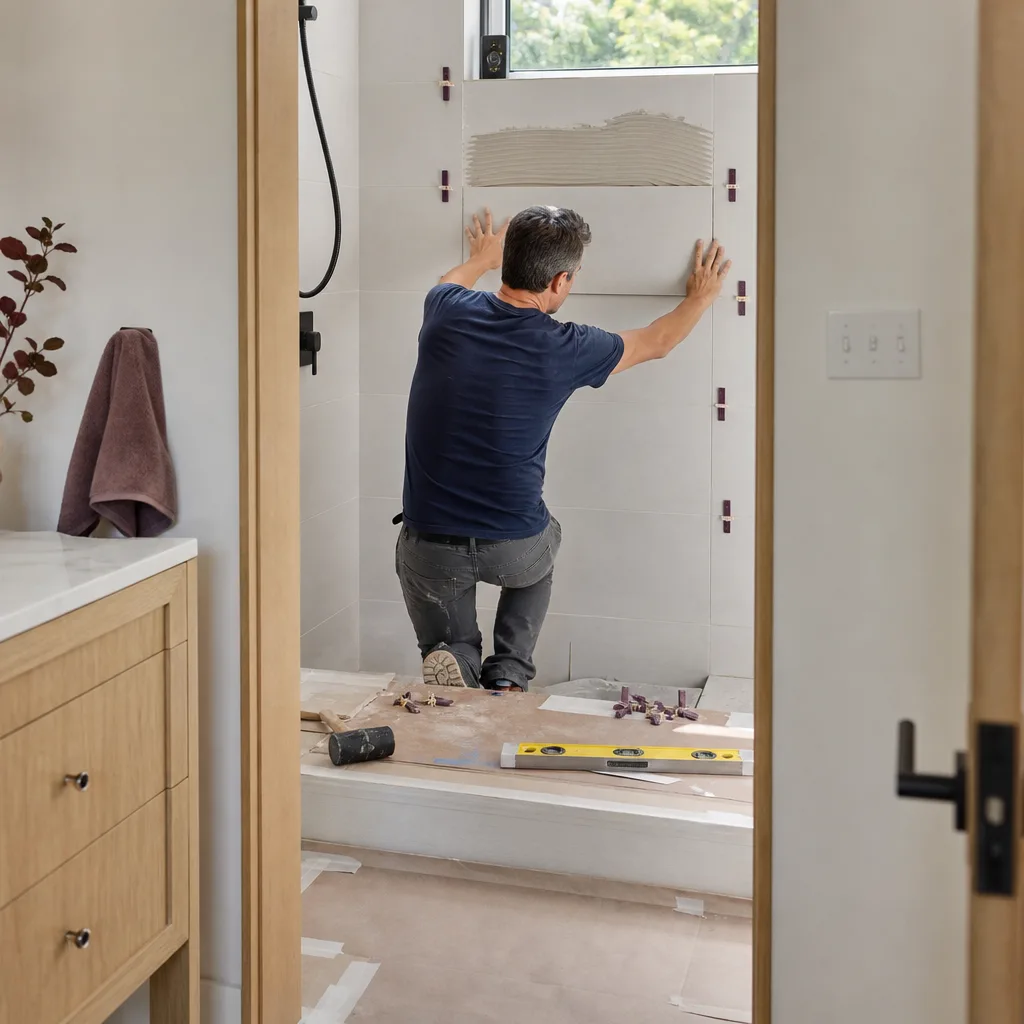
Set a two-foot level along the long edge of the tub apron or directly on the tub deck if it’s flat enough. Note the bubble. Then set the level across the short dimension and note that. A tub out of level by an eighth of an inch or less is within normal installation tolerance and probably always was. A quarter inch or more means movement since installation. Confirm it against the floor: check for a gap between the tub base and the floor at one end, and look at the caulk line where the tub meets the wall tile. A caulk line that’s clean on one end and split on the other is the tell.
The cost gap is the reason this measurement matters. Re-caulking and re-grouting alone is $45 to $150. Rebuilding a deflected subfloor under a tub – pulling the fixture, sistering or replacing joists, new subfloor, resetting the tub – runs $2,500 to $5,500. If the framing below has also been water-damaged, the upper end of that range moves.
Every tub-shift call we’ve walked says the same thing: they noticed the crack months ago and assumed caulk. The crack is the messenger. The level tells you whether the message is trivial or expensive.
Exhaust Fan Condensation: The Cheapest Sign You’ll Ignore
Every bathroom needs mechanical ventilation, and a fan that isn’t moving enough air is the quiet cause of a lot of the damage above. The test costs nothing. Turn the fan on, hold a tissue against the grille. If the tissue sticks and holds, the fan is pulling. If it sags or falls, the fan or the duct has failed.
In Fort Worth homes we regularly find two problems behind a weak fan. The first is a duct that terminates in the attic instead of through the roof – especially common in houses built or remodeled in the 1990s and 2000s. That duct dumps warm, moist air into a space designed to stay dry. The second is a fan rated at 50 CFM, the old standard, running in a 100-square-foot bathroom that needs 80 to 110 CFM. It’s not broken; it’s undersized.
Condensation visible on the grille, a rusty fan housing, or mold spots in the ceiling corner above the shower are all signs the ventilation is failing. A new fan with a properly routed duct runs $350 to $800 installed. Attic mold remediation from years of redirected bathroom moisture runs into the thousands. This is the cheapest warning sign on the list and the one most often ignored.
Before You Hire: Five Things to Document First
When you’re ready to bring in a contractor, the homeowner who documents first gets a better quote, a tighter scope, and a written record to compare against. Here’s our standard pre-hire list. Take photos with your phone and write the measurements down.
- Photograph every crack, gap, and stain with a coin next to it for scale. A coin gives the photo a reference dimension that a paper measurement cannot, and it takes five seconds.
- Record moisture meter readings with the date and location. Buy or borrow a meter and note the reading at each spot you tested – baseboard, corners, shower floor, around the toilet. A contractor can’t argue with a number.
- Measure the room in feet and inches, including fixture positions. A 5-by-8 bathroom and a 5-by-10 bathroom are two different projects. Get the dimensions right before anyone quotes.
- Test every fixture and photograph the result of each test. Run the tub, the shower, both sinks, and flush the toilet twice. Note any slow drain, standing water, or wobble. This is your baseline.
- Confirm what’s behind the wall before demolition, using the existing access. Look in the crawlspace or attic for signs of prior water damage, and photograph what you find. If there’s a rubber membrane product like James Hardie cement board visible at a cut, note it. It tells a contractor what they’re removing.
With those five documents in hand, a written quote becomes a real comparison instead of a guess. It also means you’re working with a contractor who quotes to a documented scope, which is how we work: a flat written price before anyone starts, and a photo record on every visit. You get the same discipline whether you’re planning a routing change with the Home Additions & ADU in Fort Worth team or a straightforward bathroom refresh.
When the Warning Is the Renovation Itself
Some warning signs aren’t in the bathroom at all – they’re in the contractor you’re about to hire. The costliest bathroom remodeling decision in Fort Worth isn’t the tile you choose. It’s the quote you accept without a written scope, change orders that show up after the work is already halfway done, and a finished job with no documentation of what was found or what was done.
A written price before work starts is the single best warning system you have. When a quote is verbal or a range (“around $15,000, depending”), that range is the warning. When a contractor won’t put a scope in writing, the scope is where the surprise will come from.
We deliver a flat written price with a written scope and a written warranty on every project, and no change proceeds without a signed change order. That’s Clause 1 of the Haven Standard, and it’s the reason our jobs have finished within a few percent of the agreed price across 4,000-plus projects. If you already have a written estimate in hand from another contractor, we’ll review it line by line at no charge before you sign anything. That free second opinion exists because more of these expensive ten-figure surprises are prevented by reading the document than by inspecting the bathroom.
The same logic applies across every room in the house. Whether you’re looking at a bathroom, a Fence Installation in Fort Worth, or a full Driveway & Pavers in Fort Worth project, the warning is the same: a contractor who won’t write the price down before the work begins is the contractor most likely to surprise you at the end.
Common Mistakes to Avoid
- Caulking over a gap instead of measuring it. Caulk hides a crack that keeps widening. Measure the gap first with a straightedge; if the plane has moved, caulk just delays the call.
- Skipping the moisture meter because the surface looks dry. Trapped moisture sits behind tile and drywall. A $12 meter catches it in thirty seconds; a wet-vac afternoon doesn’t catch it at all.
- Replacing tile over a floor that has movement. Fort Worth’s clay soil doesn’t stop moving for new tile. Diagnose the foundation before you spend on a tile field that will crack again.
- Ignoring a toilet that rocks “just a little.” A rock under a quarter inch is a wax ring and eventually a rotted subfloor. The repair triples in cost for every month you wait.
- Leaving the bathroom fan ducted to the attic. In Fort Worth’s humid climate, that air has to go somewhere. Through the roof is the only place it works. A ducted fan installed correctly is a fraction of the remediation cost.
- Accepting a verbal quote and a handshake timeline. A written scope and a written price let you compare bids apples to apples. Without them, you’re choosing a personality, not a contract.
- Waiting for a crack to “settle down.” Structural movement doesn’t settle. It gets measurable. Catch it at the straightedge stage and the repair is small.
See the difference
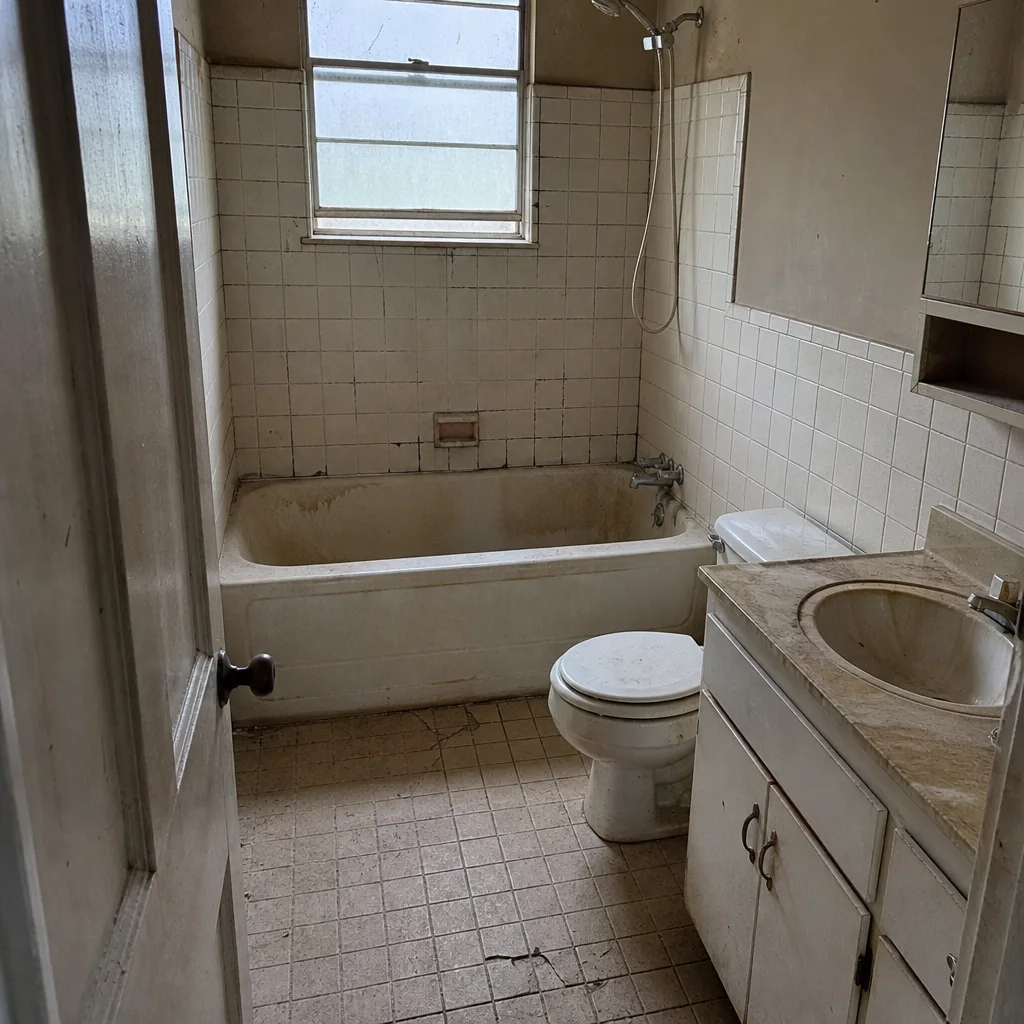 Before
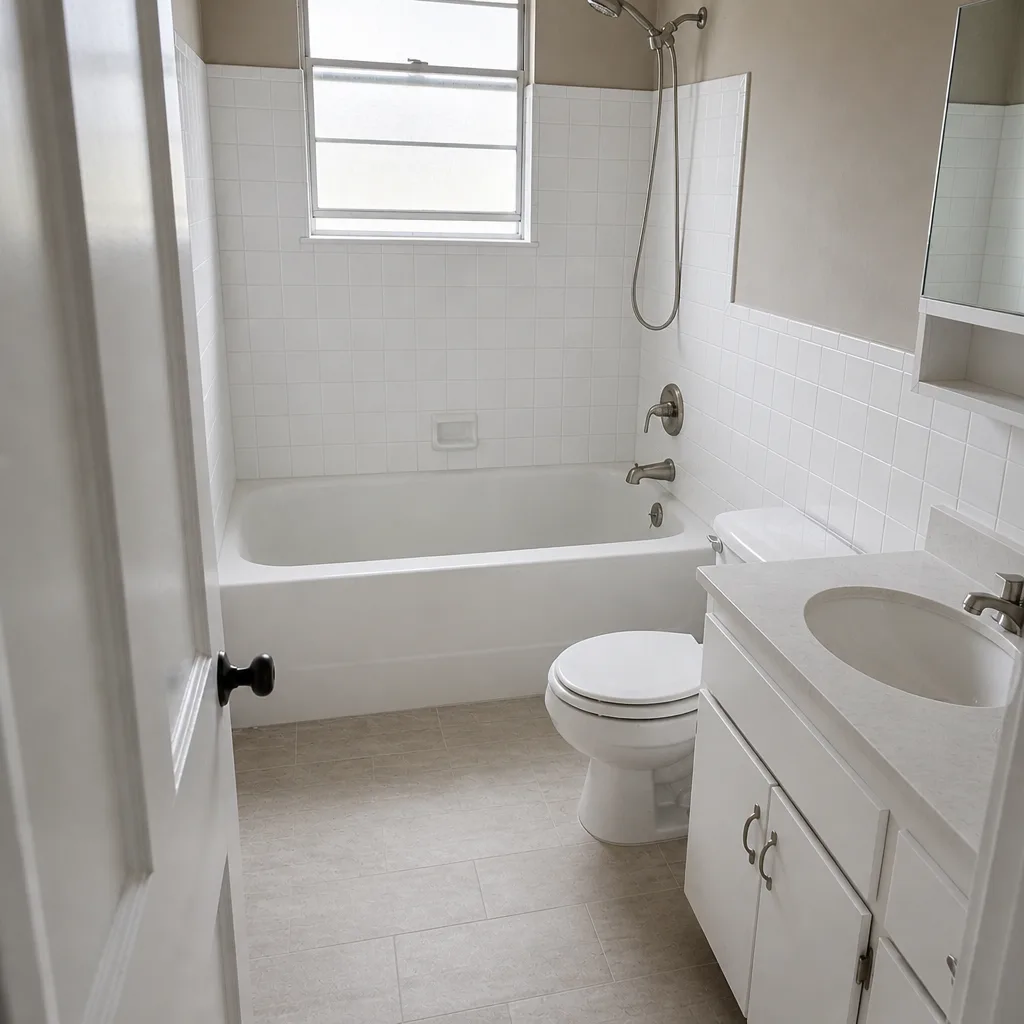 After
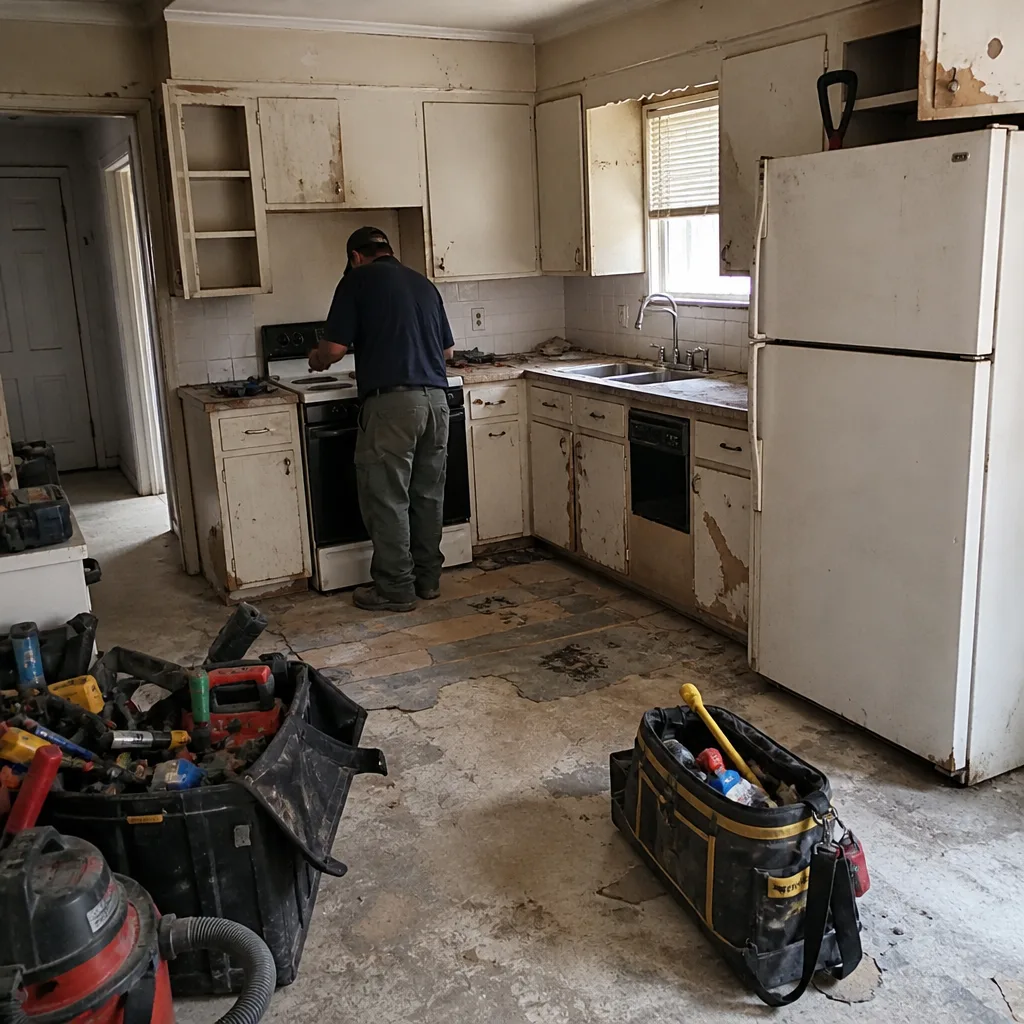 Before
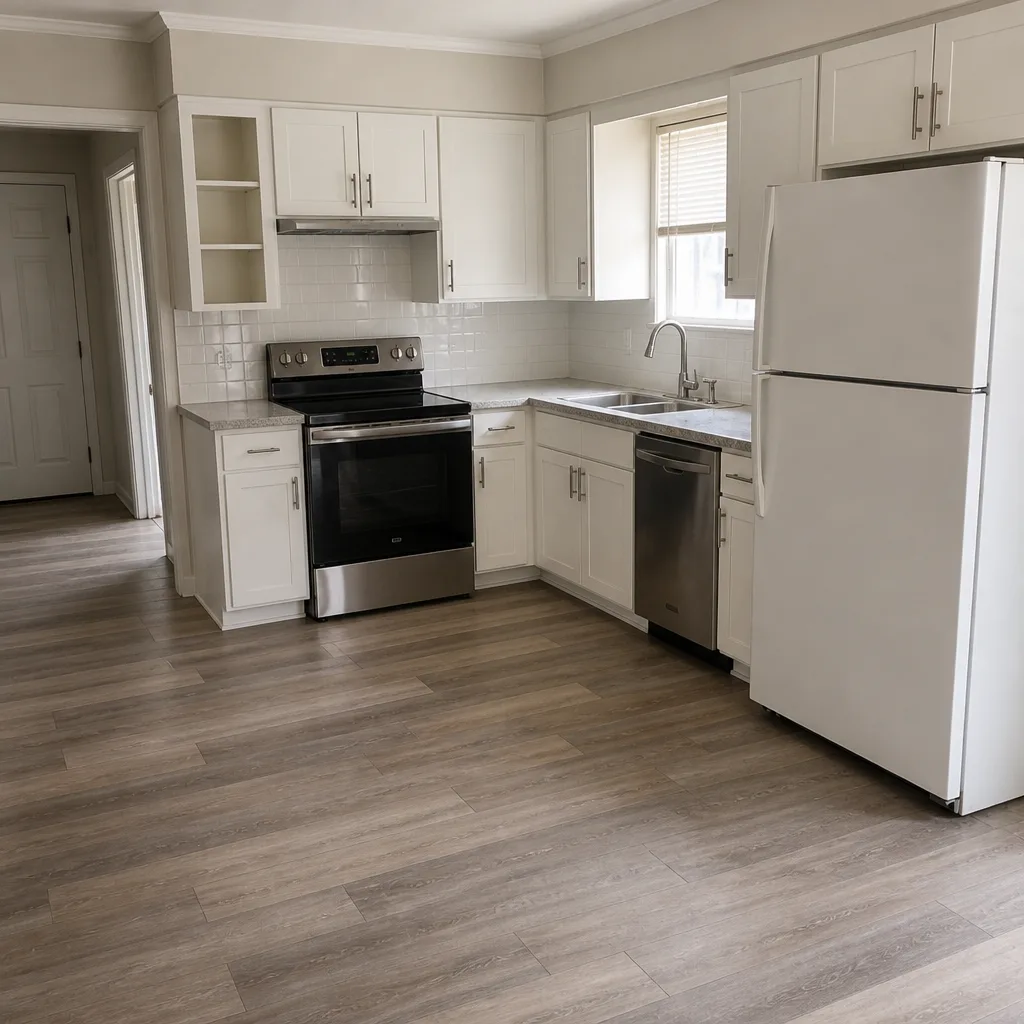 After
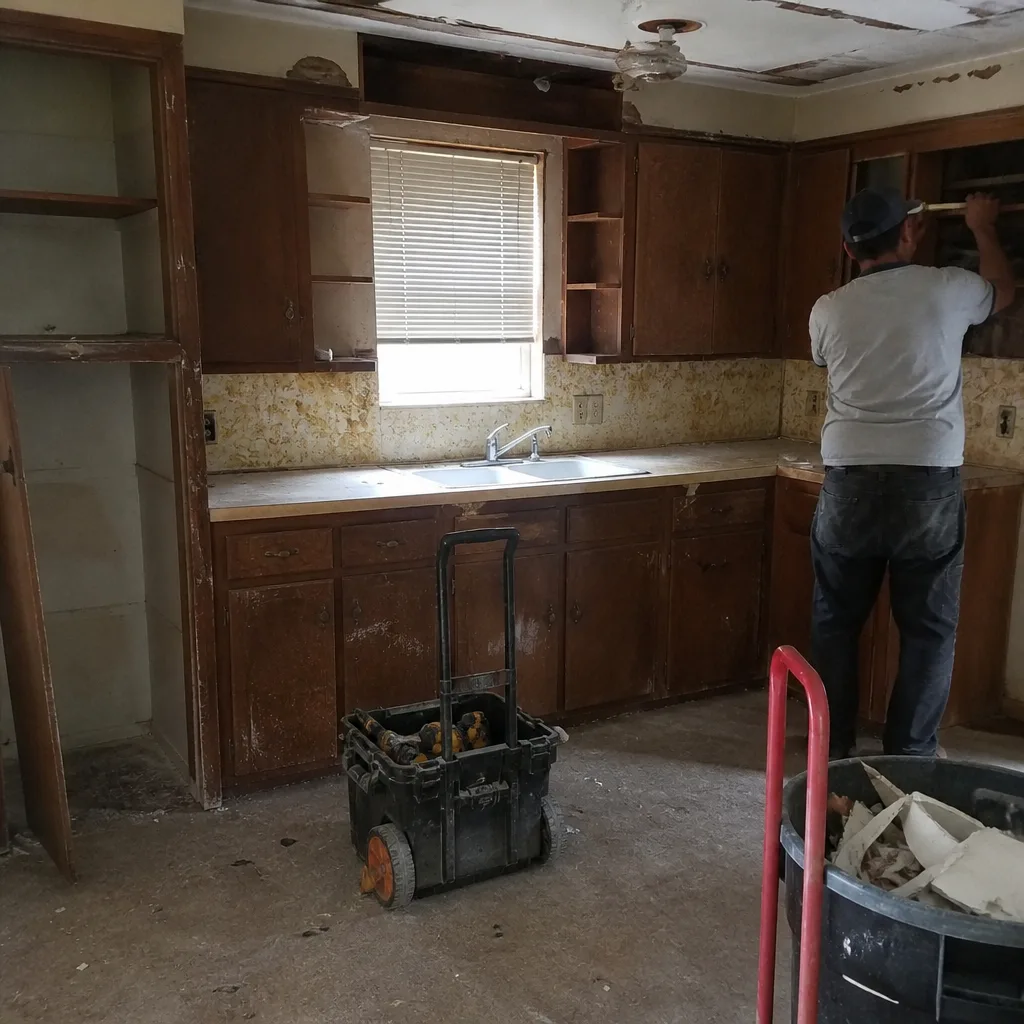 Before
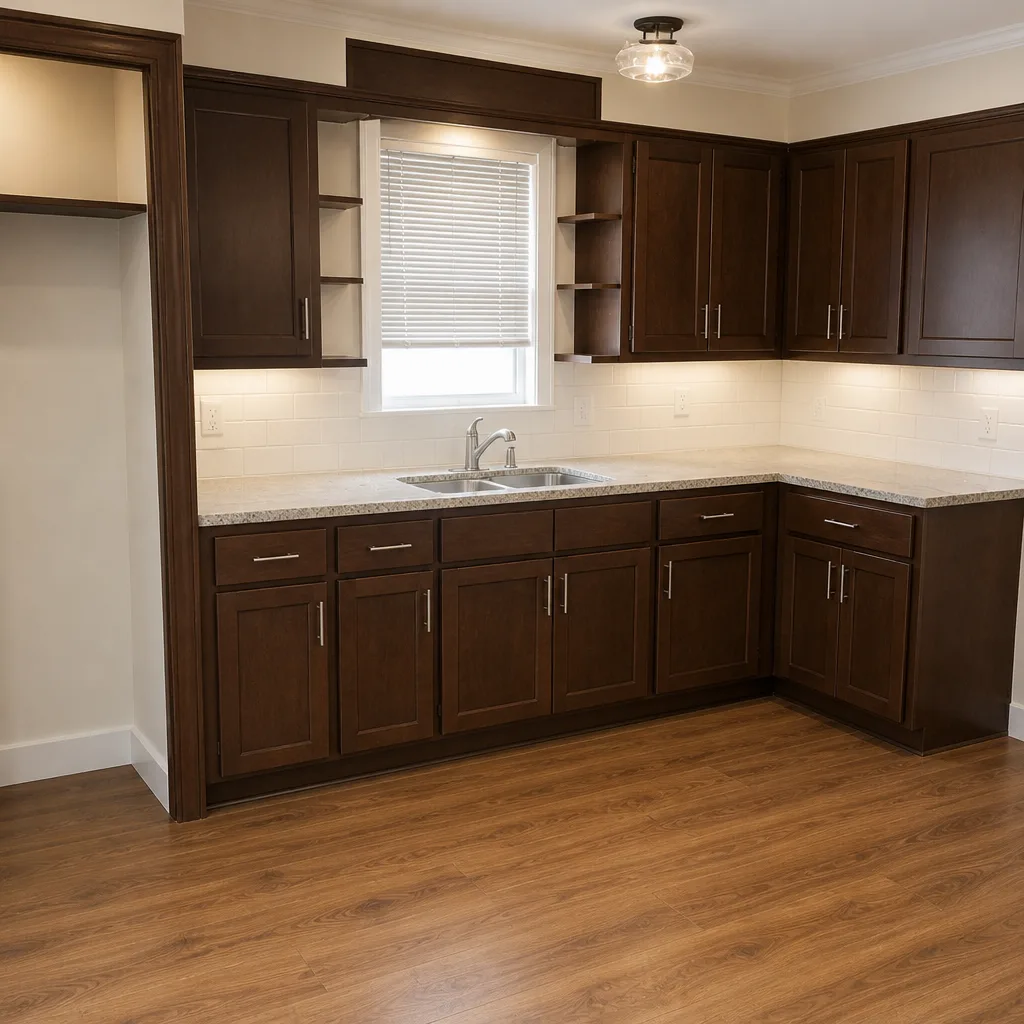 After
When to Call a Professional
Call a professional when the signal is structural, when water is moving through the assembly, or when you have two or more warning signs confirming each other. Specifically: a straightedge that rocks on the bathroom floor, a moisture meter reading over 15 percent in two locations, a tub out of level by a quarter inch or more, efflorescence or hollow tile anywhere on the shower floor, a toilet that rocks at all after being reset, or a fan ducted into the attic. These are not the cases where a homeowner fixes it with a tube of caulk – they’re the cases where the fix needs a documented scope and a written price.
Rowan Construction Group Fort Worth offers free estimates for bathroom remodeling in Fort Worth – call (833) 570-6084 to schedule yours. Bring your measurements and photos, or bring a competitor’s written estimate and we’ll review it line by line at no charge.
Frequently Asked Questions
Cosmetic re-grouting runs $300 to $600, a failed shower pan rebuild runs $1,800 to $4,000, a deflected subfloor under a tub runs $2,500 to $5,500, and a full tile substrate replacement runs $2,800 to $6,500. The wide range exists because the difference between cosmetic and structural is exactly the point of documenting first. Call (833) 570-6084 for an exact quote on your bathroom – estimates are free.
Not on our projects, and never without a signed change order. We deliver a flat written price with a written scope and written warranty before anyone starts, and the Haven Standard requires that no change proceeds without a signed change order. Across 4,000-plus projects that discipline has kept final costs within a few percent of the agreed number.
Yes. Bathroom remodeling in Fort Worth requires permits for most structural, plumbing, and electrical work, and pulling them is part of the scope, not an add-on. The permits and the subsequent inspections are part of the documented record you receive at the end.
A straightforward cosmetic refresh takes two to three weeks; a rebuild down to the framing runs four to six weeks depending on permitting time in Fort Worth and material lead times. The written scope includes a schedule, and the schedule is part of what the price was quoted against.
Sometimes. A crack that runs diagonally across the tile field and widens in late summer is likely foundation movement from Tarrant County’s clay soil. A crack that runs along the grout grid and stays constant is usually material fatigue. The straightedge test and the moisture meter tell you which; a foundation inspection confirms it. Call (833) 570-6084 for a free estimate before you spend on new tile.
If it’s not done right, we make it right for 365 days after the work is completed. The promise is printed on every page and backed by a terms page, not an asterisk. You can read the exact terms before you sign anything.
The Bottom Line
Bathroom problems are cheap to find and expensive to postpone. Grout cracks that widen, drywall that softens at the baseboard, a toilet that rocks, a tub out of level by a quarter inch, condensation on a fan grille – each is a measurable signal with a known repair cost attached. The straightedge and the meter are what separate cosmetic from structural. In Fort Worth, the clay soil means movement shows up in bathroom tile first, so those signals deserve attention rather than a fresh coat of caulk. Document what you find with photos and numbers, get a free second opinion on any written estimate, and get the price written before any work starts. That’s how a $45 repair stays a $45 repair.
Contact
If your bathroom is showing any of these signals and you want a written number before anyone picks up a tool, call Rowan Construction Group Fort Worth at (833) 570-6084 for a free estimate. We quote a flat written price with a written scope and a written warranty, we pull the permits and document the work with a photo record on every visit, and we back the job with the 365-Day Done Right Promise. A free second opinion on any competitor’s written estimate is available any time – bring it in and we’ll read it line by line with you.
Written by the team at Rowan Construction Group Fort Worth.