Last updated November 18, 2026




Free written scope consultation - allowances, timeline, and change-order rules on paper before a single trade is scheduled
Windows & Doors Maintenance Schedule: What to Do and When
Lubricating a casement window operator in October takes four minutes and about $6 in silicone spray. Replacing a seized operator in February, when the window won’t close ahead of a cold front, runs $150 to $400 per unit, plus the energy loss from a sash that has been sitting partly open for weeks. The same math repeats across every window and door in a Fort Worth house. Timing decides whether maintenance costs you minutes or hundreds of dollars. This guide assigns each task to the month it matters most in Tarrant County, names the products, and shows you what to photograph so a warranty claim or hail inspection goes your way.
Quick Answer
In Fort Worth, window and door maintenance follows the local weather calendar, not a generic annual checklist. Inspect after every hail event in March through May, check weatherstripping before cooling season in May, lubricate hardware before heating season in October, and inspect door thresholds and sweeps in December. The single most valuable habit is a photo record of frame corners, caulk lines, and hardware function taken once a year.
Styles & brands we work with
- Kitchen remodeling
- Bathroom remodeling
- Home additions & ADU
- Roofing
- Windows & doors
- Driveway & pavers
- Fence
Table of Contents
- Why a Seasonal Schedule Beats an Annual Checklist in Fort Worth
- The Fort Worth Month-by-Month Calendar
- How to Inspect an IGU Seal with a Flashlight and a Straight-Edge
- Weatherstripping: The May Check Before Cooling Season
- Hardware Lubrication: Silicone Spray vs. WD-40
- Door Thresholds and Sweeps: Measuring the Gap
- What to Document Annually for Warranty and Insurance
- Common Mistakes to Avoid
Why a Seasonal Schedule Beats an Annual Checklist in Fort Worth
Generic homeowner checklists assume four mild seasons and steady humidity. Fort Worth does not cooperate. A single spring can deliver baseball-sized hail in April, three weeks of 100-degree highs in June, and a hard freeze in February that cracks a poorly sealed frame. Each of those events stresses windows and doors differently, and the damage compounds if you only look at them once a year.
Hail is the loudest factor. In neighborhoods like Arlington Heights, Ridglea, and Tanglewood, we regularly see dented window screens, chipped vinyl frames, and cracked glass that homeowners don’t notice until the next storm season. A post-hail walkthrough in March catches these while an insurance claim window is still open.
Peak UV is the quiet one. Fort Worth summers push UV index into the 10 to 11 range for weeks, and that intensity degrades caulk and weatherstripping faster than in cooler climates. Windows facing south and west take the worst of it. A door sweep that seals fine in Colorado may need replacing every two to three years here.
Freeze-thaw is the third force. When temperatures swing from 70 degrees to 20 degrees in a single week, as they did during recent North Texas cold snaps, moisture trapped in a compromised seal expands and contracts. That’s what turns a hairline crack into a failed insulated glass unit.
The takeaway: schedule by Fort Worth’s calendar, not the calendar printed in a national home magazine. And when you need a repair beyond maintenance, our Rowan Construction Group Fort Worth home page outlines the trades we cover.
The Fort Worth Month-by-Month Calendar
Here is the schedule we recommend for any home in Fort Worth. Every task on this list is one a homeowner can complete without special equipment, except where noted.
- March – Post-hail inspection. Walk the exterior after any hail event. Check screens, frame corners, glass for chips, and caulk lines. Photograph everything you find. File an insurance claim within the policy window if damage is present.
- April – Screen and track cleaning. Remove screens, rinse with a hose, and clear tracks of grit before pollen season peaks. Grit in a track grinds the rollers and accelerates wear.
- May – Weatherstripping check. Test every door and operable window for air leaks before cooling season. Replace any stripping that has flattened, cracked, or pulled loose.
- June – IGU seal inspection. Run the flashlight and straight-edge test on every double-pane window (full method below).
- July – Exterior caulk review. Inspect caulk lines around frames and re-caulk any cracks wider than a credit card edge.
- September – Post-summer hardware check. Test every lock, latch, and operator after a summer of heavy use.
- October – Hardware lubrication. Lubricate casement operators, sliding door tracks, and hinges with silicone spray before heating season.
- November – Draft check. Hold a tissue near door edges and window frames on a windy day to spot air movement.
- December – Threshold and sweep inspection. Measure the gap under every exterior door and replace sweeps that no longer seal (method below).
That’s nine tasks spread across the year, none of them taking more than an afternoon. Fort Worth homeowners who follow this schedule typically avoid the emergency repair calls that cluster in January and February, when a window that won’t close becomes urgent.
How to Inspect an IGU Seal with a Flashlight and a Straight-Edge
An insulated glass unit (IGU) is the sealed sandwich of two panes with a gas or air gap between them. When the perimeter seal fails, moisture gets in and the unit fogs from the inside. Left alone, the fog spreads and the unit eventually needs full replacement. Catching it early lets you plan the work instead of reacting to it.
You don’t need tools for this inspection. A flashlight and a straight-edge (a ruler or a credit card works) are enough. Here is the ten-minute-per-window method we use:
- Shine the flashlight at a low angle across the glass from inside the room. A failing seal shows as a hazy or milky patch, often starting at the bottom edge.
- Hold the straight-edge against the glass and look for a wavy reflection. A distorted reflection can signal separation between panes.
- Check the perimeter gasket with your fingertip. Any gap, crack, or soft spot in the black seal around the unit is a failure point.
- Look for condensation between the panes, not on the room-side surface. Condensation inside the sandwich is a confirmed seal failure.
- Photograph any fog or distortion with a date. If the window is still under warranty, the photo is your evidence.
In Fort Worth, we see IGU failures cluster on west- and south-facing windows after five to seven years, largely from UV and thermal cycling. If you’re seeing fog on multiple windows in the same wall, that’s a pattern, not a coincidence.
Weatherstripping: The May Check Before Cooling Season
Weatherstripping is the flexible material that seals the gap between a door or window sash and its frame. When it flattens or cracks, conditioned air escapes and outside air comes in. In Fort Worth, where July electric bills can spike from a single leaky door, the May check pays for itself fast.
Do the dollar-bill test: close the door on a dollar bill so half hangs inside and half outside. If you can slide the bill out with no resistance, the stripping isn’t sealing. Repeat at the top, bottom, and both sides of the door. If any spot slips freely, the stripping needs replacement.
What to use depends on the application. Felt stripping is cheap but flattens within a season in a hot climate. Foam tape is better but still short-lived. For Fort Worth, we recommend silicone or EPDM bulb stripping because it holds its shape through heat and doesn’t dry out the way foam does. Available at any home center; expect $10 to $25 per door for materials.
For sliding windows, check the pile strip in the track. If it looks matted, it has compressed and needs replacing. A five-minute job per window with a $6 roll of pile strip.
Hardware Lubrication: Silicone Spray vs. WD-40
Here’s where most guides go wrong. They tell you to spray WD-40 on window tracks. In Fort Worth, where vinyl frames are common, that advice damages the hardware over time. WD-40’s petroleum distillates attack vinyl and can degrade the plastic components in casement operators and sliding tracks within a few seasons.
Use silicone spray instead. It lubricates without leaving a residue that traps grit, and it’s safe for vinyl, aluminum, and wood. A $6 can lasts years. Apply in October before heating season, when operators and hinges sit idle and any sticking goes unnoticed until you need them.
What to lubricate:
- Casement and awning window operators (the crank mechanism)
- Sliding door tracks (top and bottom)
- Hinges on exterior doors
- Lock cylinders and deadbolts (a graphite or silicone lock lubricant)
- Window roller assemblies in sliding windows
What not to lubricate: weatherstripping (it attracts grit), glass (obvious), and anything that contacts painted surfaces.
When hardware has already seized, lubrication won’t fix it. A seized operator is a replacement, and in Fort Worth that runs $150 to $400 per unit installed depending on size and mechanism. Scheduling the work in fall, ahead of cold-front timing, keeps the cost and the inconvenience separate.
Door Thresholds and Sweeps: Measuring the Gap
The threshold is the sill at the bottom of an exterior door; the sweep is the flexible piece attached to the door bottom that seals against it. Together they stand between your conditioned air and the Fort Worth outdoors. A gap the width of a pencil under a standard exterior door can leak roughly the energy cost of a small appliance running year-round, and it lets in insects, dust, and humidity that damages flooring.
Measure the gap accurately before ordering a replacement sweep, because sweeps come in different heights:
- Close the door fully and shine a flashlight from outside along the bottom edge.
- Slide a piece of paper or a credit card under the door. If the paper slides freely with no contact, the sweep isn’t reaching the threshold.
- Measure the height of the gap with a ruler at the hinge side, latch side, and center.
- Match the gap to a sweep height. Standard sweeps cover 1/4 inch to 1/2 inch; deeper gaps call for a door shoe or an adjustable threshold.
In older Fort Worth homes, particularly in neighborhoods like Ryan Place and Mistletoe Heights, thresholds are often original and out of level after decades of settling. In those cases, adjust the threshold first, then replace the sweep. That saves you buying a sweep that doesn’t actually cover the gap.
What to Document Annually for Warranty and Insurance
Documentation is the part nobody does, and it’s what makes the difference between a smooth warranty claim and an argument. Every year, take the same set of photos of every window and exterior door, dated. Here’s what to capture:
- Frame corners – all four, exterior and interior, to document any cracks or seal separation
- Caulk lines – close-up shots of the caulk where frame meets siding or drywall
- Hardware function – a short video of each operator, lock, and latch opening and closing smoothly
- IGU glass – a shot angled across each double-pane window to catch fog or haze
- The threshold and sweep – a shot showing the door bottom against the threshold, plus a flashlit shot of any light leaking through
- Any visible damage from hail or storms – with a date referenced somewhere in the frame or file name
Store the photos in a cloud folder with the year in the name. When a hail event damages a window screen or cracks a frame, you have a before photo proving the condition of the window beforehand. Insurance adjusters and warranty departments both respond better to a dated record than to a verbal description.
We include a documented photo record on every visit as a standard deliverable, not an upgrade – it’s part of the discipline behind the Fence Installation in Fort Worth and window and door work we do, and it’s how the customer knows what was found and what was fixed.
Common Mistakes to Avoid
- Spraying WD-40 on vinyl window tracks. The petroleum distillates degrade the plastic. Silicone spray does the job without the damage.
- Skipping the post-hail walkthrough. Fort Worth hail damage is often invisible until the next season. A ten-minute inspection in March catches it while an insurance claim is still open.
- Replacing an IGU before confirming the seal failed. Fog between panes is a seal failure; fog on the room-side surface is just humidity. Test before you buy.
- Buying a sweep without measuring the gap. A sweep that doesn’t reach the threshold wastes the money. Measure hinge, latch, and center first.
- Ignoring the threshold on a settling old home. In Mistletoe Heights and Ryan Place, the threshold often needs adjusting before a sweep will seal.
- Letting a seized operator wait until winter. In February, a window that won’t close is urgent. Lubricate in October and you won’t face that.
- Failing to document. The dated photo record is what wins a warranty claim. Without it, you’re arguing from memory.
The other piece of maintenance that often gets deferred on Fort Worth homes is the exterior envelope – our Driveway & Pavers in Fort Worth page describes the same seasonal pattern: water management matters more than any single repair.
See the difference
 Before
 After
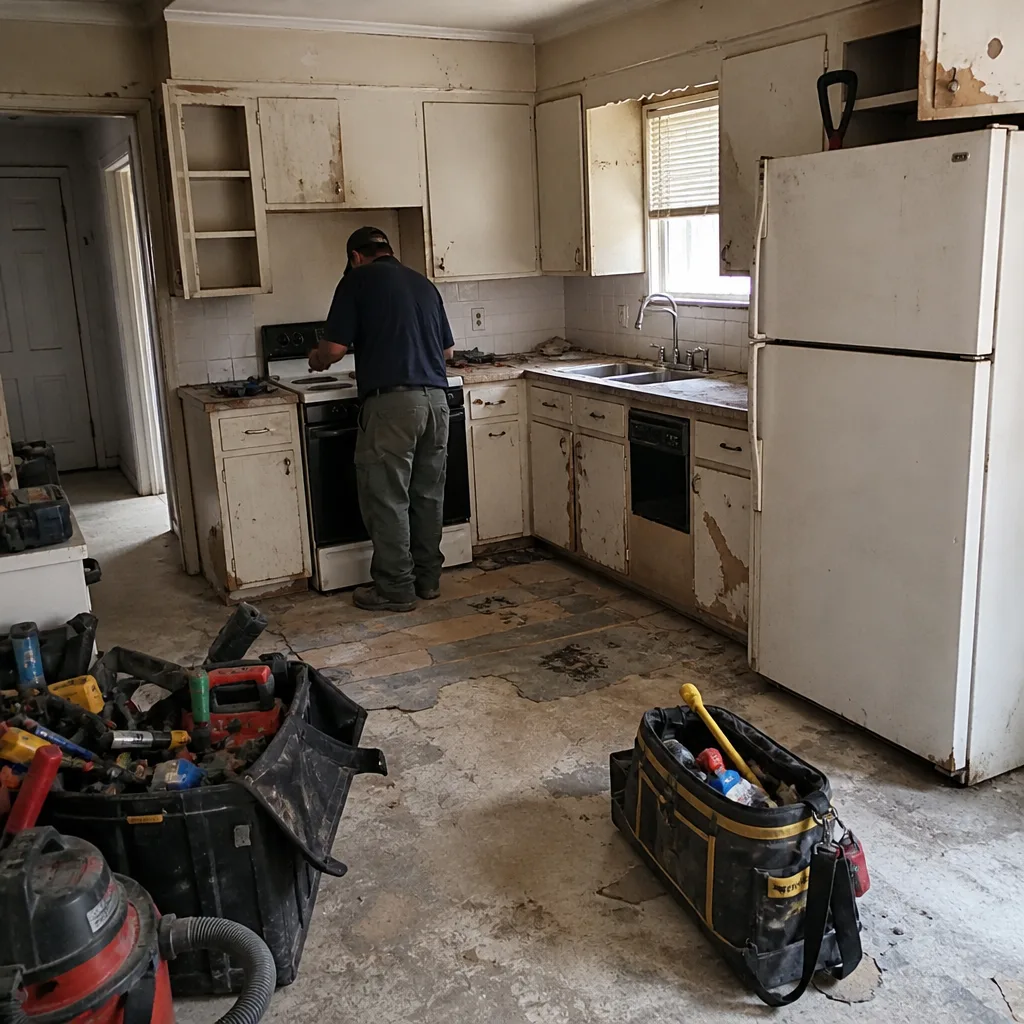 Before
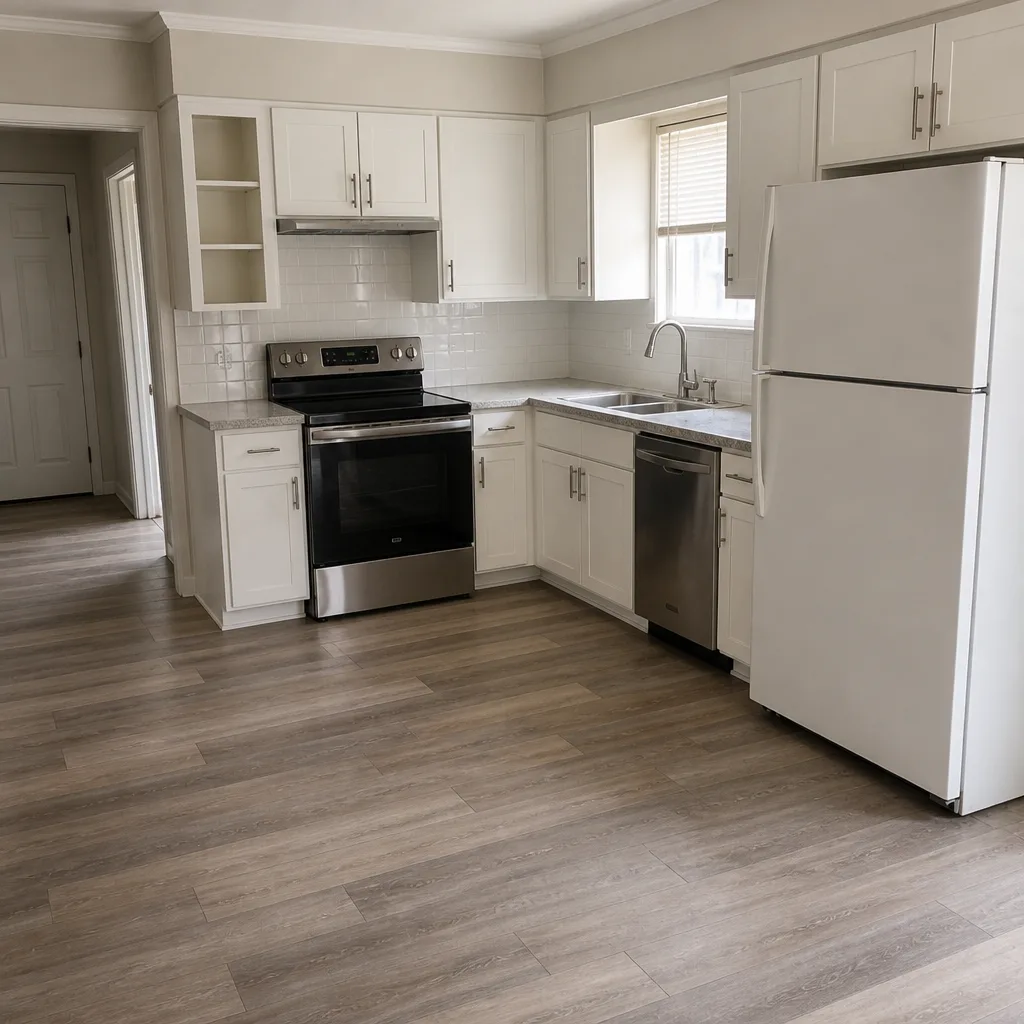 After
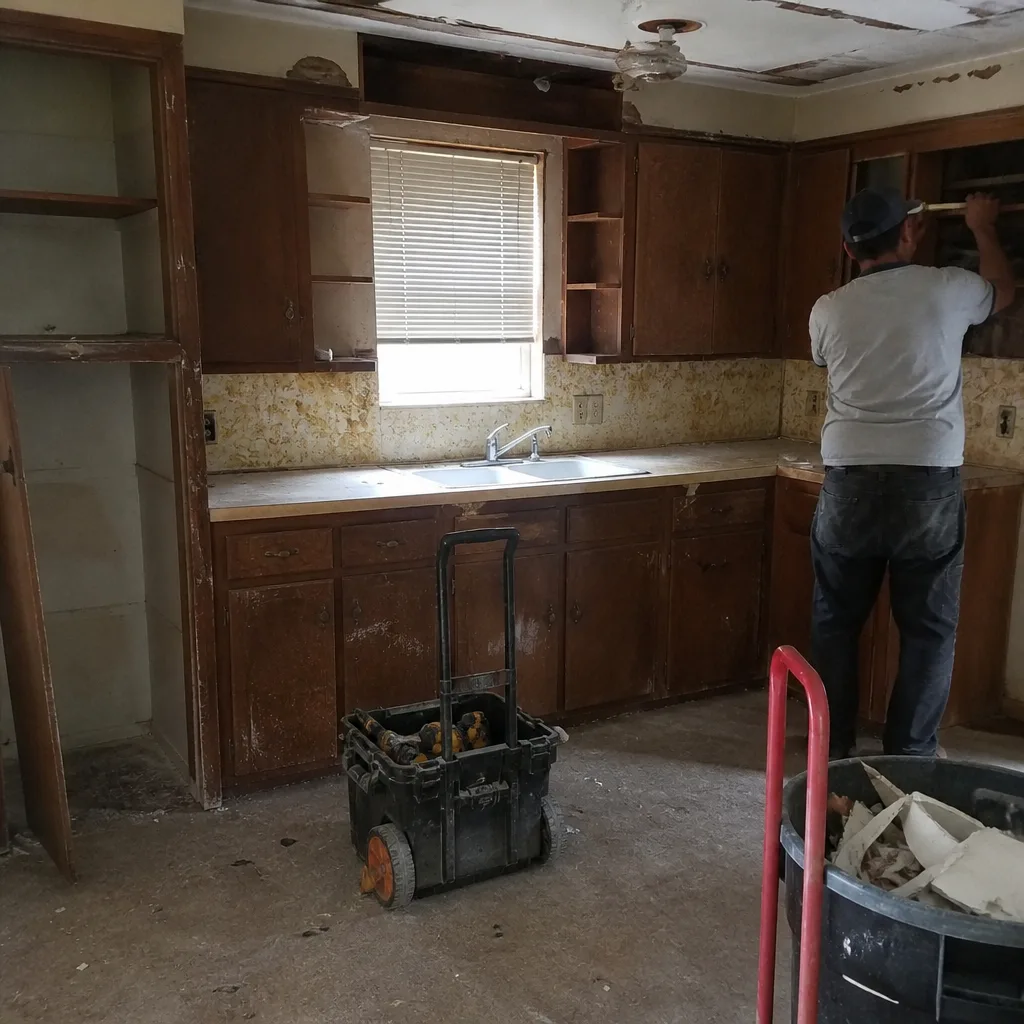 Before
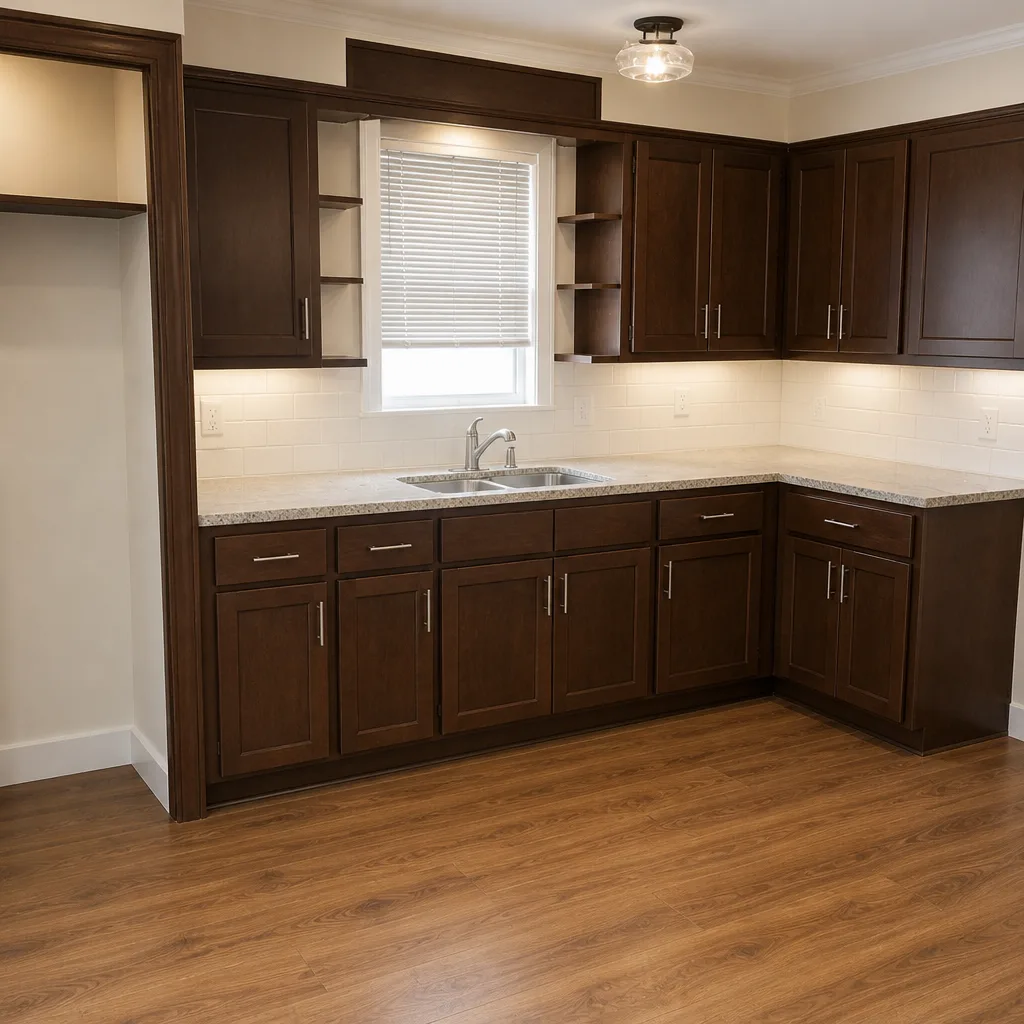 After
When to Call a Professional
Some window and door problems are maintenance; some are structural or safety matters. Call a professional when you find: fog spreading inside an IGU (seal failure requires unit replacement), a casement operator or hinge that won’t move after lubrication (the mechanism has seized or stripped), water staining on the interior drywall around a window (the leak is inside the wall, not at the glass), a frame that moves when you press it (rotted substrate or failing anchors), or a door that no longer squares to the frame (the threshold or frame has shifted, and adjusting it is a carpenter’s job, not a homeowner’s).
If your window or door work overlaps with a larger project – opening a wall, adding a room, or building an ADU, where window and door installation is spec-driven and permit-inspected – our Home Additions & ADU in Fort Worth page has the process detail. Rowan Construction Group Fort Worth offers free estimates in Fort Worth; call (833) 570-6084. A written price before any work starts is standard on every job we quote.
Frequently Asked Questions
Inspect exterior frames and glass after every hail event, and run the full schedule – weatherstripping in May, IGU seals in June, hardware lubrication in October, thresholds in December – four times a year at minimum. Fort Worth’s storm season and UV load mean more frequent checks than a colder climate requires.
A failed IGU seal lets moisture into the gas gap, which then condenses on the inside of the glass. In Fort Worth, UV and thermal cycling are the main causes, and failures typically appear on west- and south-facing windows after five to seven years. The unit has to be replaced; you can’t dry it out once the seal has failed.
Yes. WD-40’s petroleum distillates degrade vinyl and plastic components over time, while silicone spray lubricates without attacking them. Use silicone on tracks, operators, and hinges. Reserve WD-40 for rusted metal fasteners, not window hardware.
Close the door and shine a flashlight along the bottom edge; if light shows through, the sweep isn’t sealing. Confirm with the paper test – if a sheet of paper slides under the closed door with no resistance, measure the gap and order a sweep that covers it. In Fort Worth, door sweeps often need replacing every two to three years because heat flattens the material.
Often yes, if the damage is documented and the claim is filed within the policy window. That’s why the post-hail photo record matters – dated photos before and after the event give the adjuster clear evidence. Call your insurer as soon as you spot damage.
Call us when the problem is inside the wall (water staining on drywall), the mechanism has seized, or the frame has moved. Maintenance you can handle yourself; structural issues need a professional eye. Call (833) 570-6084 for a free estimate.
The Bottom Line
Window and door maintenance in Fort Worth is a seasonal rhythm, not an annual chore. March hail inspections, May weatherstripping checks, October hardware lubrication, and December threshold checks catch the failures that otherwise become emergency repairs. Silicone spray, a flashlight, and a straight-edge handle most of the work. The photograph habit is the one that pays off when a warranty claim or hail inspection comes. If a problem turns out to be structural, or if you’d rather have a documented inspection done by the team, call (833) 570-6084 for a free estimate under our written-price, no-change-order discipline.
Written by the team at Rowan Construction Group Fort Worth.