Last updated November 18, 2026


Free written scope consultation - allowances, timeline, and change-order rules on paper before a single trade is scheduled
Driveway & Pavers Troubleshooting: Common Problems and How to Fix Them
Two pavers rock underfoot when you walk to the mailbox. From the curb they look identical. One will cost you around $200 to reset with fresh joint sand; the other can run $3,000 once the base gets excavated. Same wobble, wildly different bill. In our experience across Fort Worth, most people call a contractor describing “a sunken paver” without knowing which failure they actually have, and that gap costs real money on the first phone call. This guide gives you the diagnostic order, the Fort Worth-specific failure patterns, and the cost benchmarks for each repair tier, so you can name what’s wrong before anyone quotes a fix.
Quick Answer
Most driveway paver problems in Fort Worth come from one of three root causes: inadequate base compaction, a missing or undersized edge restraint, or joint sand washout. Isolated rocking pavers usually mean washed-out bedding sand (a $0.50 – $1.50 per square foot re-sand). Perimeter pavers spreading outward point to edge restraint failure. Multiple pavers sinking together in a pattern means the base itself has failed and needs excavation. Diagnose which one you have before you request a quote; the repair pathways differ by thousands of dollars.
Styles & brands we work with
- Kitchen remodeling
- Bathroom remodeling
- Home additions & ADU
- Roofing
- Windows & doors
- Driveway & pavers
- Fence
Table of Contents
- How to Diagnose Your Paver Problem in Three Steps
- Base Failure: When Multiple Pavers Sink in a Pattern
- Edge Restraint Failure: Pavers Spreading From the Perimeter
- Isolated Sand Washout: Single Pavers That Rock
- The Fort Worth Spring Rain Wash-Out Cycle
- What Each Repair Tier Actually Costs
- What a Contractor’s Written Repair Scope Must Include
- Repair vs. Replace: When the Math Flips
How to Diagnose Your Paver Problem in Three Steps
Do this in order. Each step narrows the diagnosis, and the last one tells you whether you’re looking at a small repair or a base reconstruction.
- Map the failure pattern. Walk the driveway and mark every paver that moves, sounds hollow, or sits below grade. A cluster of sunken pavers in a connected area is a base problem. One or two isolated movers are a bedding sand problem. Markers that spread outward from the driveway edges are restraint trouble.
- Check the perimeter. Look at the outer edge of the driveway where it meets grass, a curb, or another surface. If the edge pavers lean or the restraint is loose, cracked, or missing, that’s an edge failure, and any surface repair will fail again until it’s fixed.
- Probe the joint sand. Pour a small amount of water on the joints. If it disappears immediately, the joint sand is depleted and water is entering the base. If it pools, water is draining somewhere else, or the surface is pitched incorrectly, which is a separate problem worth noting.
We’ve seen the diagnostic order matter more than the repair itself. A Fort Worth homeowner who identifies a cluster of sunken pavers before calling will ask for a base assessment rather than a re-sand, and the quote they get matches the actual failure. Under Clause 1 of the Haven Standard, the written price comes before any work starts, so getting the diagnosis right on the front end is the cheapest thing you’ll do all year.
Base Failure: When Multiple Pavers Sink in a Pattern
Base failure is the expensive one, and it announces itself with a pattern. Not one paver but four, six, ten pavers sinking together along a line or across a wider area. In Fort Worth, the most common driver is the soil underneath: expansive clay that swells when wet and shrinks when dry. A paver base that wasn’t compacted in lifts, or was too thin to begin with, doesn’t have the stiffness to bridge that clay movement. The surface telegraphs it.
Common signs:
- Multiple pavers sitting below the surrounding surface in a connected area, often along a wheel path or at the top of a slope
- Joints widening in the failed zone and narrowing where the pavers have pushed outward
- Water pooling after rain in the sunken area instead of draining off
- A hollow sound when you tap the pavers with a mallet or the handle of a screwdriver
A base failure of this type doesn’t respond to a re-sand. The contractor lifts the affected field, excavates to the proper depth (in the Fort Worth area, most paver installations are built on a base of 4 to 8 inches of compacted aggregate, depending on the drive’s use), re-compacts in 2- to 3-inch lifts, and re-lays the pavers. That’s a $10 – $16 per square foot job, not a $1 per square foot job. The reason it’s worth paying for is that anything short of fixing the base puts new sand on top of a failure that will re-open next spring.
Edge Restraint Failure: Pavers Spreading From the Perimeter
Edge restraint is the hidden component that holds everything together. It’s the aluminum, steel, or concrete border set along the perimeter of the driveway to keep the pavers from pushing outward under load. When the restraint is loose, missing, or too shallow for the pavement, the pavers migrate outward and the joints widen. The failure starts at the edge and works inward, so it looks dramatic from the curb and subtle in the middle.
In our experience across Fort Worth, edge restraint failure shows up in a few recurring ways: an aluminum L-channel that wasn’t spiked into compacted base (spiked into topsoil instead), concrete curbs that cracked after a freeze, and restraint that was undersized for the driveway’s load. We’ve seen it most often on shorter driveway aprons built quickly in the 2010s, before the property was fully settled.
The repair pathway:
- Lift the affected perimeter pavers
- Remove or replace the restraint; aluminum is fine for most residential drives, steel or poured concrete where vehicles turn or park on the edge
- Re-spike or re-bed the new restraint into compacted base, not soil
- Re-set the perimeter pavers, re-sand the joints, and check the overall grade so water still pitches away from the house
Edge restraint repair usually overlaps a re-sand of the affected zone, so you’re typically paying the paver reset tier ($4 – $8 per square foot) plus a small restraint charge. The fix holds far better than a surface re-sand that ignores the cause.
Isolated Sand Washout: Single Pavers That Rock
This one is cheap, and it’s the easiest to mistake for something worse. One or two pavers rock or sit slightly low, with intact edges and no spillover of the surrounding field. The bedding sand under those specific pavers has washed out. Sometimes a hose, downspout, or gutter dumped its discharge onto that spot. Sometimes the joint sand in that zone was never fully filled, and every storm moved a little more material away.
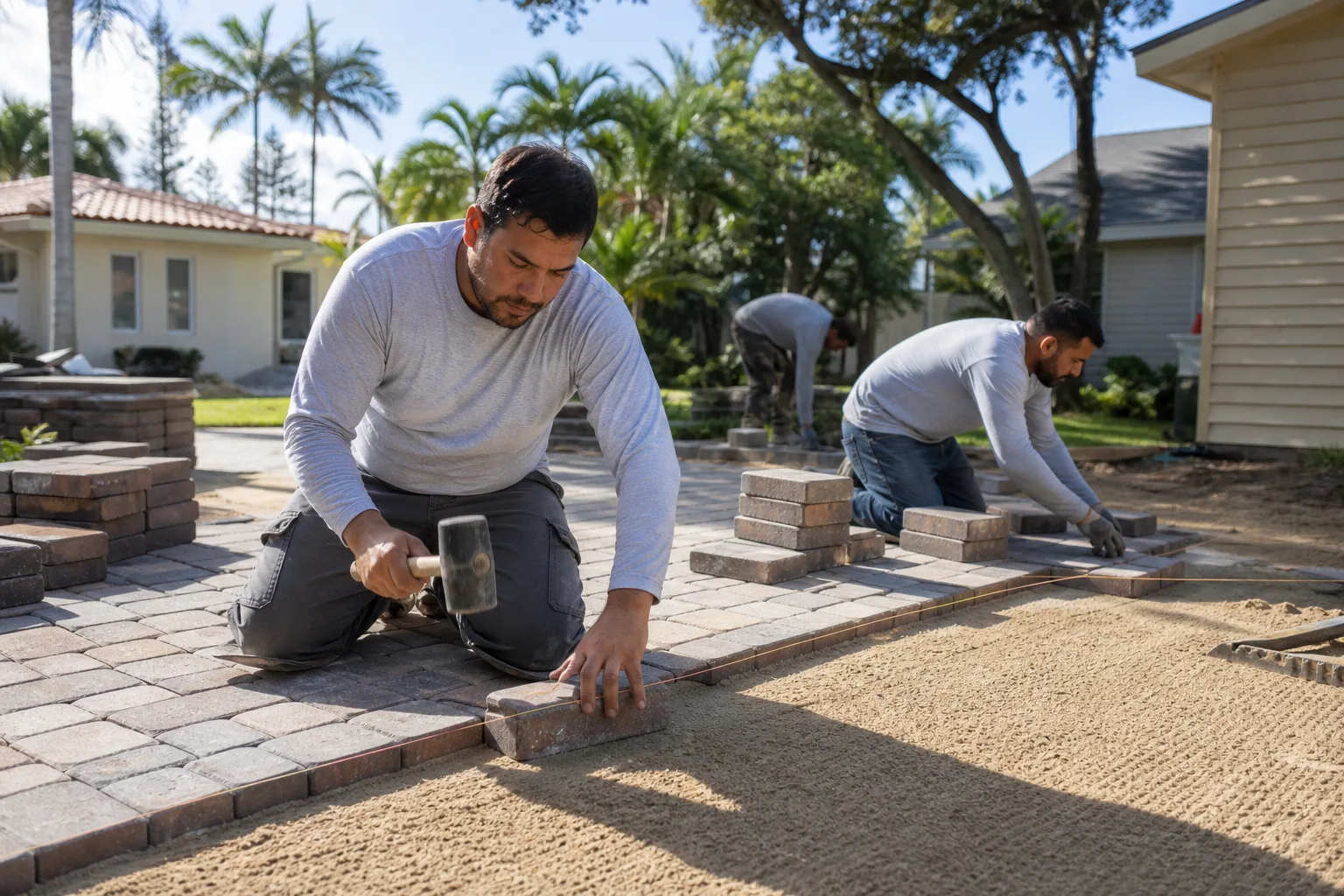
The repair is a targeted paver reset:
- Lift the loose pavers with a paver extractor (or two flat pry bars and a careful hand) and set them aside
- Re-level the bedding sand beneath them, adding a small amount of concrete sand if it’s depleted
- Re-set the pavers and check they’re flush with the surrounding field
- Sweep polymeric sand into the joints and wet it per the manufacturer’s instructions
At $0.50 – $1.50 per square foot for re-sanding, this is the least expensive fix in the guide. But treat it as a signal: if a specific spot washes out more than once, water is getting in from somewhere, and the next step is tracing the drainage rather than re-sanding the same few pavers every spring. We’ve seen North Texas homeowners re-sand the same corner of a Fort Worth driveway three seasons running before someone looked up and found the gutter discharging there.
The Fort Worth Spring Rain Wash-Out Cycle
Fort Worth springs are hard on joint sand. The metro gets a concentrated stretch of heavy rain events in March, April, and May, often with short high-intensity bursts. Water moves into depleted joints, lifts the polymeric sand, and drains into the base. Each storm takes another layer. Left alone, that washout stops being a surface problem and starts eroding the bedding sand, then the base itself.
The cycle looks like this:
- Spring storm one: joints are full but the sand is slightly loose on the surface
- Spring storm two or three: the polymeric binder is broken, and sand starts to wash out visibly
- Mid-summer: joints appear open (you can see the sand is below the paver chamfer), water enters freely at every rain event
- Next spring: isolated pavers start rocking; the driveway is now in the re-sand tier but headed for the reset tier if the pattern widens
The telltale sign is joint height. On a healthy Fort Worth driveway, polymeric sand sits nearly flush with the paver surface. Once it’s a quarter-inch or more below, water is entering at a rate the base was never designed to absorb. That’s when we recommend a full re-sand, not a spot touch-up. It’s a modest cost and it buys you a dry base through the next rainy season.
What Each Repair Tier Actually Costs
Costs vary with square footage, access, and how much base is exposed. These are the ranges we work from for Fort Worth driveways, written as line items you can compare against a quote.
| Repair Tier | Typical Cost | What It Fixes | What It Doesn’t Fix |
|---|---|---|---|
| Re-sand joints (polymeric) | $0.50 – $1.50 / sq ft | Depleted joint sand, minor surface washout | Bedding sand loss, base settling |
| Paver reset with added base material | $4 – $8 / sq ft | Isolated bedding sand washout, minor edge lifting | Widespread base failure |
| Full base reconstruction | $10 – $16 / sq ft | Compaction failure, undersized base, expansive clay movement | Drainage problems upstream of the drive |
A short driveway apron might be under 200 square feet; a full three-car drive can run 600 to 900 square feet. Multiply carefully before you compare quotes, because one contractor quoting $1/sq ft re-sand and another quoting $12/sq ft base reconstruction aren’t giving you the same job. The written quote should name the tier, the square footage, and the base depth, and we won’t proceed on a change without a signed change order. For a broader look at the trade, see Driveway & Pavers in Fort Worth.
What a Contractor’s Written Repair Scope Must Include
The repair might be right and the paperwork might still hide the root cause. A written scope that doesn’t document the base is a scope that’s guessing. Here’s what we put in writing, and what you should ask for whether you hire us or anyone else.
- Documented base depth before and after. Measured at the excavated zone, in inches. If the original base was 4 inches of aggregate and the spec calls for 6 to 8, that’s a real finding and it should be on the page.
- Compaction result. Lift-by-lift compaction, with the number of passes and the plate compactor used. Not a vibe, a number.
- Edge restraint gauge and attachment. Aluminum, steel, or poured concrete, the gauge if metal, and confirmation it’s spiked into compacted base, not soil.
- Joint sand spec. Polymeric sand by brand and product, plus the installation method (dry sweep and wet, or slurry).
- Photo record. Before, during, and after. We include this on every visit as a standard deliverable, so you can see what was found under the surface without trusting a description.
- Written warranty. The repair, the workmanship, and the term. Ours sits under the 365-Day Done Right Promise. If it isn’t done right, we make it right.
A contractor who can’t produce the base depth and compaction spec on paper hasn’t diagnosed the failure; they’ve quoted the symptom. If you already have a written estimate from someone else and want a second read, we offer a Free Second Opinion line by line at no charge. It’s one of the offers we’ve kept in place since 2007 for exactly this reason: the number should be honest before any tool comes off the truck.
Repair vs. Replace: When the Math Flips
Sometimes the right answer is a full replacement, and there are thresholds that make it obvious. Two rules of thumb we use in Fort Worth:
- Failure area under roughly 3 – 5% of total square footage: repair wins. A 600 square foot drive with 25 square feet of failure is a repair, either reset tier or localized base fix.
- Failure area over roughly 15% of total square footage, or failures in more than two separate zones: the base is likely failing broadly, and reconstruction starts to rival the cost of replacement. At that point, the design flexibility of a new build (drainage, pitch, restraint spec) is usually worth factoring in.
Between those two numbers it’s a judgment call on how the driveway sits, how much you’re planning to stay in the home, and how the clay underneath behaves. We’ve seen Fort Worth driveways at 8 – 10% failure be worth a targeted reconstruction on a home where the driveway is otherwise well-built, and we’ve seen a 20% failure be worth re-doing from the gate forward. The comparison only makes sense when both options are quoted against the same scope. Under our Free Second Opinion offer, we’ll review a competing estimate and show you which thresholds the quote runs into and which it doesn’t. For a broader sense of how the trade fits together on a larger project, see Rowan Construction Group Fort Worth home and Home Additions & ADU in Fort Worth.
Common Mistakes to Avoid
- Calling in a re-sand on a base problem. If the pavers are sunken in a pattern, sand is going on top of a failure that returns next spring. Diagnose the pattern before you spend the money. We’ve seen this happen most in Fort Worth after a heavy March, when the surface looks bad but the cause is a foot below.
- Ignoring edge restraint because the middle looks fine. Restraint failure starts at the perimeter and travels inward. A cheap fix on the edge today becomes a base excavation in three seasons.
- Letting a contractor re-sand over a downspout discharge. If the gutter dumps water directly at the driveway, no amount of polymeric sand will survive a Fort Worth storm cycle. Extend the downspout before re-sanding, not after.
- Accepting a quote with no base depth or compaction spec. A line item that reads “reset pavers” without a base measurement hasn’t diagnosed anything. Ask for the numbers in writing, or get a second opinion.
- Assuming the failure is only cosmetic. Sunken pavers channel water toward the foundation; pair that with Fort Worth’s clay soils and you get movement where the drive meets the house. Treat the drive as part of the drainage system, not a flat surface.
- Comparing per-square-foot prices between tiers. A $1/sq ft re-sand and a $12/sq ft base reconstruction are not the same scope. Compare tier to tier, square footage to square footage.
- Filling joints with ordinary play sand. Play sand doesn’t bind; it washes out on the first hard rain. Polymeric sand is the spec for a reason, and the brand and product should be named in the written scope. We source polymeric sand from the same vetted brands we use across the other trades.
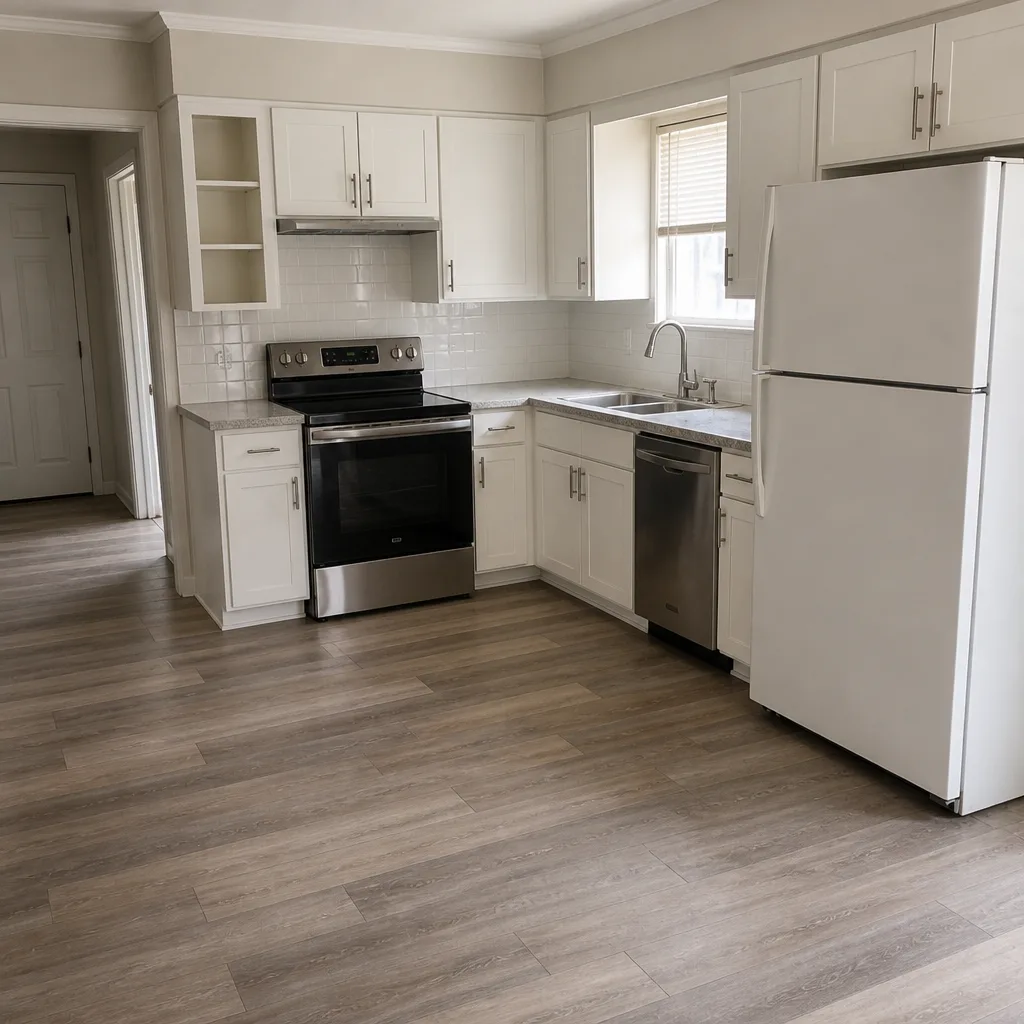
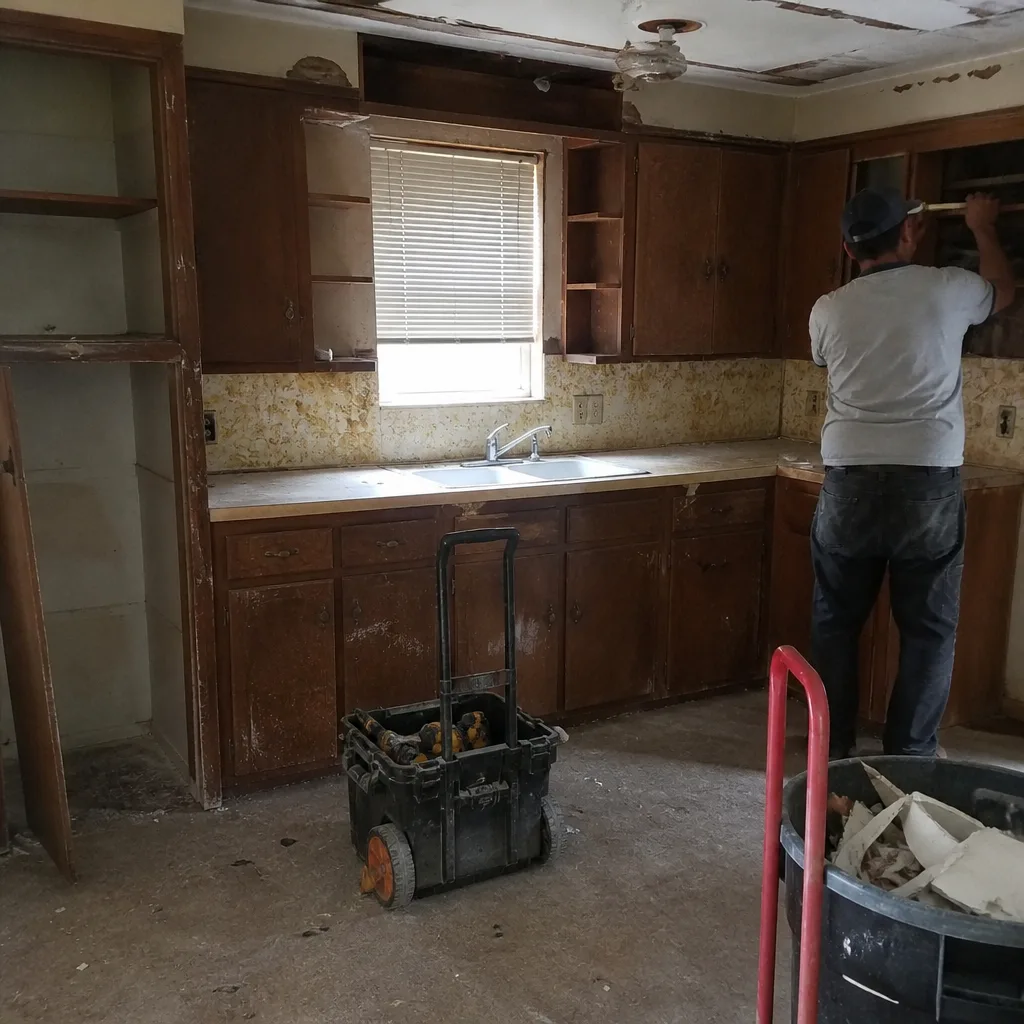
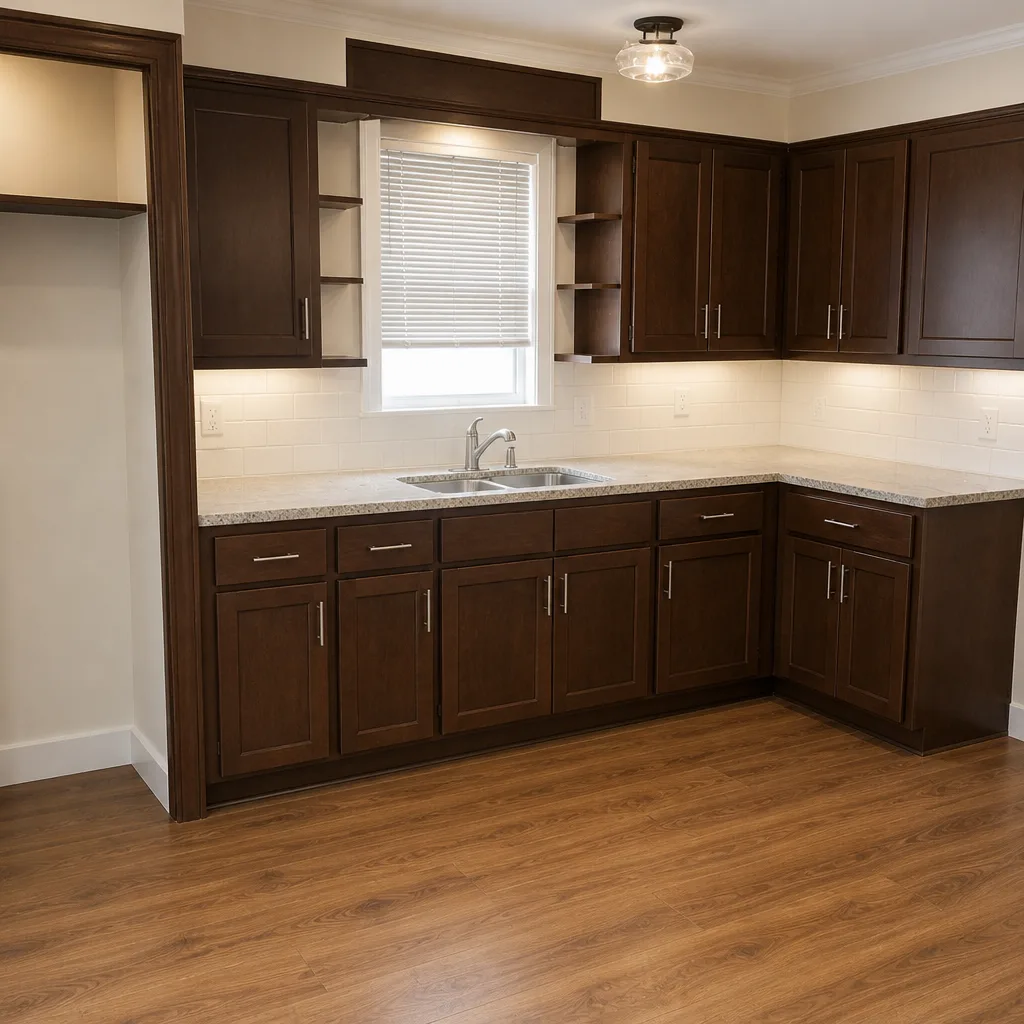
See the difference
 Before
 After
 Before
 After
 Before
 After
When to Call a Professional
Small isolated rocking pavers are a reasonable DIY touch-up if you’ve confirmed the sand is the problem and the base is intact. But there are specific scenarios where the diagnosis benefits from a trained eye and a written scope. Call us when: pavers are sinking in a pattern across more than two square feet; the perimeter is spreading outward and the driveway edge looks loose; you’ve re-sanded the same area more than once and it keeps failing; water pools against the driveway where it meets the house or a garage slab; or a contractor has quoted a repair without naming the base depth. Rowan Construction Group Fort Worth offers free estimates in Fort Worth with a written, line-item price before any work starts, a documented photo record on every visit, and our 365-Day Done Right Promise behind the repair. Call (833) 570-6084 to schedule your free estimate.
Frequently Asked Questions
Paver repair in Fort Worth runs $0.50 – $1.50 per square foot for re-sanding, $4 – $8 per square foot for a paver reset with added base material, and $10 – $16 per square foot for full base reconstruction. The tier depends on which of the three failure types you have. A single isolated rocking paver is often under $200; a cluster of sunken pavers can run into the thousands. Call (833) 570-6084 for an exact quote; estimates are free.
Most sinking and shifting in Fort Worth comes down to one of three causes: inadequate base compaction over expansive clay, missing or undersized edge restraint, or joint sand washout from heavy spring rain. The pattern tells you which. Sunken in clusters means the base; spreading from the perimeter means the restraint; one or two movers means bedding sand. Call (833) 570-6084 and we’ll diagnose it in person, no charge.
No work proceeds on a change until the change order is signed. Our quotes are flat written prices with a written scope, and the discipline behind that goes back to our founding in 2007, when flat pricing under The Haven Standard became the whole point. If we find something under the base that changes the scope, we document it, price it in writing, and wait for your signature before lifting a tool. Call (833) 570-6084 for a written estimate.
Most re-sand jobs finish in a single day. A targeted paver reset with added base material runs one to three days depending on the square footage and how much area needs lifting. A full base reconstruction usually takes three to seven days for a residential driveway, plus dry time for the joint sand. The written scope will name the duration, and we photograph the work at each stage. Call (833) 570-6084 to talk through timing.
Only if the issue actually is joint sand depletion. Adding sand over a base problem, or over bedding sand that has already washed out, covers the failure for a season and lets it get worse underneath. Sweep test first: pour water on the joints and watch whether it disappears or pools. If the pavers are rocking or sunken in a pattern, stop and get it diagnosed. For a comparison of surface options, see Fence Installation in Fort Worth if your perimeter and drainage interact with fencing. Call (833) 570-6084 for a free assessment.
It depends on the scope. Re-sanding and paver resets typically don’t require a permit; reconstruction that touches the public right-of-way, changes drainage, or affects a driveway approach to a city street may need one. We confirm what’s required before any work starts and put it in the written scope. Full replacement scopes we quote with the permit path named. Call (833) 570-6084 and we’ll tell you exactly what your project needs.
The Bottom Line
The single biggest lever on your paver repair cost is the diagnosis, not the contractor. Isolated rocking pavers point to sand washout and a modest re-sand; spreading perimeter pavers point to edge restraint failure and a reset with new restraint; sunken pavers in a pattern point to base failure and reconstruction. Get the pattern right, get the base depth and compaction spec in writing, and compare quotes by tier and square footage rather than per-square-foot headline price. Fort Worth’s heavy spring rain and expansive clay make the base work more important here than in drier markets. Rowan Construction Group Fort Worth quotes a flat written price before any work starts, documents the base with a photo record, and stands behind the repair under the 365-Day Done Right Promise. Call (833) 570-6084 for a free estimate.
Written by the team at Rowan Construction Group Fort Worth.